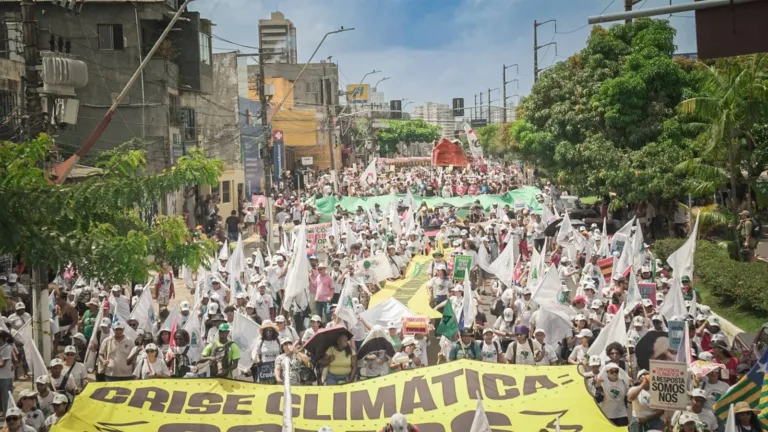
One of the central themes of the 30th United Nations Climate Change Conference (COP30), the creation of a “roadmap” outlining timelines and actions for countries to phase out their dependence on fossil fuels, remains deadlocked.
Following the fire that hit part of the Blue Zone on Thursday afternoon (20), the final stretch of negotiations has grown even more uncertain. The decisions expected from this summit will shape the planet’s climate future.
At around 1:35 p.m., Cláudio Ângelo, international policy coordinator for the Climate Observatory, a network of Brazilian environmental organizations, told BdF that “so far, the roadmap is stuck.”
“The presidency [of COP30] is trying to reverse that. But I wouldn’t be surprised if we end up with a new version of the text without this roadmap,” he said, referring to the conference’s final proposal. Less than an hour later, the Blue Zone, the official UN area where intergovernmental negotiations take place, was evacuated because of a fire break out.
Roadmap blocked by oil-dependent countries
The roadmap proposal has stalled in negotiations among the Like-Minded Developing Countries (LMDC) bloc, which includes Saudi Arabia, India, Indonesia, Pakistan, Algeria, Bangladesh, Belarus, Bhutan, Cuba, China, Egypt, Iran, Malaysia, Myanmar, Nepal, the Philippines, Sri Lanka, Sudan, Syria, Vietnam, and Zimbabwe.
On Thursday morning, UN Secretary-General António Guterres reiterated the urgency of the roadmap.
“The world must phase out fossil fuels in a fair and orderly way. At COP28 in Dubai, that understanding advanced,” Guterres said in a press briefing. “Now governments must ensure that workers and communities dependent on oil and gas are retrained, protected, and provided with new opportunities.”
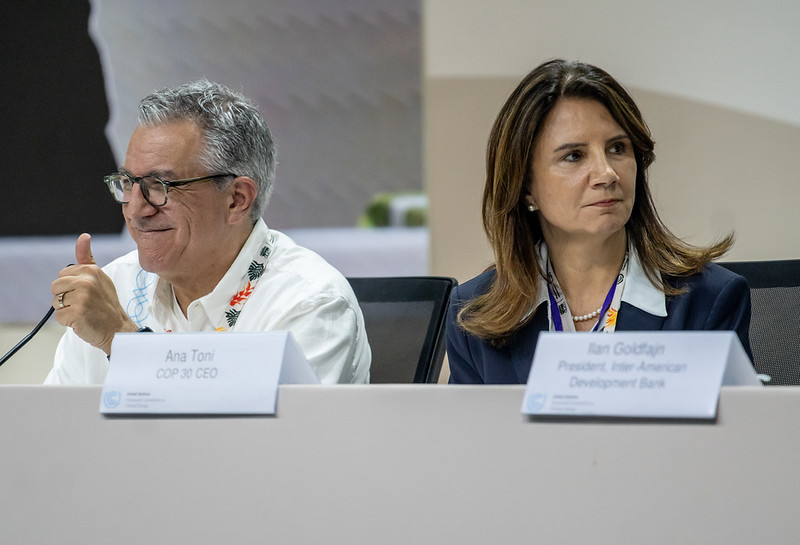
Speaking later that day, Marcelo Behar, Brazil’s special envoy for COP30, struck a more optimistic tone. He confirmed that the roadmap remained the main point of debate, with over 80 countries already supporting the plan, including Brazil.
“There are multiple versions, numbers, and deadlines being discussed,” Behar said. “What matters is that we start taking this seriously, every country must know where it stands and how it will move from non-renewable to renewable sources.”
According to Behar, the talks now focus on setting deadlines and targets for the roadmap. Still, he acknowledged resistance from oil-dependent economies, particularly those in the LMDC bloc.
“Countries like ours, which already have solutions, are in more of a hurry, not just because we offer the solution, but because we can implement the transition,” he said, referring to Brazil, which, despite being a major oil producer, has expanded its renewable energy investments. “We must make this roadmap work for everyone, but we also need to move beyond the stage where no one knew when anything would actually happen.”
Fire halts proceedings at the UN Blue Zone
Less than 30 minutes after Ângelo spoke to BdF, everything changed. Negotiators and participants awaited new instructions from the UN on when they could reenter the venue.
An official UN statement released Thursday evening said that negotiation activities would only resume once “the site has been thoroughly inspected and deemed completely safe by health and fire authorities.”
“We do not anticipate any plenary activity tonight,” the statement added. “Tomorrow’s plenary will be open to all Parties and Observers and will be broadcast live.”
The fire broke out near the Pavilion of Nations, close to the entrance hall of the Blue Zone, one of the most restricted areas of COP30, where key international meetings take place. The blaze was contained within minutes but prompted a full evacuation. Researchers, journalists, and national delegations quickly exited the site.
“Today is a sad day at COP30,” said Carolina Pasquali, executive director of Greenpeace Brazil. “We were expecting a new draft text from the presidency and two plenaries, the People’s Plenary this afternoon and the Presidency’s Plenary this evening.”
The fire began around 2 p.m. and was controlled within six minutes, according to official reports. No one was seriously injured, though 13 people were treated for smoke inhalation.
All official activities were suspended after the evacuation. The Blue Zone, managed by the UN, is now temporarily under the coordination of the Brazilian government while authorities assess the damage.
The COP30 presidency is evaluating the incident’s impact and determining when negotiations can safely resume. According to the fire department, the likely cause of the fire was an electrical short circuit.