One of the leading voices in the articulation of Mujeres Indígenas por el Buen Vivir in Argentina, Moira Millán stands out as an activist, writer, and self-described “weichafe” (warrior) of the Mapuche people. Her trajectory has been marked by tireless struggle in defense of ancestral territories, resistance to the advance of extractivist megaprojects, and the denunciation of what she calls “terricide”, a concept that encompasses the systematic destruction of all forms of life and ecosystems.
Born into a Mapuche family that endured forced displacement to the urban periphery, she followed a path of returning to her roots and reclaiming land to restore her people’s way of life, becoming a central figure in a movement that brings together Indigenous spirituality and political resistance.
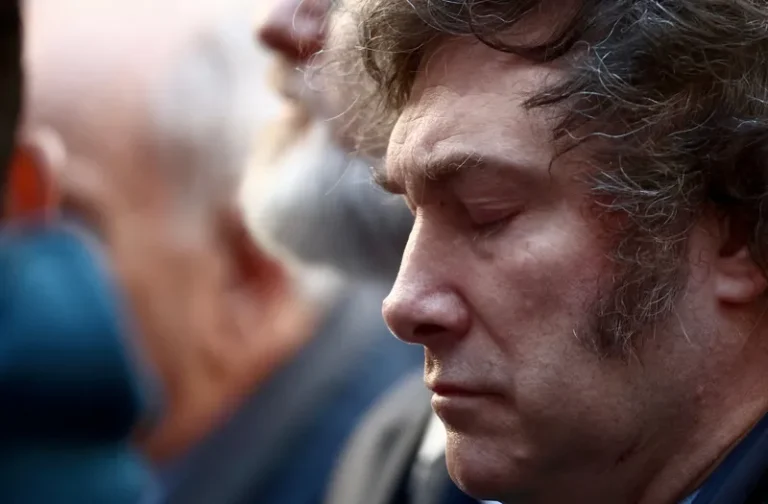
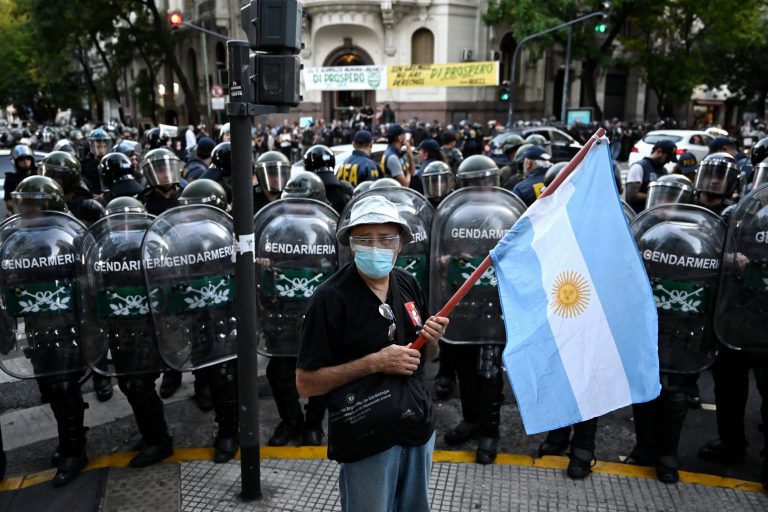
Today, alongside the three million Mapuche people who live between Chile and Argentina, Moira resists the government of far-right president Javier Milei, which has maintained a confrontational and stigmatizing stance toward the Mapuche, labeling them as terrorists. The roots of this persecution lie in the Mapuche’s historic demand for the right to live on their ancestral lands, territories seized by the state in the 19th century and now targeted by economic and environmental interests.
In the book Terricide: Ancestral Wisdom for an Alternative World, Moira Millán argues that environmental destruction is not an isolated event, but a systematic project that kills not only physical ecosystems, but also subjectivities, languages, and forms of spirituality that sustain the balance of life. “Terricide encompasses all the ways the system assaults life and all forms of life,” the activist told BdF in an interview.
Analyzing capitalism from an Indigenous and feminist perspective, Millán denounces how the nation-state system operates in collusion with corporate interests to dispossess peoples of their territories, resulting in an existential threat that goes beyond Indigenous communities and affects all of humanity.
Speaking Radio BdF, she explains that the book proposes recovering ancestral wisdom as the only possible path toward building a future not governed by the logic of exploitation and profit. Through the narrative and political thought of Mujeres Indígenas por el Buen Vivir, the author presents concrete alternatives based on reciprocity with nature and the reconstruction of the communal fabric.
Millán describes Indigenous women as guardians of knowledge that can help humanity rethink its existence on the planet, confronting the patriarchal and colonial system that underpins environmental exploitation.
Read the full interview:
BdF – In your recently released book Terricide: Ancestral Wisdom for an Alternative World, the term “terricide” is central. Could you explain the fundamental difference between ecocide and terricide?
Moira Millán – Terricide is a concept we developed collectively among Indigenous women from different peoples. This is very important, because we realized that concepts like ecocide were too narrow, insufficient to describe the reality of death in our territories.
Terricide encompasses all the ways the system attacks life and all forms of life. So when we speak of femicide, we are speaking of terricide. When we speak of epistemicide, the destruction of cultures and languages, that is terricide.
When we speak of the persecution of Indigenous spirituality, the persecution of Indigenous spiritual and political authorities, we are speaking of terricide. When we speak of ecocide, genocide, all of that is terricide. The central point of the concept of terricide is understanding that all lives are interconnected and that all are deeply, profoundly important. No life is expendable or disposable.
The concept of Buen Vivir (Well being) is presented as an alternative path. What are the ethical and practical pillars of Buen Vivir that can reorient modern society toward a reciprocal relationship with nature?
We define Buen Vivir as restoring harmony, respect, and solidarity among peoples and with all of nature.
Therefore, one cannot speak of Buen Vivir if there are people who continue to be involved in processes that destroy life. You can think about better labor conditions or higher wages, but if those improvements depend on destroying forests or land, then that is not Buen Vivir.
Buen Vivir proposes a new civilizational matrix, a different paradigm, where harmony is restored as a fundamental principle and all life is recognized. It does not discard technology, but rather seeks to build technological models that respect nature and the cultures of peoples.
Does food play a role in this?
In the past, the Mapuche people ate in order to have courage. Today, we simply eat, but there is no real nourishment. That is what the elders of my culture say.
When the Mapuche people went through genocide, like our Palestinian brothers and sisters today, we endured a genocide that lasted from around 1875 or 1878 until 1940. As a result, there were deep psychological and emotional wounds, fear and panic.
At that time, the machis (our healers), to heal trauma, would feed people the meat of predators, such as the puma. They say we must return to healthy forms of nourishment to regain courage, because the meat industry raises animals in fear, under pressure and mistreatment. We eat that meat and we, too, become fearful and mistreated. We are societies of fear.
Food, therefore, is part of this paradigm shift. It is not enough for food to be organic; it must also be produced with justice.
As a weychafe (warrior) and opinion leader, what is the specific role of Mapuche women on the front lines of defending territory and resisting terricide? How are patriarchy and extractivism two faces of the same violence against women and the Earth?
Patriarchy is a colonial expression. In most Indigenous peoples around the world, there was no system of oppression against women. That arrived with the conquerors. The Mapuche people do not assign roles or functions based on gender.
If you are born with the ability to heal, you are a machi. If you are born with the ability to understand the heart of plants, you are a wenwutefe (healer), whether man or woman, it does not matter. If you are born with a political calling to accompany your community in struggle, gender does not matter: you can be lonko (leader) or weychafe (warrior).
There was gender equity among the Mapuche because there was harmony. What structured our political and social relations was the maintenance of harmony.
To fight without being anti-patriarchal or anti-colonial is a contradiction. To fight patriarchy without being anti-racist is also a contradiction. We must dismantle the system in all its forms, not just fight for privileges while others continue to suffer.
I believe Indigenous peoples and women, especially today, are carrying out a crucial struggle to dismantle this system, proposing an agenda of feminism, anti-patriarchal and anti-colonial struggle. There can be no victory unless the entire system is dismantled.
The Mapuche people number around three million between Chile and Argentina. What is their situation today?
It is very harsh, very difficult. All of Wallmapu (Mapuche territory) is under siege by fascism and, above all, by international Zionism. I live in Patagonia, in the southern province of Chubut.
There, Mekorot, an Israeli water company, has arrived to privatize water. President Milei is a very dangerous man. He is unhinged and doing everything possible to destroy life in territories and among peoples, militarizing, bringing weapons from Israel. He is practically gifting Patagonia to the Israeli state.
Recently, he approved a law to allow mining in periglacial areas. I want people watching this interview to understand the importance of Patagonia and its glaciers: we are a freshwater reservoir for the world. Patagonia and the Amazon must be sisters. Both are under severe threat right now.
I call on my brothers and sisters in Brazil to support the Mapuche struggle, because it is a struggle for the life of Patagonia. Patagonia is not only the responsibility of the Mapuche people, it belongs to all humanity. Milei is a nightmare right now. We need global support to put an end to his government, which is a government of death.
We have political prisoners, entire families living underground, deaths and disappearances. It is extremely serious. In Argentina, there is a media blackout preventing people from knowing what we are living through.
If you travel the 200 kilometers between my community and the main Patagonian cities, you must pass countless checkpoints. Military forces and federal and provincial security forces have merged into a joint task force called the Unified Command. They have a green light to invade, arrest, and even kill. They point their weapons at our heads, and the world does not know it. This could end in a massacre.
In a world marked by climate crisis and systemic violence, what does the Mapuche worldview offer as hope? What is the first practical step a reader can take after finishing the book to align with the defense of life and territory?
I believe hope lies in the fact that struggle is not placed solely on human beings. We do not have an anthropocentric worldview. We do not believe that the only emerging social and political subject is humanity or the working class.
Today, the social and political subject is the Earth itself. It is around the Earth that we are uniting, and the Earth is conspiring with us to fight this system of death, this capitalist system in which the worst hold power.
We must look to the Earth. We must listen to the Earth. It is the Earth that gives us wisdom. That fills me with hope: knowing we do not depend on any leader or messiah. We depend on the Earth, which is far wiser than we are.