The Landless Workers’ Movement (MST) will field 18 candidates for federal and state legislatures through Brazil’s Workers’ Party (PT) in this year’s elections, as the movement marks 42 years of existence.
According to Ceres Hadich, a member of the movement’s national leadership, the MST has always played an active role in electoral processes by shaping public debate, especially around agrarian reform, and supporting allied candidates. Since the 2022 general elections, however, the movement has decided it was necessary to contest these spaces with its own grassroots militants.
“We have always understood that the electoral struggle is an important one. It is an expression of class struggle and part of Brazil’s democratic process,” Hadich said. “But in recent years, we have intensified our participation because elections are also a moment to debate our Popular Agrarian Reform project with Brazilian society. It is an opportunity to present our proposals, politicize the debate, and strengthen a project of society centered on the working class.”
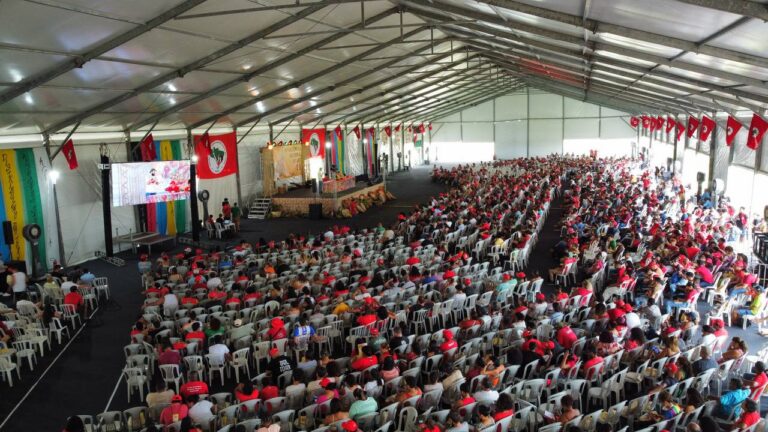
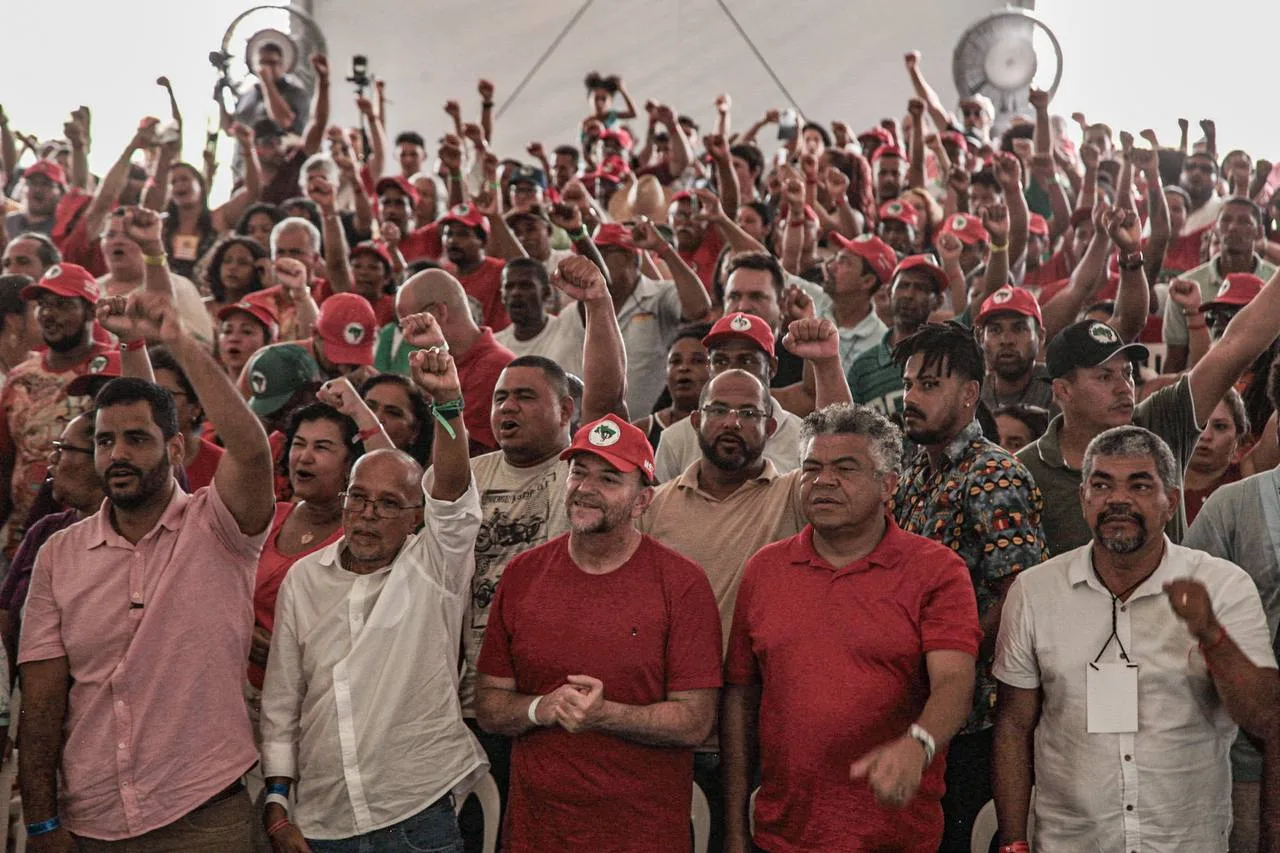
“More than simply occupying institutional spaces, which is also important, we see elections as a moment to engage directly with society and be closer to the Brazilian people,” Hadich told BdF during the 14th National Meeting of the MST, held in Salvador, Bahia, from January 19 to 23.
Maintaining and expanding representation
In 2022, the MST elected seven lawmakers, and in the 2024 municipal elections, 43 city councilors emerged from its ranks. This year, the movement aims to reelect those mandates while doubling efforts to expand landless representation in Brazil’s legislatures.
Among those seeking reelection are Rio de Janeiro state lawmaker Marina do MST, Adão Pretto Filho of Rio Grande do Sul, and Missias do MST from Ceará. Missias highlighted that during the current term alone, his office submitted 93 bills to Ceará’s Legislative Assembly, 25 of which were approved. He stressed the importance of a mandate rooted in the struggles of rural workers.
“Our mandate brought into the Assembly people who had been invisible and denied their rights, giving them a voice on the Assembly’s TV and radio channels,” Missias said. “Our work is not confined to the Assembly building, it is grounded in the people’s reality, with the people and in their territories.” Missias currently chairs the Assembly’s Agriculture Committee.
New candidates
This year’s slate also includes new candidates. In Pará state, Pablo Neri, a member of the MST’s political education sector, is running for a seat in the state legislature, headquartered at the Palácio da Cabanagem. He said the decision to launch his candidacy was made collectively by the movement.
“This was not an individual decision,” Neri said. “We reflected on the current moment and our role in Pará. The movement defined a strategy that includes land struggle, expanding agroecology, and institutional participation as part of this historical moment, in which we must reposition ourselves politically.”
Neri said his campaign aims to challenge the dominance of right-wing forces in the state legislature. “For a long time, Pará has been controlled by a violent agrarian elite that uses political office to serve colonial interests. Our candidacy allows us to dialogue with broader society and confront this colonial reality as a collective subject.”
In São Paulo, former vice president of the National Students’ Union (UNE) and current deputy secretary for youth at Brazil’s Presidency, Jessy Dayane, will run for state deputy. She said her main focus will be linking agrarian reform to the right to food.
“One of our key battles in São Paulo is the debate around agrarian reform, especially food access,” Dayane said. “We want to strengthen initiatives like Armazéns do Campo and our work against hunger through popular organization. A parliamentary mandate can help amplify what we already do.”
In Maranhão, Vânia do MST is running to secure the first-ever landless mandate in the state, which faces heavy pressure from agribusiness interests.
“Maranhão is a poor state, but with hardworking, dignified people who want a new political culture, one that rejects corruption, vote-buying, and policies against workers,” Vânia said. “They want a voice they can identify with, one that defends the interests of rural and urban workers alike.”
MST: 42 years of history
This Thursday (22), the MST marked its 42nd anniversary. For the candidates, the movement’s legacy is deeply tied to their personal histories and to a political vision centered on human dignity.
“The MST gave me my worldview, through exchanges, collective experiences, and struggle,” Vânia said. “It is my greatest teacher, my greatest school. I dedicate my life to this movement.”
“Fighting is not a momentary act, it is a way of life,” Pablo Neri added. “For 42 years, the MST has called on society to commit to values that lead to dignity and a better life. The movement calls on us to fight for the life we want.”