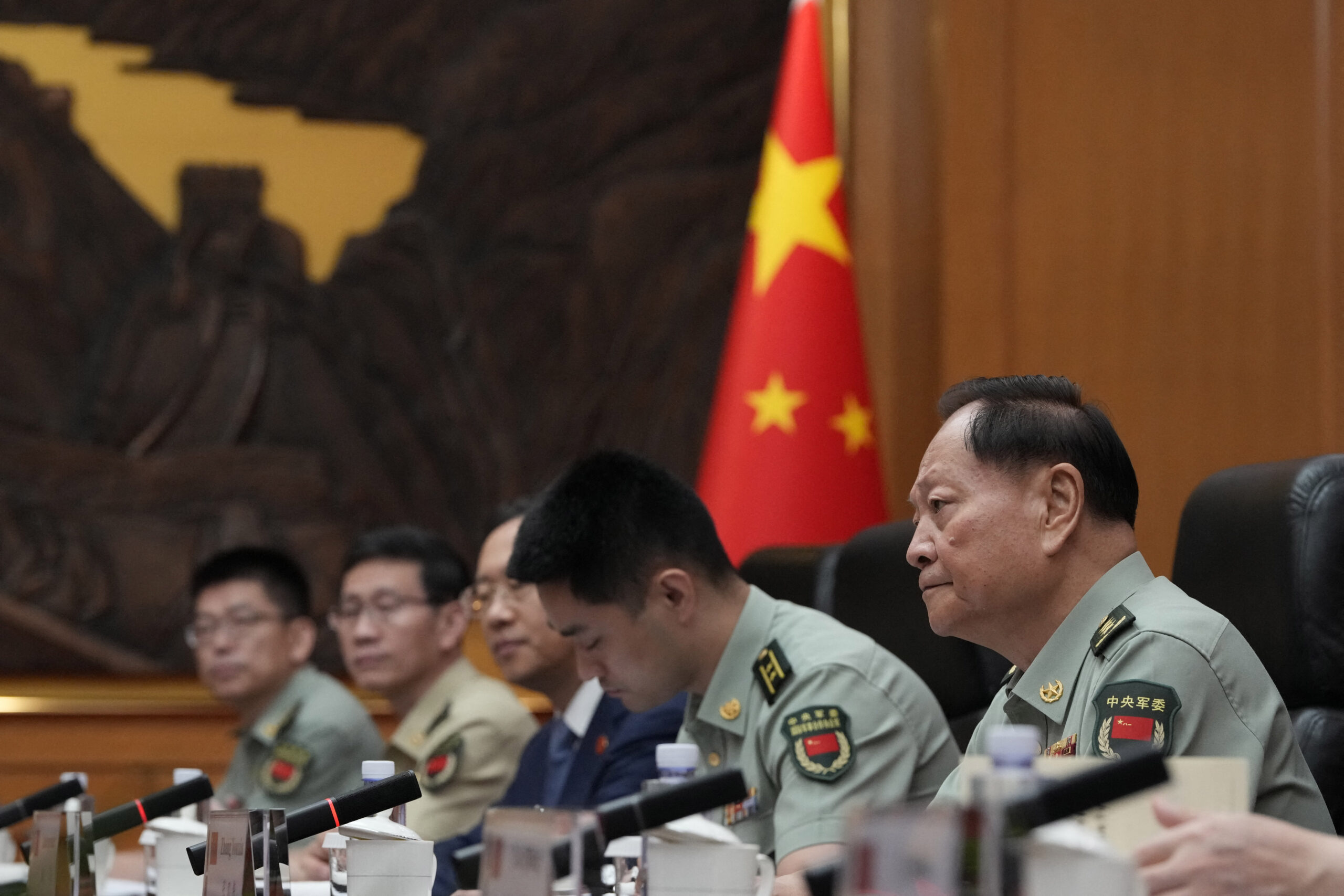
The launch of investigations into two senior military officials last Saturday (24) drew widespread attention from international media, particularly because the main figure under scrutiny is not only a vice chair of the Central Military Commission, chaired by President Xi Jinping, but also a member of the Chinese Communist Party’s Politburo. The second official under investigation is Liu Zhenli, chief of the Joint Staff Department of the same commission.
The decision was taken by the Party’s Central Committee, its highest authority, composed of 205 members, which stands above the 24-member Politburo in the Party hierarchy.
International mainstream outlets have used China’s handling of the case to fuel speculation ranging from internal rifts over Taiwan to coup rumors. While surprise outside China may be understandable, anti-corruption probes are not exceptional in the country. The investigations are part of an intensified campaign launched in 2013, during the first year of Xi Jinping’s presidency.
In 2012, after being elected general secretary of the Communist Party and months before assuming the presidency, Xi placed corruption at the center of the Party’s concerns. Speaking at the 18th National Congress of the Communist Party of China, he warned: “In recent years, some countries have experienced widespread public discontent, social unrest and the collapse of governments due to contradictions accumulated over many years, with corruption being a major contributing factor. Numerous facts show that if corruption continues to grow, it will inevitably lead to the downfall of the Party and the country. We must remain vigilant.”
More than 7 million cases in 12 years
From the start of the campaign in 2013 through 2025, more than 7 million people were investigated and disciplined, according to data from the Central Commission for Discipline Inspection (CCDI) and the National Supervision Commission.
Recent figures show the campaign’s intensification. In 2023, disciplinary bodies punished 610,000 people. In 2024, the number rose to 889,000, according to official reports. In 2025, a total of 983,000 individuals received disciplinary sanctions, including 115 officials at provincial, ministerial or higher levels.
Last year, the campaign also reached the top personnel. Before the current case involving Zhang Youxia, another Politburo member, He Weidong, was investigated, along with Miao Hua, an admiral and member of the Central Military Commission. Seven other generals were expelled from the Party.
What the People’s Liberation Army said
Details of the investigations are unlikely to be made public. A claim by The Wall Street Journal that the generals leaked classified information about nuclear weapons programs has been widely questioned.
Drew Thompson, former director for China, Taiwan and Mongolia at the U.S. Department of Defense (2011-2018), who organized a 2012 visit by a Chinese Defense Ministry delegation that included Zhang Youxia, said in a recent podcast that he does not believe the leak narrative put forward by the U.S. outlet.
On the day the investigations into Zhang Youxia and Liu Zhenli were announced, the newspaper of the People’s Liberation Army published an editorial that went beyond corruption allegations to stress ideological concerns. The text said the two officers had “seriously betrayed the trust and expectations of the Party Central Committee and the Central Military Commission” and had “severely undermined the system of responsibility of the chair of the Central Military Commission,” harming “the Party’s absolute leadership over the armed forces.”
The editorial instructed Party members, especially senior ones, to treat punished officials as negative examples and to “consciously safeguard the ideological line of defense, the bottom line in exercising power, the red line of law and discipline, and the boundaries of family conduct.”
It also demanded that military cadres “adhere to the Party’s original aspirations and mission, lead ideological transformation, political training and discipline building,” warning that disciplinary violations had “threatened the foundations of Party governance” and “seriously impacted the political and ideological basis for unity and progress among officers and soldiers.”
Anti-corruption drive to intensify in the next five-year plan
As China prepares to approve its next Five-Year Plan, signals from the recent fifth plenary session of the 20th Central Commission for Discipline Inspection suggest a further tightening of the anti-corruption line, summarized by the principle that officials should “not dare to be corrupt, not be able to be corrupt, and not want to be corrupt.”
The CCDI session, held this week in Beijing, approved guidelines to strengthen anti-corruption efforts during the 15th Five-Year Plan (2026-2030).
The meeting called for intensified enforcement in sectors such as finance, state-owned enterprises, energy, pharmaceuticals and higher education, and mandated “strict supervision and severe punishment for collusion between public officials and business interests.” The final communiqué stressed that China must adopt “more forceful and effective measures to eradicate environments conducive to corruption” as it enters the new planning period.