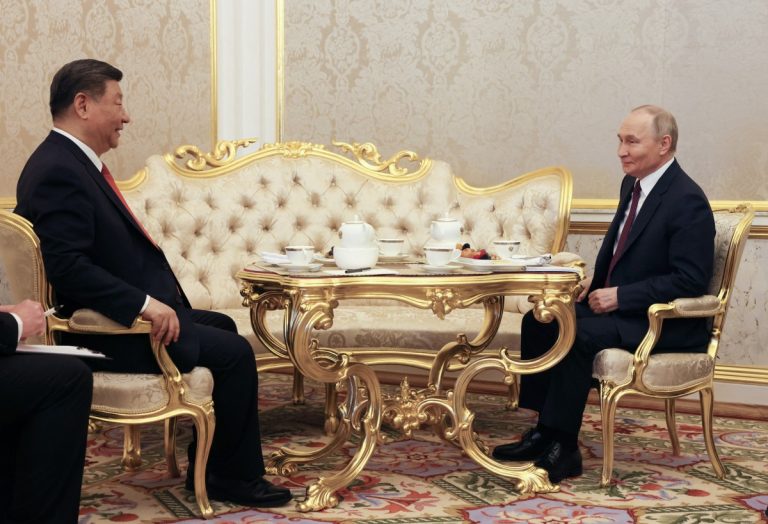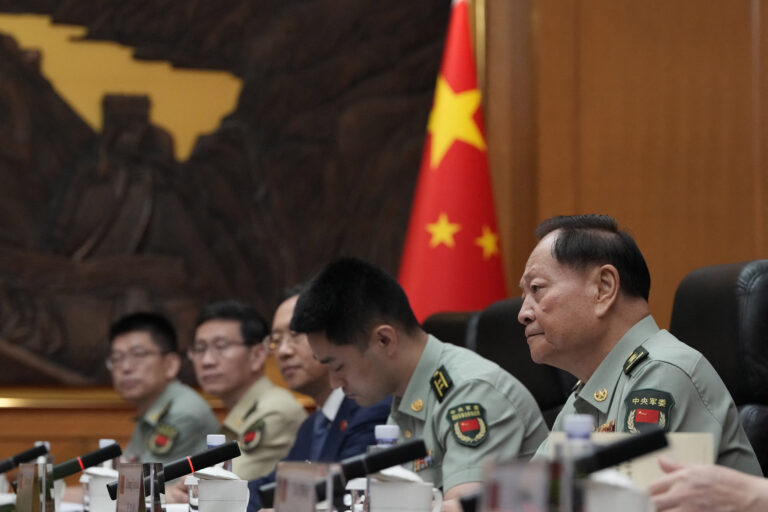
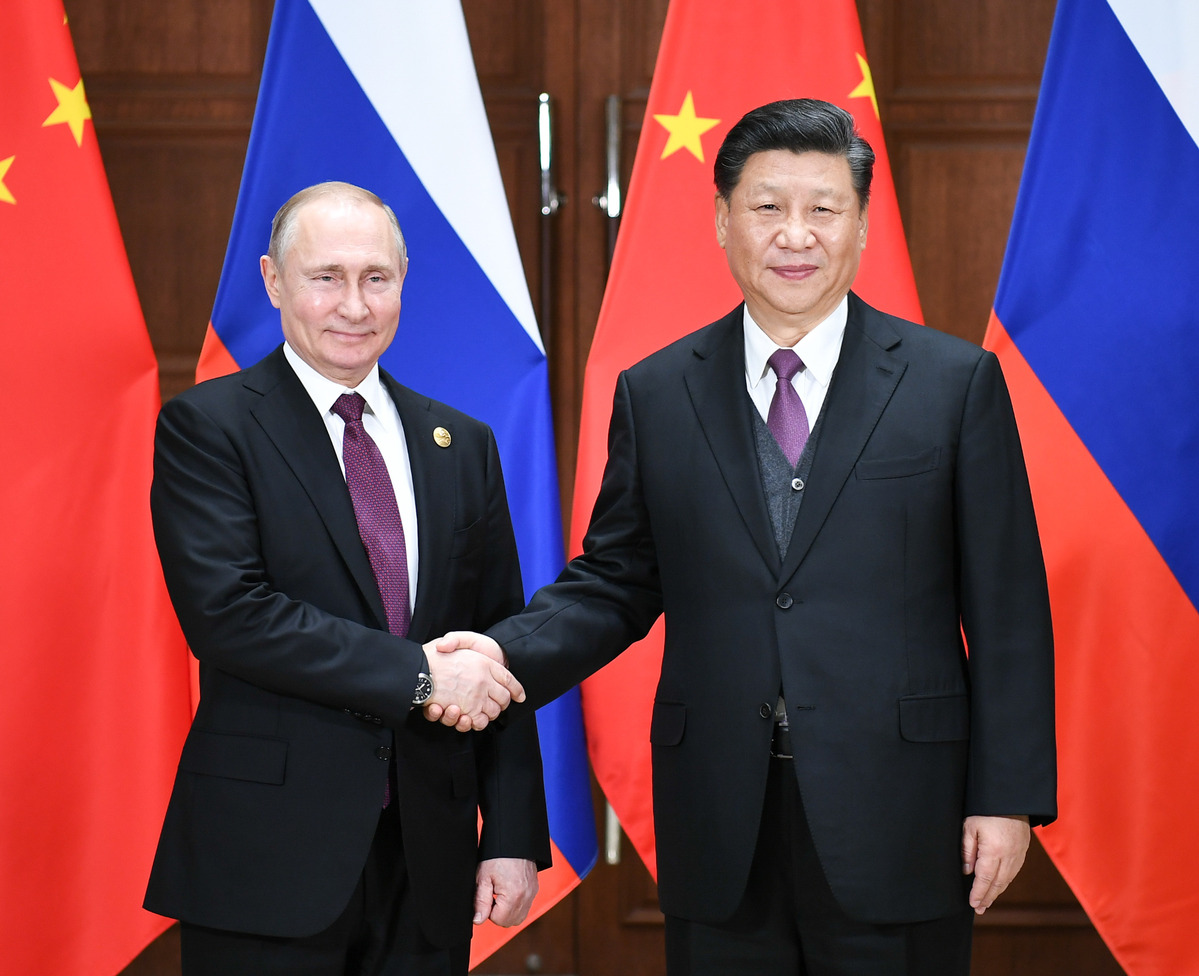
In Beijing on Sunday (1), Russia’s Security Council Secretary Sergei Shoigu and China’s Foreign Minister Wang Yi discussed strengthening political coordination between Moscow and Beijing amid rising international tensions. The meeting was convened at the direct request of Presidents Vladimir Putin and Xi Jinping.
Senior diplomatic and security advisers from both countries took part in the talks. Key topics included defending multilateralism, regional stability, safeguarding shared strategic interests, and deepening cooperation within multilateral forums.
The dialogue comes as the global geopolitical order undergoes reconfiguration, marked by initiatives led by the United States and its allies. Among them, Moscow and Beijing pointed to the creation of a so-called Board of Peace, viewed by both governments as a parallel body to the United Nations with the potential to impose unilateral rules and expand Western influence outside established multilateral frameworks. For China and Russia, this move raises the risk of instability and underscores the need for permanent strategic coordination.
According to China’s official readout, Wang Yi emphasized that China and Russia, as permanent members of the UN Security Council, bear a special responsibility to defend an international system centered on the UN. This position was reiterated on Monday (2) by Chinese government spokesperson Li Jiang, who said the two countries are “comprehensive strategic partners of coordination for a new era” and maintain “close communication on core bilateral issues.” In a world marked by uncertainty, he added, Beijing and Moscow will “uphold genuine multilateralism” and work toward more balanced global governance.
Wang Yi also warned that the world is entering a period of growing instability, with the erosion of norms that underpinned the post-war international order. He cautioned against a drift toward a “law of force” in international relations, arguing that China and Russia must act in concert to preserve multilateral mechanisms, prevent confrontation, and promote political solutions to global conflicts.
On the Russian side, Shoigu noted that 2026 marks the 25th anniversary of the 2001 Sino-Russian Treaty of Friendship between the two countries. He said bilateral ties are grounded in mutual respect, political trust, and reciprocal benefit, particularly important amid an increasingly volatile international environment with overlapping crises across regions.
Shoigu reaffirmed Moscow’s support for China’s position on Taiwan and criticized moves he said threaten stability in the Taiwan Strait. He also spoke out against Japan’s remilitarization, an ongoing concern shared by Moscow and Beijing. These remarks come amid recent U.S. arms transfers to Taiwan, estimated at around US$ 11 billion, and Japan’s military buildup, steps both governments say heighten tensions in East Asia.
While neither Shoigu nor Wang Yi cited specific resolutions, their statements align with UN General Assembly Resolution 2758, which recognizes the People’s Republic of China as the sole legitimate representative of China at the United Nations and affirms Taiwan as part of Chinese territory.
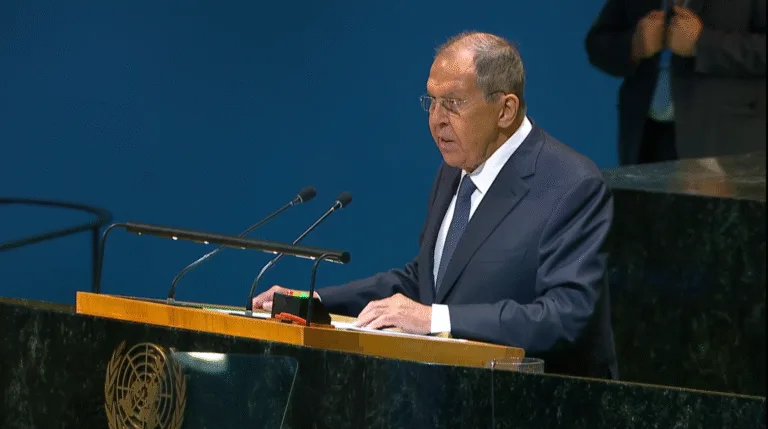
During the meeting, Shoigu also expressed Russia’s willingness to deepen coordination with China within mechanisms such as the UN, Brics, and the Shanghai Cooperation Organization, while sustaining high-level bilateral relations. The shared objective, he said, is to help build a fairer and more secure multipolar world, with particular attention to stability across Eurasia.
For Moscow and Beijing, consolidating their strategic partnership is seen as a means to protect national sovereignty, defend core interests, and reshape global governance on less asymmetric terms. The two sides also held in-depth exchanges on international and regional issues of common concern, opening new avenues for cooperation through 2026.