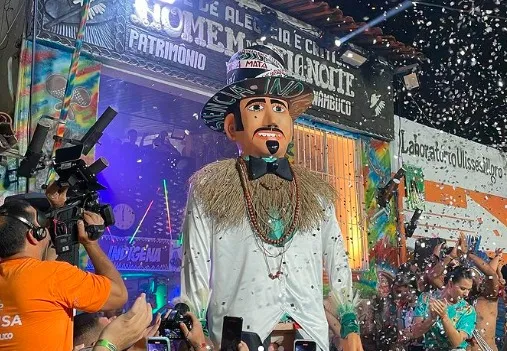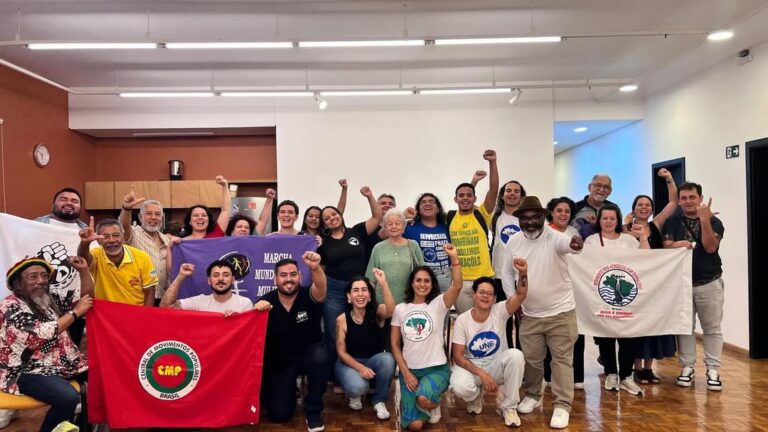
This Saturday (7), Radio BdF opens its 2026 season with the coverage of Carnival. In this edition, viewers will learn how agrarian reform will take center stage at the Anhembi Sambadrome in São Paulo during the elite samba school parade. Leading the discussion is Acadêmicos do Tatuapé, whose samba theme — “Plant to harvest and nourish: much land without people and many people without land” — draws inspiration from the struggles and achievements of the Landless Rural Workers’ Movement (MST), one of Latin America’s largest grassroots movements advocating for land redistribution and food sovereignty.
“Our theme will talk about agrarian reform, portraying the struggle of thousands of Brazilians, people fighting to defend the land, to cultivate it, and to have a small plot where they can grow food for families across the country,” said carnival designer Wagner Santos.
The narrative travels back to the mythical origins of agriculture, beginning with Tupã, a deity from Tupi-Guarani cosmology, represented in the opening float. Moving from mythic past to contemporary reality, still marked by inequality and land conflicts, the parade concludes with a tribute to small farmers and producers of healthy food.
“Our final float celebrates small-scale farmers, those who cultivate modest plots. It represents the great agricultural festival, when the truck arrives at their farms to collect the harvest and bring healthy, pesticide-free food to Brazilian families,” Santos explained.
If the theme focuses on fair land distribution and sustainable food production, it also highlights threats facing rural communities, including agrochemicals, deforestation and deliberate fires. These challenges are depicted in one of the allegorical floats, reinforcing the urgency of discussing agrarian reform in public spaces.
“Bringing this theme to Carnival is a way of inviting society to reflect,” said Carla Loop, from the MST’s National Culture Collective. She emphasized that agrarian reform points toward a new relationship with land — “a production model free from poison, and a countryside where peasants are subjects, not commodities.”
Marlene Santana, a member of the school’s traditional Velha Guarda (Old Guard), described the theme as one of the strongest the school has taken to the avenue. “Culture carries power, and we need to talk about land. Without land, nothing exists,” she said.
‘Much land without people and many people without land’
Developing a samba theme involves deep research and immersion. For Felipe Higino, responsible for the school’s musical harmony, the lesson expressed in this year’s title is central.
“Why is there so much empty land? Land that remains unproductive while people are still going hungry? And at the same time, many people want to work it, to plant and harvest,” he said.
The school worked in partnership with the MST during the composition process. “There were several moments of dialogue and debate with the school’s organization, and once we reached consensus, there was nothing better than to carnivalize this topic,” said Loop.
Rural workers themselves will participate in the parade on February 13. Residents from an encampment and a settlement in São Paulo state will form one of the parade’s wings.
“The cocoa wing, featured in the final highlight alongside a float, celebrates agriculture and the harvest festival. We have 60 MST members coming from the Marielle Vive encampment, the Lagoinha settlement, and other activists who live in São Paulo and rehearse weekly,” Loop explained.
The closing float will feature 30 MST honorees described as the “old guard of agrarian reform”, activists involved in legal advocacy, environmental defense, food security and healthy nutrition. Their names remain secret until the parade.
At the Allegory Factory in São Paulo, even with floats still being assembled, it is already possible to grasp the scale of the production. Every detail celebrates rural life, tools, harvest fruits and symbols of cultivation, while also highlighting a long-standing challenge: agrarian reform in Brazil remains unfinished.
According to MST data, approximately 140,000 families currently live in encampments across Brazil awaiting access to land for cultivation. With Acadêmicos do Tatuapé, this urgent debate enters the rhythm of Carnival, combining social critique with celebration to nurture hope.
“I believe that when we step onto the avenue on February 13, the ground will shake. Those who awaken to this theme will also understand the kind of society they want and how to build a new tomorrow,” Santana concluded.
Samba lyrics (translated)
Tupã! With a tender breath
Conceived agriculture for the children of this land
Thunder echoed above the hut
When dew waters the fields and communion is completeBut the invader came and the land bled
Black resistance planted rebellion
Each raised hoe made freedom bloom