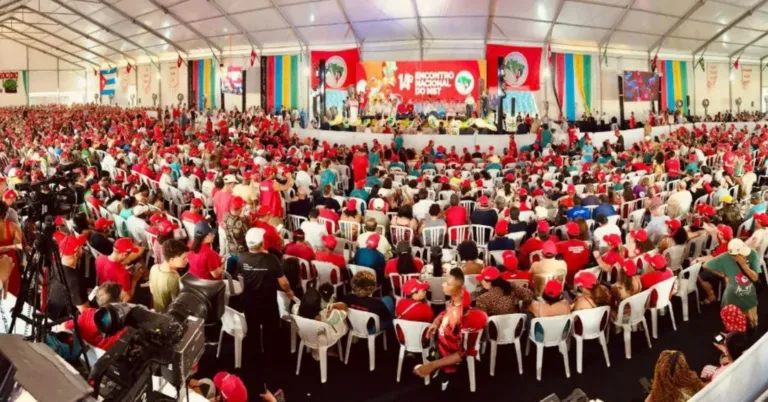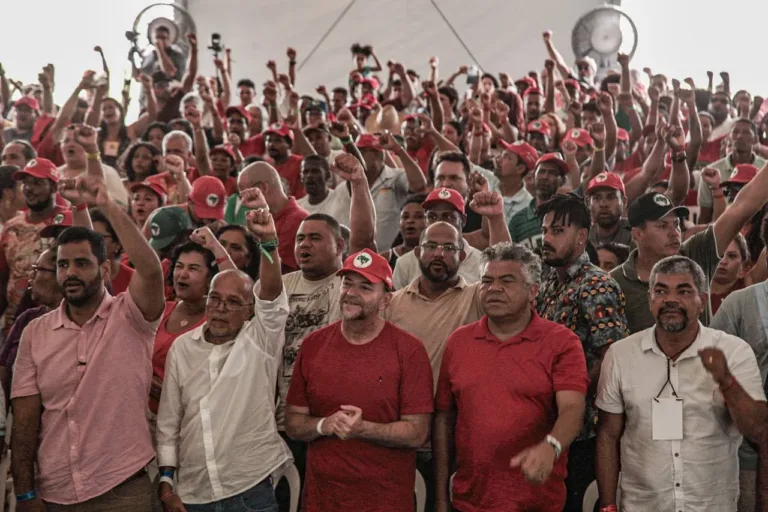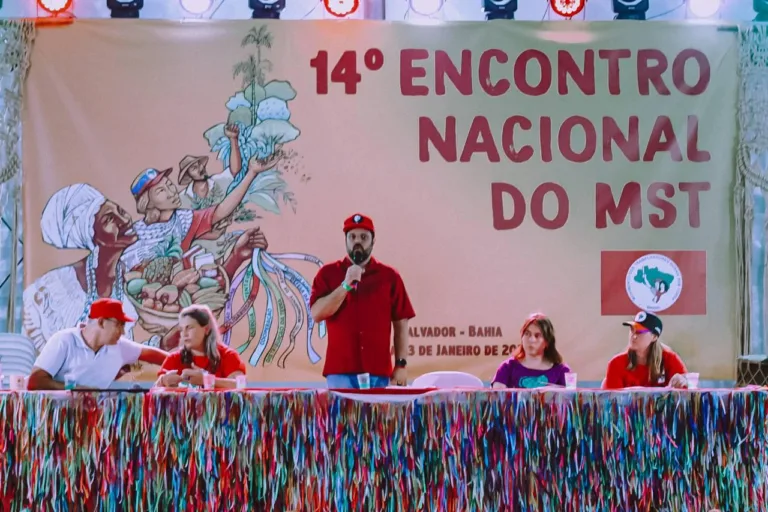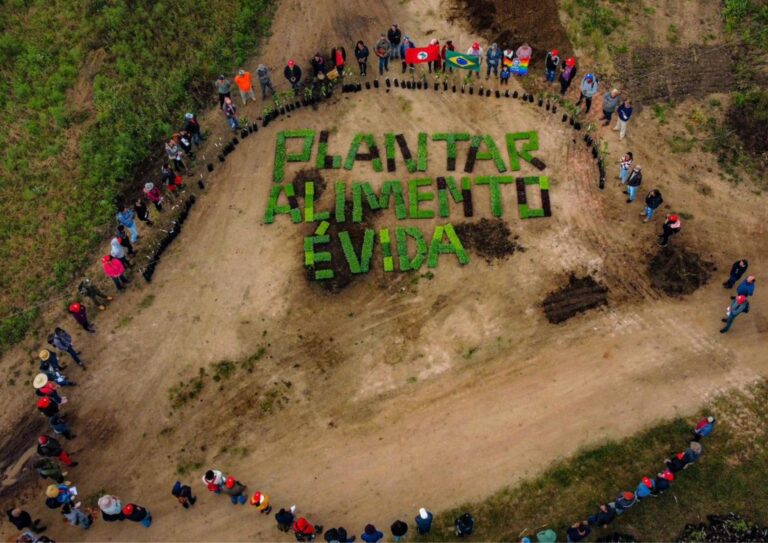
Scaling up agroecology was one of the central themes discussed at the 14th National Meeting of Brazil’s Landless Workers’ Movement (MST), held in January in Salvador, Bahia. According to the movement, agroecology is not only a viable model for producing healthy food and tackling hunger, but also a pathway to confronting the global environmental and humanitarian crisis. The MST views this approach as both a production model and a way of life capable of challenging the structures of capitalism and imperialism, which it identifies as driving the current crisis.
“Reaffirming agroecology as a strategic perspective at this moment is essential,” said Diego Moreira, national coordinator of the MST’s production sector, in an interview with Radio BdF. He emphasized that the movement has developed an advanced agricultural proposal for the country.
“Our sustainable agriculture project challenges the dominance of agribusiness by placing agroecology and cooperation at its core, from two main perspectives: caring for and protecting nature, and fighting hunger,” Moreira explained.
Control over seeds and breeding lines for small livestock is considered central to expanding agroecology, alongside the goal of producing healthy food at scale through processes that incorporate industrial organization while maintaining ecological principles. The movement also highlights the need for appropriate mechanization to develop productive forces in agriculture, combined with agrarian reform, industrialization, renewable energy, improved commercialization strategies, and a renewed understanding of land and territory as fundamental elements.
“For agroecology to effectively confront hunger in Brazil, it must be thought of at scale,” Moreira said. “We already know how agroecology can help solve this problem: through food production in harmony with nature. These elements need to be inherent to any strategy aimed at expanding agroecological practices.”
He also stressed that “agroecology is diversity,” noting that the model must adapt to Brazil’s different biomes and regional conditions. “Agroecology in the Cerrado cannot be practiced in the same way as in the Pampa biome or in the Amazon,” he said, pointing to differences in soil, climate, and vegetation.
According to Moreira, agroecology stands out as the most effective alternative for three main reasons: it preserves and cultivates nature as a fundamental condition for human survival; it prepares sustainable conditions for future generations; and it ensures food production aimed at overcoming hunger.
“Any government, organization, or institution should treat these priorities as central, how to care for nature and how to produce healthy, high-quality food so that humanity can be healthier not only physically, but psychologically and socially as well,” he concluded.