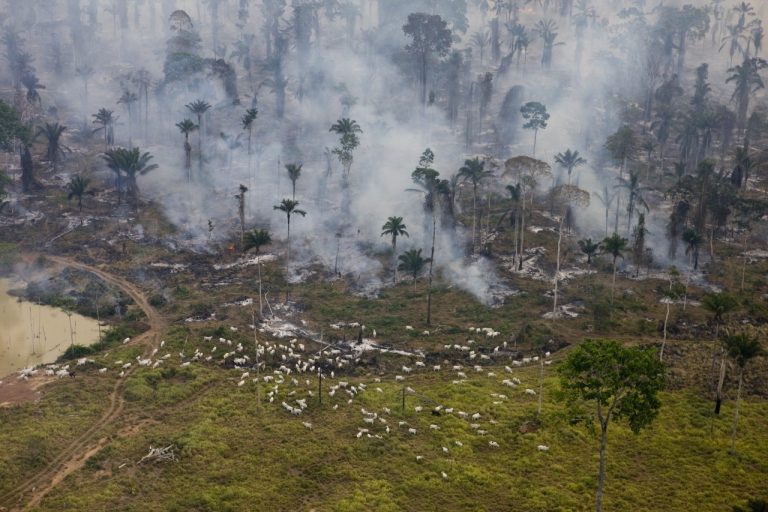

Over the past 12 months, the Amazon biome has seen a 4% increase in deforestation alerts, covering 4,495 square kilometers (km²), compared to 4,321 km² in the previous period. Despite this increase, the figure remains the second lowest in the historical series.

The Cerrado biome recorded a 20.8% decrease in alerts, covering 5,555 km² compared to 7,014 km² in the previous period.
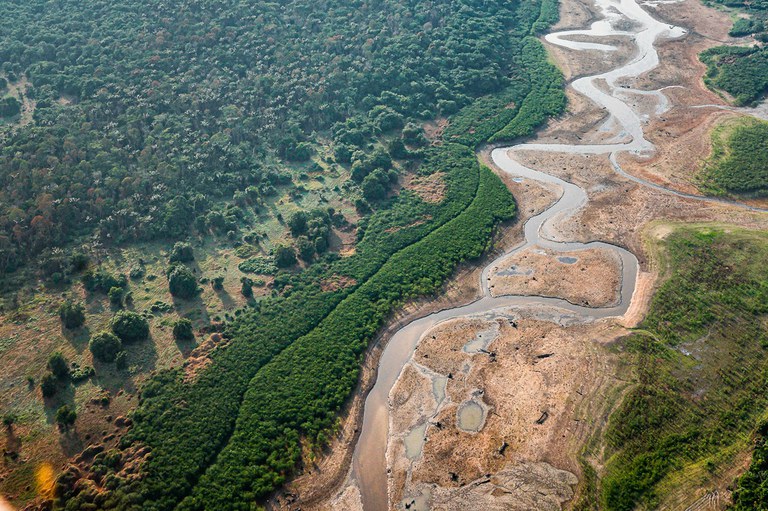
In the Pantanal, deforestation decreased by 72%, dropping to 319 km² from 1,148 km² in the previous period. The biome also saw a 9% decrease in fire outbreaks, falling to 16,125 km² from 17,646 km² during the same period.
Data for the 2024/2025 season, collected from August 2024 to July 2025, were presented on Thursday (7) by the National Institute for Space Research (Inpe) to the Minister of Environment and Climate Change, Marina Silva.
The figures come from the Real-Time Deforestation Detection System (Deter), a daily rapid alert system designed to support monitoring. The system issues clear-cutting alerts when vegetation is completely removed, as well as alerts for progressive degradation, primarily caused by recurring fires.
Enforcement
According to the Brazilian Institute of Environment and Renewable Natural Resources (Ibama), during the same period—from August 2024 to July 2025—3,976 infraction notices were issued, and fines totaling US$ 442 million were imposed. The embargoed area exceeded 5,000 km².
Repercussion
For Ana Crisostomo, a conservation specialist with the non-governmental organization WWF-Brazil, the reduction in Amazon deforestation demonstrates that progress is possible through public policies and enforcement. However, she emphasizes the need to stay vigilant against environmental setbacks and, for example, to veto a bill recently approved by Congress. Known as the “Devastation Bill”, it weakens the criteria for granting environmental licenses, according to her.
“This moment demands coherence and responsibility: protecting our biomes is protecting the future of the country,” said Crisostomo.