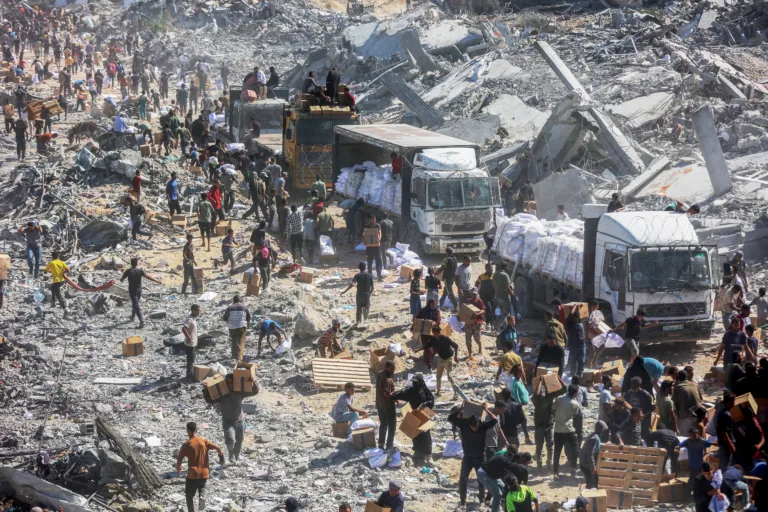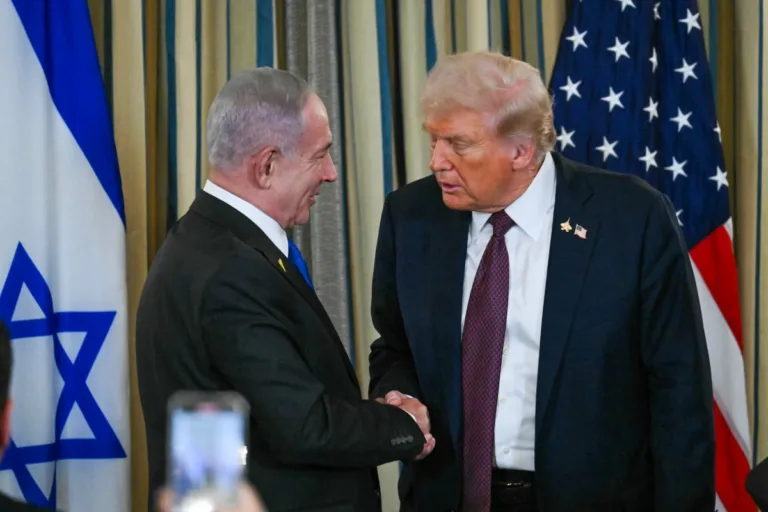

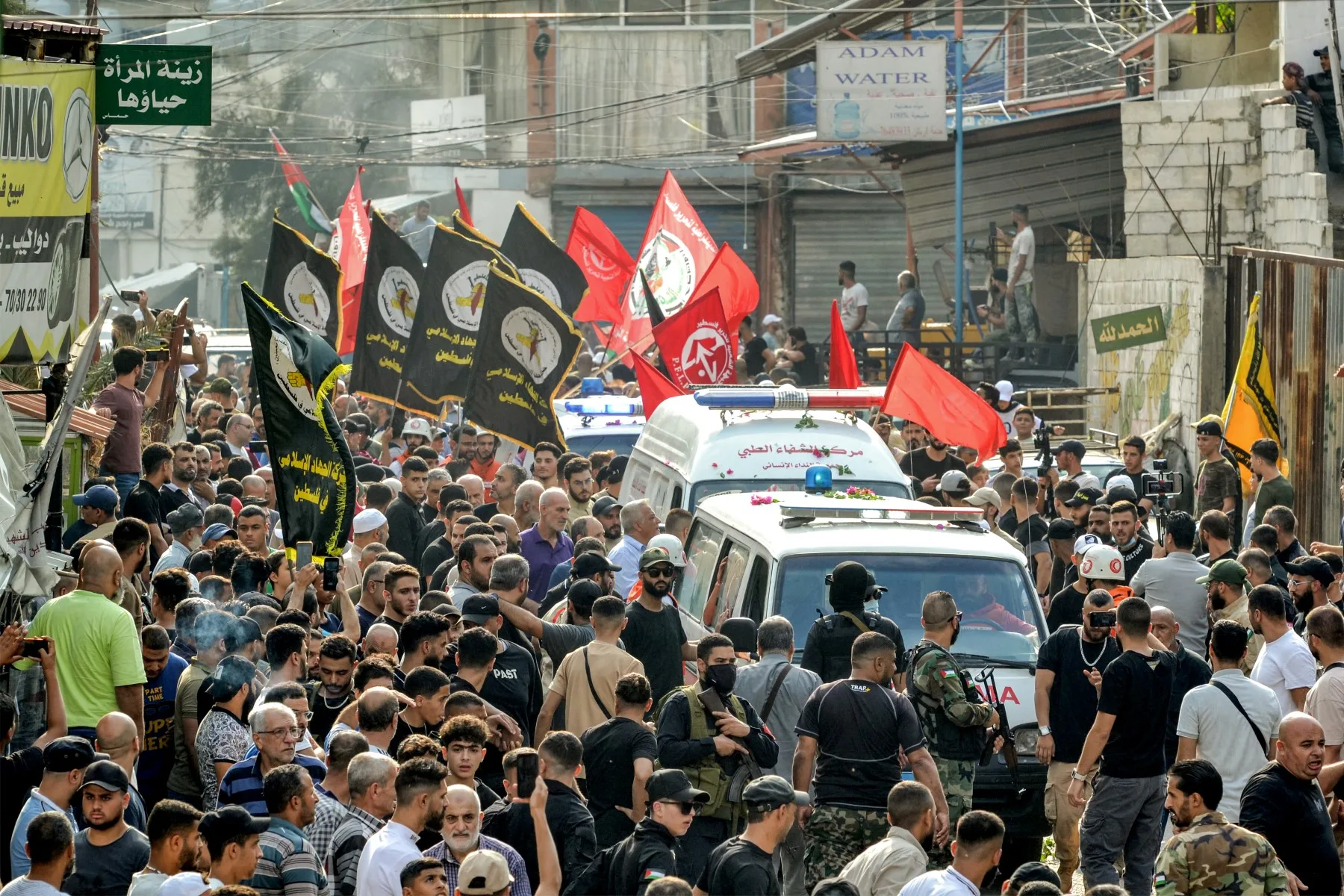
As a fragile ceasefire struggles to hold in the Gaza Strip, negotiations are underway over the future of Palestine, from security and reconstruction to the role of current political leaders in a potential new administration. Qatari and Egyptian mediators, among others, are holding talks with the various political actors involved, seeking a solution acceptable to both Israel and the United States, as well as to Palestinian groups such as Hamas (which governs Gaza) and Fatah (which controls the West Bank).
Another key actor is the Popular Front for the Liberation of Palestine (PFLP), a leftist political and military organization founded in 1967 that operates on the front lines of the armed resistance. The group is one of the signatories of the Beijing Agreement, in which different Palestinian groups pledged to end nearly two decades of division and internal disputes and to prioritize the interests of the Palestinian people.
The split dates back to 2006, when Hamas won the only Palestinian legislative elections ever held, a result rejected by Israel, the United States, and the European Union, which responded by tightening sanctions and blockades against the Palestinian population despite the elections being internationally recognized as free and fair. The pressure led to a violent rupture between Hamas, which has since governed Gaza, and Fatah, which retained control of the West Bank.
Meanwhile, the PFLP continues to operate across all Palestinian territories, including East Jerusalem. BdF spoke with Jameil Saleh Mezher, the organization’s deputy secretary-general, from Egypt. Mezher said that the first goal of all Palestinian groups should be to build a united front to resist Israel. Labeled a terrorist organization by the United States and the European Union, the PFLP says that participating in a new government is not a priority for now.
Mezher discussed how the PFLP envisions Palestine’s future administration, the international wave of solidarity following what he calls Israel’s genocide, the group’s relationship with Iran, and the challenges of maintaining peace in Gaza after years of devastation. Read below:
BdF – What is the PFLP’s position regarding the future government of Gaza and the West Bank?
Jameil Saleh Mezher – The Popular Front’s position on the future of governance in Gaza and the West Bank is based on a comprehensive national vision, rooted in the firm conviction that any future government must emerge from broad national consensus, not from partial settlements or external pressure, especially given the serious historical challenges faced by the Palestinian cause.
In the Front’s view, such a government should not merely function as an administrative body managing citizens’ daily affairs, but as a political and national structure that restores unity, ends internal divisions, and strengthens the Palestinian front that has long been weakened, allowing the occupation to continue its campaigns of extermination, settlement expansion, and Judaization.
We have therefore consistently emphasized the need for an inclusive national dialogue involving all groups — including Hamas, Islamic Jihad, and social forces — with the goal of forming a national unity government under the framework of the Provisional Leadership of the Palestine Liberation Organization (PLO). This government would administer both Gaza and the West Bank, oversee reconstruction, provide relief, reinforce the steadfastness of the Palestinian people, and prepare for comprehensive presidential, legislative, and municipal elections that would establish a new democratic legitimacy.
The Front also believes that any government must resist Israel’s attempts to fragment Palestinian geography and demography, by separating Gaza from the West Bank or through settlement and blockade policies, and must exercise full authority over all Palestinian territories.
If the formation of a unity government proves difficult in the short term, the Front proposes an interim national body under the authority of the Palestinian Authority to temporarily administer Gaza, ensuring unified governance and paving the way for full PA control, while keeping Gaza within the national framework. This body, whether called an administrative or support committee, should operate under the Palestinian government’s reference, with Arab and international backing.
Through this stance, the PFLP seeks to formulate a comprehensive national project and strategy to confront the occupation’s plans, balancing reconstruction needs with continued national struggle, grounded in partnership, social justice, and unified political decision-making.
How will the resistance continue after the end of the genocide?
It is obvious that resistance must continue as long as the occupation persists. This is a fundamental principle for the Popular Front and all resistance groups. However, after the major events of October 7, 2023, continuing the struggle does not mean repeating the same methods or excluding one form of resistance in favor of another. Resistance must adapt to new realities, military, political, and social.
Following these shifts, the resistance must develop updated tools and multiple fronts that include, but are not limited to, armed struggle. Armed resistance will continue, even under a ceasefire, but it must now be part of a unified national strategy, coordinated under a single resistance front that determines timing, scope, and methods of action — particularly in the occupied West Bank, where settler violence, annexation, and Judaization policies have escalated dangerously.
At the same time, diplomatic, legal, and international resistance must not be neglected. The global mobilization that has emerged in solidarity with Palestine can become a powerful lever: street demonstrations, boycott campaigns, and corporate divestment can translate into parliamentary, judicial, and economic pressure against the occupation.
In essence, resistance must evolve from individual acts into a collective, calculated national effort, capable of inflicting greater pain on the occupier while minimizing the burden on the popular base that sustains the resistance.
The PFLP signed the Beijing Agreement promising unity among Palestinian groups. Yet the US and EU still classify the group as a terrorist organization. Would you agree to stay out of a future government to avoid jeopardizing it?
Since the establishment of the Palestinian Authority and its first governments, the PFLP has maintained a clear, independent position. It refused to participate in any of the Authority’s cabinets because their legitimacy was rooted in the Oslo Accords, which the Front opposed. The PFLP has always criticized corruption and poor governance, but has never obstructed the formation of governments. Rather, it has acted as a national opposition voice, advocating reform and accountability.
Before Hamas’s 2006 electoral victory, the PFLP declared its confidence in the government Hamas formed, not out of full agreement with its policies but out of respect for the democratic process and rejection of the Oslo framework. By doing so, the Front avoided being seen as complicit in the subsequent political division.
Today, amid profound changes in the Palestinian landscape, the question of whether the PFLP will join a future unity government is premature. The priority, the Front says, is ensuring that any such government fulfills its mission, to serve the Palestinian people under a national program that transcends groups interests, ends division, and transforms the state into an instrument of liberation rather than a burden.
In short, the PFLP’s position remains consistent: it supports any national measure that restores unity and strengthens Palestinian institutions. Future participation decisions will depend solely on what best serves the unity and goals of the Palestinian people.
Iran has been a historic ally of the PFLP. Have this year’s events, such as the fall of the Syrian government and Israeli attacks on Iran, weakened your ties with Tehran?
Iran has long been a historic ally of the Palestinian people and the resistance, including the PFLP. Recent events, such as the fall of the Syrian government and Israel’s criminal aggression against Iran, may have caused temporary disturbances, but they have not weakened relations in any meaningful way. On the contrary, cooperation continues to grow, based on shared principles of liberation, self-determination, and steadfast support for the Palestinian struggle.
Iran’s support for the Palestinian cause has never been contingent on short-term regional developments. It rests on a firm principle: the Palestinian people’s right to resist occupation and achieve liberation. This support spans political, diplomatic, legal, and logistical dimensions, reinforcing the steadfastness of our people.
In short, our relationship with Tehran remains stable, strong, and evolving a strategic pillar for the Palestinian people and their national project.
Do you believe reconciliation between Hamas and Fatah is possible?
We believe reconciliation between Hamas and Fatah is both possible and realistic, provided there is genuine political will and that national interests come before groups calculations. The Palestinian people can no longer bear the consequences of division, which has gravely weakened their ability to resist the occupation.
The PFLP has long worked to foster reconciliation, believing it must be supported by a genuine Arab role that provides political, economic, and diplomatic guarantees. A comprehensive national framework must also ensure fair distribution of responsibilities, unify legitimate institutions, and restore civil and political rights for all Palestinians.
We remain optimistic, because past experiences have shown that unity is achievable when the collective interest of the Palestinian people prevails over the groups concerns.
What is the PFLP’s position on the executions in Gaza of people accused of collaborating with Israel?
The Front’s position on the executions of alleged collaborators must be understood within Gaza’s complex wartime context. Through repeated wars and attacks on police and civilian institutions, the occupation has sought to destabilize Gaza, form armed gangs, and create chaos. Given the absence of an effective central government amid ongoing bombardments, the resistance took strict measures to preserve internal stability and protect the population.
Such actions, including executions under the PLO’s Revolutionary Penal Code, were taken after exhausting all legal options to pursue individuals accused of aiding the occupation or undermining internal security. These actions reflect a national consensus aimed at safeguarding the Palestinian front against attempts to sow division and disorder.
The Front stresses that the security of the resistance is inseparable from the security of the Palestinian people. Pursuing collaborators is part of defending the national cause and protecting the social fabric against the occupier’s efforts to incite internal strife.
Once stability is restored and aggression ends, legitimate Palestinian authorities will resume full legal procedures: conducting transparent investigations, holding fair trials, and implementing reconciliation and transitional justice measures as part of national recovery.