
The year was 1945. The world was celebrating the end of the Second World War, liberating thousands from Nazi concentration camps. In New York, the newly founded United Nations promised an era of peace.
In Brazil, Getúlio Vargas’s Estado Novo dictatorship was ending. The country lived the “radio era,” humming the songs of Dorival Caymmi, Nelson Gonçalves, Aracy de Almeida, and Carmen Miranda, while movie theaters filled with audiences watching Alfred Hitchcock’s ‘Spellbound‘.
It was in this atmosphere that, on October 27, 1945, Luiz Inácio Lula da Silva was born in Garanhuns, Pernambuco, the seventh of eight children of sharecroppers Aristides Inácio da Silva and Eurídice Ferreira de Melo, affectionately known as Dona Lindu.
Still a child, Lula migrated with his family to São Paulo, where he grew up, married, trained as a metalworker, and began his political life as a union leader in the ABC industrial belt, at the forefront of strikes that helped reopen Brazil’s path to democracy.
Father of five, widowed twice and now married to Rosângela Silva (Janja), Lula often jokes that he has reached 80 “with the energy of 30 and the passion of 20.” He leads his third presidential term and has already confirmed his intention to run again in 2026 for a fourth mandate.
To mark the date, BdF spoke with longtime friends, comrades, and political allies who have shared more than five decades alongside the “son of Brazil’s working people.”
The beginning of it all
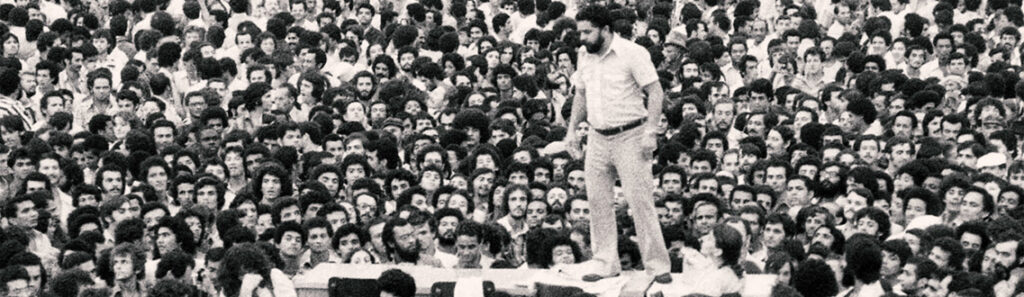
The massive strikes of the late 1970s are widely regarded by historians as the first cracks in Brazil’s military dictatorship, forced open by grassroots mobilization and international public pressure.
It was in that climate that José Genoino met the man who would become one of his closest friends. “I met President Lula at the Metalworkers’ Union in São Bernardo, before the Workers’ Party even existed,” Genoino recalls. “I’d just been released from prison in ’77 and was teaching evening classes. Lula was still the union president, organizing the solidarity committees for the strikes and the first meetings to create a new party.”
During their first conversation, Genoino asked Lula whether the party he envisioned would be tactical or strategic. “He told me: ‘I don’t care if it’s vanguard, strategic or tactical – I want to build a workers’ party.’”
That same moment drew Benedita da Silva, now a federal deputy for Rio de Janeiro, into Lula’s orbit. “I was invited to a meeting in São Paulo where a union leader was talking about forming a party,” she recalls. “At first I thought, what am I going to do there? But they said we needed community leaders, students, religious people – that everyone had to join.” She remembers being captivated: “He said everything I thought. Everything I wished would be done for the poor, for working people. I got excited, and I went out recruiting: ‘Look, it’s a worker’s party, the party of a worker.’”
Both Genoino and Benedita saw in the young metalworker who would soon found the Workers’ Party (PT) the makings of a national leader. “Coming out of prison, after years in hiding, we suddenly encountered a mass leader of Lula’s size,” Genoino says. Benedita adds: “He held huge meetings about labor rights and I could see the talent there.”
Another early ally was Senator Jaques Wagner of Bahia – “Galego,” as Lula affectionately calls him. “My relationship with him has always been one of friendship and admiration – never blind idolization,” Wagner says. “I remember a congress of petrochemical workers in Salvador around 1978, just before the Amnesty Law. Lula got scolded that day because his second son, Sandro, had just been born and Marisa called the hotel furious,” he laughs.
It was during that meeting that Lula first voiced the idea of founding a political party. “He said, ‘Galego, we can’t just keep fighting in the unions, just mopping up water. We need a party that can influence national politics and close the social gap maintained by an elite that thinks only of itself.’”
The struggle for democratization and the 1988 Constituent Assembly
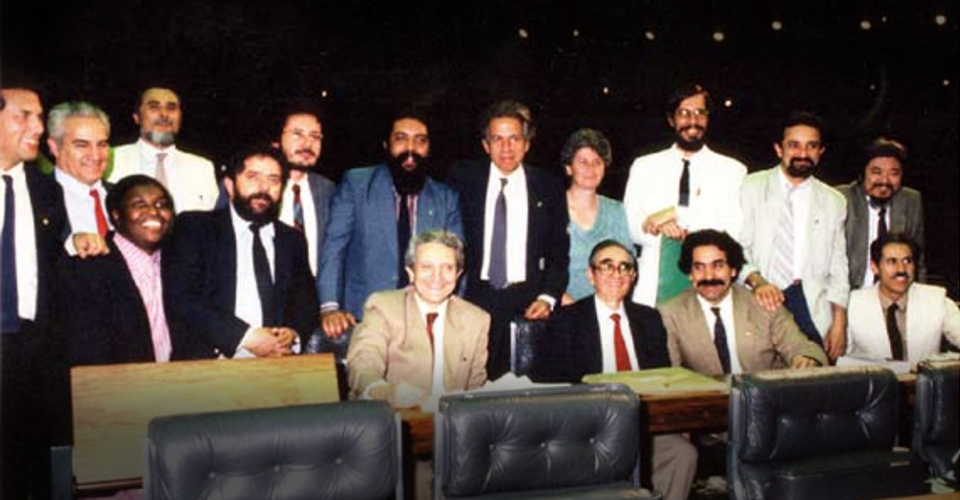
Genoino says his relationship with Lula evolved through disagreements and unity, reaching a turning point in 1988, during the drafting of Brazil’s new Constitution. “When I joined the Constituent Assembly, I wanted to learn how Parliament really worked. I studied the rules, the procedures, the territory,” he recalls. “That’s when our bond deepened – we were building democracy together.”
Benedita da Silva, the only Black woman in the Assembly that wrote the “Citizen Constitution,” remembers their collaboration. “He’d ask, ‘Bené, what should I do in this committee?’ And I’d say, ‘Give strength here – we’re working on this issue.’ That was Lula: first a friend, then a politician. He offered loyalty and understanding before strategy.”
“People talk about politics, but what Lula gives you first is friendship,” she adds. “I’m deeply fond of him.”
Lula 1 and Lula 2
After three consecutive defeats in 1989, 1994, and 1998, Brazil finally elected its first working-class president in 2002, a man with a labor card in his pocket and calluses on his hands.
The images of January 1, 2003, remain historic: thousands of Brazilians traveled from the farthest corners of the country to Brasília, some walking for days, to witness Lula’s inauguration. Many cooled themselves in the reflecting pool before the Planalto Palace, celebrating a milestone, a metalworker had become president of Brazil.
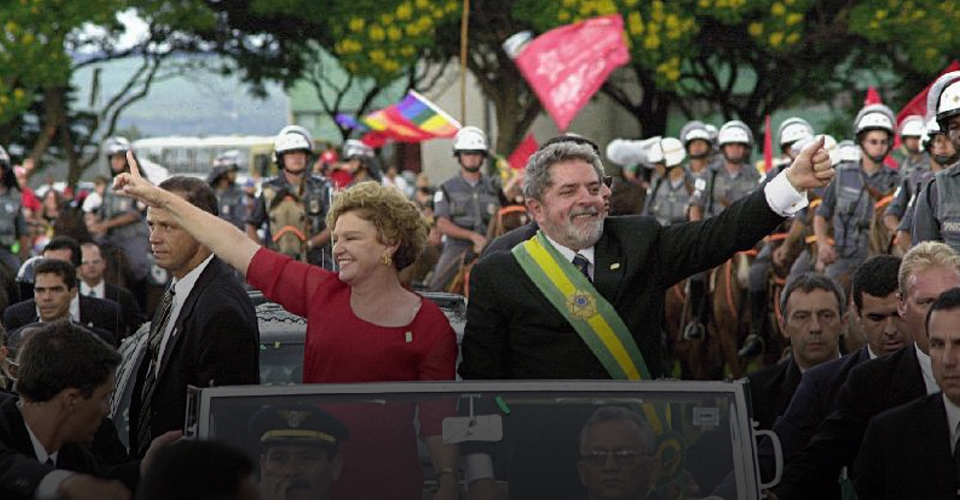
Former lawmaker José Genoino, who ran unsuccessfully for governor of São Paulo that same year, recalls joining the transition team at Lula’s request. “I helped define ministries and appointments. In early 2003, I was everywhere, either a minister without portfolio or a deputy without a mandate,” he laughs. “Our agreement was simple: when we talked, everything was said with complete honesty, but nothing went public.”
Senator Jaques Wagner served in Lula’s first Cabinet, first as Minister of Labor, then as Minister for Institutional Relations, and still finds it hard to list all the programs launched during those first years. “It’s hard not to forget something,” he says. “The scope of Lula’s social policies was enormous, Zero Hunger, First Job, minimum wage increases, family farming support, Bolsa Família, Prouni, technical schools. Here in Bahia, we had one federal university, today we have six or seven. There was one technical school; now there are more than 30. It was transformative.”
He also recalls a now-famous interview in which Lula downplayed the effects of the 2008 global financial crisis, calling it a mere “ripple” (marolinha in Portuguese) rather than a tsunami. “I asked him later what data he had to justify that optimism,” Wagner remembers. “He said: ‘Galego, I didn’t have any. But if the leader of 200 million people doesn’t encourage confidence, if he tells everyone to hide and stop spending, then yes, we’d have a crisis.’”
“And he was right. In Brazil, it really was a ripple, not a tsunami.”
For João Paulo Rodrigues, from the Landless Workers’ Movement (MST), Lula’s first term “put the house back in order” and restored the role of the state in public policy, above all by opening unprecedented channels for popular participation.
“He led a centrist government with massive grassroots participation,” Rodrigues says. “He received everyone at the Planalto, people in street situations, waste pickers, Indigenous leaders, landless workers, LGBTQ communities. That was Lula’s style.” But Rodrigues also points to contradictions. “It was a government of broad alliances that strengthened the centrist bloc in Congress. It modernized agribusiness and poured huge resources into it. And it made poor choices in organizing the judiciary,” he notes.
The hero’s greatest trial
When Lula left office in 2010, he had around 80% approval and had just elected his chosen successor, Dilma Rousseff. He then traveled the world giving lectures on how Brazil had drastically reduced hunger through social policy.
But in 2014, the Lava Jato (Car Wash Operation) investigation, an alliance between prosecutors in Paraná, judge Sérgio Moro, and major media outlets, began targeting political leaders and state companies, especially Petrobras.
By 2019, The Intercept Brasil had exposed the collusion that underpinned the operation. The investigations relied on illegal wiretaps, selective leaks, and political bias, all aimed at one outcome: Lula’s imprisonment, the only leftist leader capable of blocking the right’s plans to remove Dilma Rousseff, which they achieved in 2016.
In March 2018, while traveling through southern Brazil on his “Lula Caravans,” the former president faced harassment, road blockades, and violent attacks. In Paraná, his convoy was shot at, though no one was injured. “From the start, it was clear that the operation’s goal was to destroy Lula,” recalls a BdF report from that period.
Ten days later, Judge Moro ordered his arrest. Lula surrendered voluntarily to federal police in São Bernardo do Campo, after a powerful farewell speech at the Metalworkers’ Union headquarters. “Only the Brazilian people have the right to decide my fate,” he told the crowd. “This process began with a lie from O Globo. I always knew that if Lula could run in 2018, their coup would fail.”
Offered house arrest with an ankle monitor, Lula refused: “I will not trade my dignity for my freedom.” He spent 580 days in a Federal Police cell in Curitiba, enduring the loss of his brother and grandson and being barred from giving interviews or running for office.
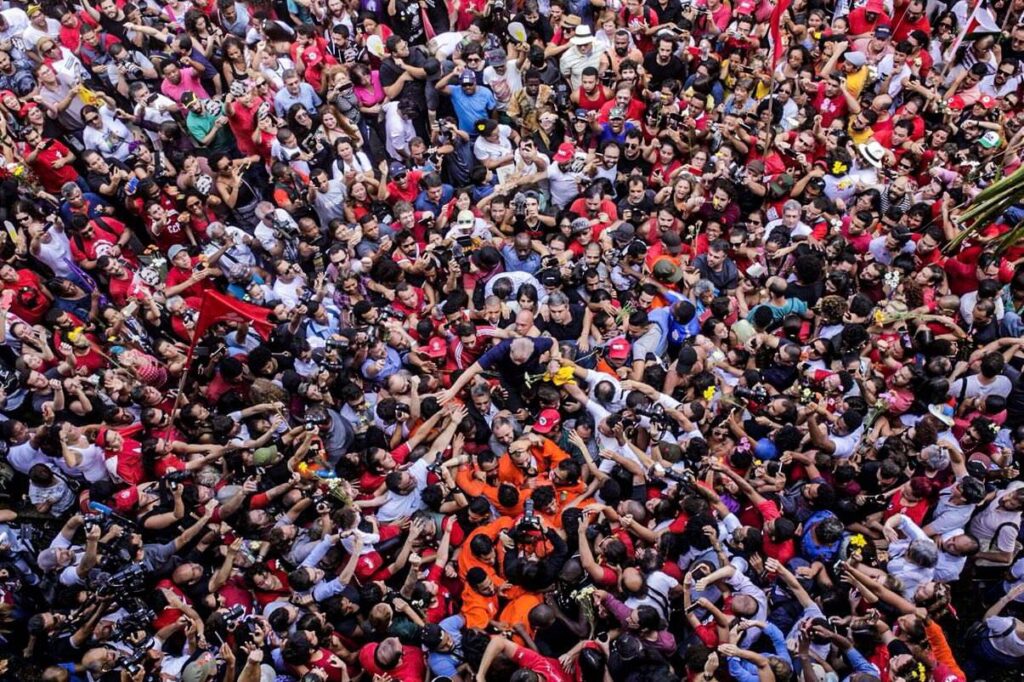
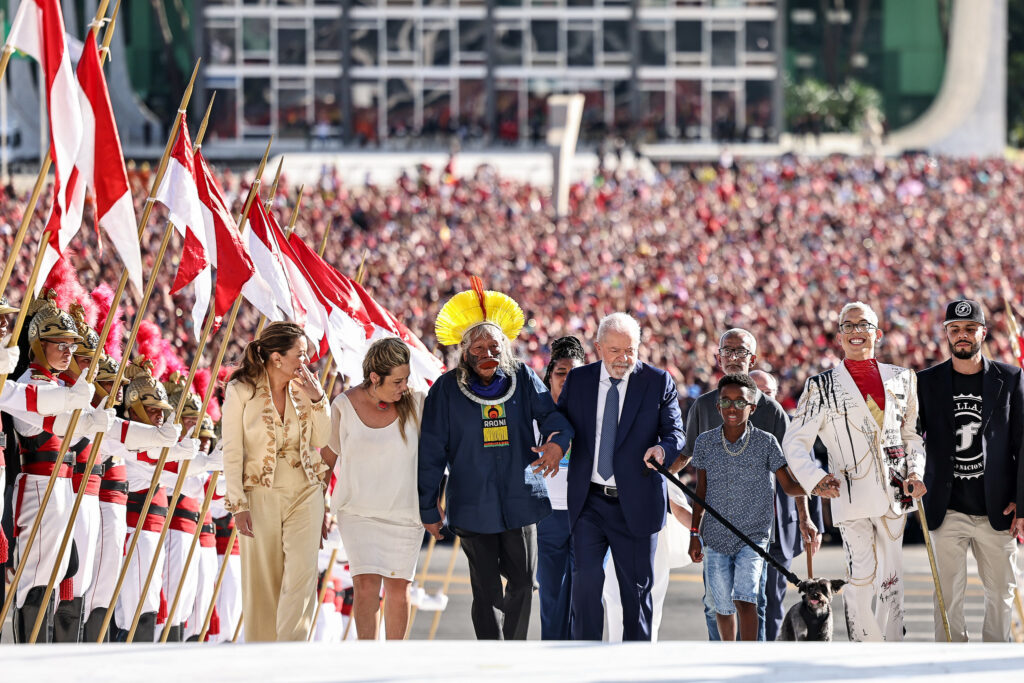
Released on November 8, 2019, after the Supreme Court ruled that imprisonment after a second-instance conviction was unconstitutional, he was fully exonerated in 2021 when the Court declared Moro biased. In 2022, Lula’s “hero’s journey” reached its reward: with more than 60 million votes, he was elected president again, defeating the incumbent, Jair Bolsonaro, who became the first Brazilian president to lose re-election.
Lula 3… and Lula 4?
Lula’s third administration began under the slogan of “reconstruction.” After years of institutional erosion under Bolsonaro, his government focused on rebuilding social programs and democratic institutions.
The results are emerging. According to Finance Minister Fernando Haddad, Lula will close his term with the best fiscal performance since 2015, projecting a 0.25% primary surplus in 2026. Unemployment is near historic lows at 5%, and economic growth has held above 3% for three consecutive years.
In August, the UN Food and Agriculture Organization (FAO) confirmed that Brazil had once again left the Hunger Map, after inheriting 33 million people in severe food insecurity in 2022.
For José Genoino, Lula’s fourth term should go beyond restoring democracy, it should pursue deep structural reform. “We’ve governed by putting the people in the budget, by improving income and jobs,” he says. “But Brazil still needs structural change: agrarian reform, democratizing the media, reforming the judiciary and Congress, and ending military tutelage.”
Deputy Benedita da Silva believes Lula’s popularity rests on concrete results. “People want Lula re-elected. Those who benefit from his programs know the difference between governments. Brazil feels closer again, and re-election would complete that cycle.” Senator Jaques Wagner echoes that sentiment. “His mother, Dona Lindu, told him: ‘Keep going, don’t give up.’ That’s what drives him, to lessen injustice, to preach peace, to avoid feeding conflict. I see no one more prepared, more energetic, or more capable of leading Brazil.”
For João Paulo Rodrigues (MST), Lula’s administration has recovered what was lost under six years of right-wing rule but must advance toward a new development model. “We can’t rely only on compensatory policies. We need structural ones, a broad agrarian reform as part of a national project for development.” He notes that while US$78,1 billion were invested in social assistance, just US$55,6 million went to agrarian reform. “We’d need at least US$372 million. That would generate jobs and income, while defending food sovereignty and the environment.”
A historic legacy
To Genoino, Lula’s legacy transcends contradictions. “He is a product of the working class, of its organization, its struggles, and its dilemmas. Lula loves politics. His authenticity is recognized by workers. He may have made ambiguous choices at times, but his legacy is monumental.”
He compares Lula’s stature to Brazil’s greatest leaders. “Like Vargas, Brizola, Goulart, or Juscelino, Lula is a son of the Brazilian people, emerging with phenomenal political skill.”
The magnitude of being the only Brazilian ever elected president three times can only be measured in the future. But as of today, Lula remains the natural favorite for re-election in 2026, when he will be 81 years old.
Tributes
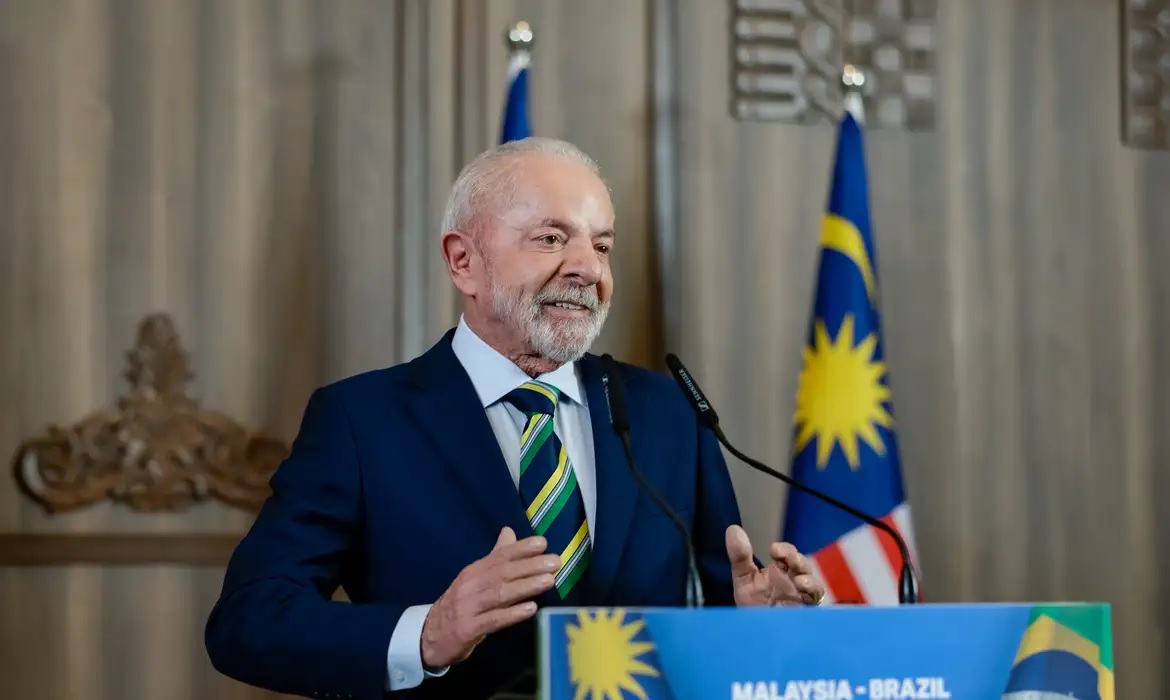
This year, Lula spends his birthday in Kuala Lumpur, Malaysia, attending the Asean Summit, but his friends sent messages of affection through BdF:
“President Lula, what I wish for you is re-election, because your re-election is the re-election of the Brazilian people. You deserve to live, to keep serving those who need you most,” said Benedita da Silva.
“You represent hope itself for our people. Receive my militant embrace,” said José Genoino.
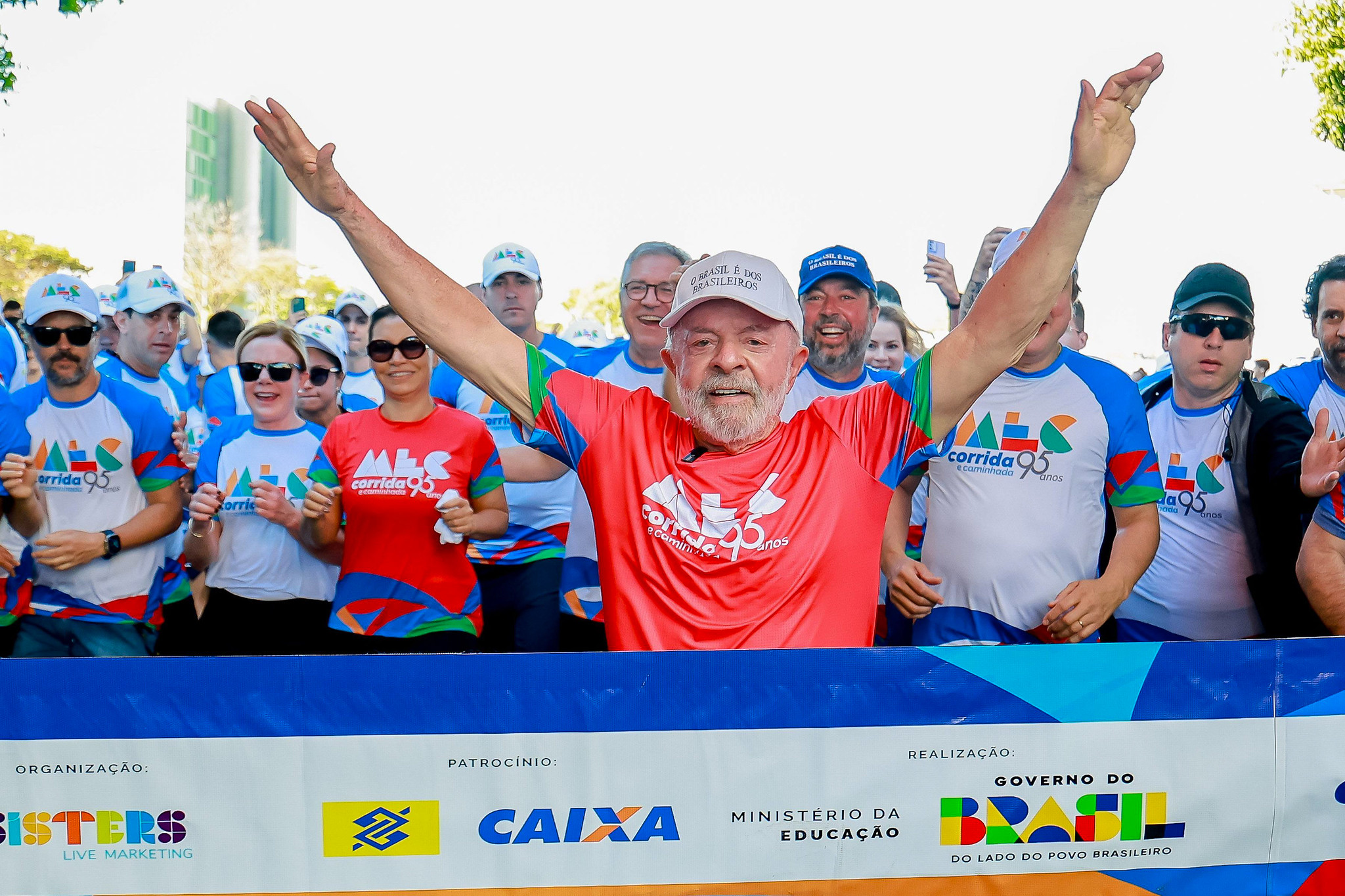
“Not everyone turns 80 running eight kilometers an hour, full of energy, hopping from country to country,” joked Jaques Wagner. “May God bless you and give you light to keep leading Brazil.”
“I wish you health and wisdom to keep guiding our country,” added João Paulo Rodrigues. “And I hope you still find time for your fishing, but never stray far from the people.”
In Rio de Janeiro’s upcoming Carnival, the samba school Acadêmicos de Niterói will parade with an entire theme honoring Lula’s life, from Garanhuns to the Planalto Palace. Its samba-anthem says: “A poor man’s son becomes a scholar / There’s food on the worker’s table / Hunger is in a hurry.”