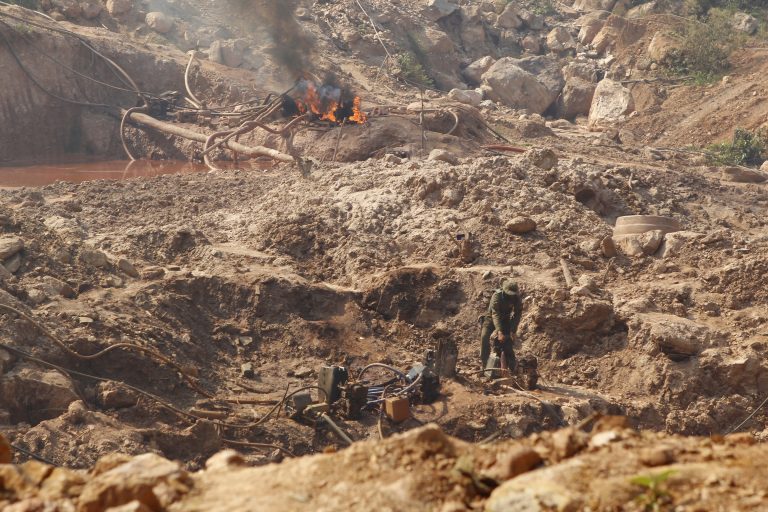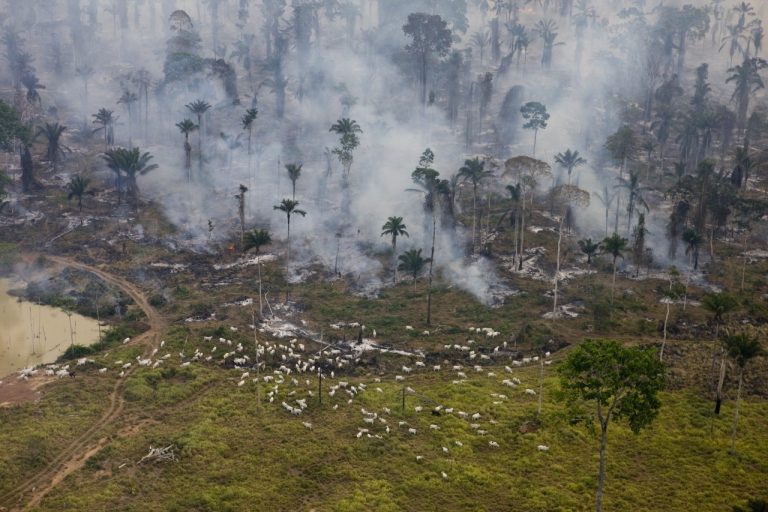
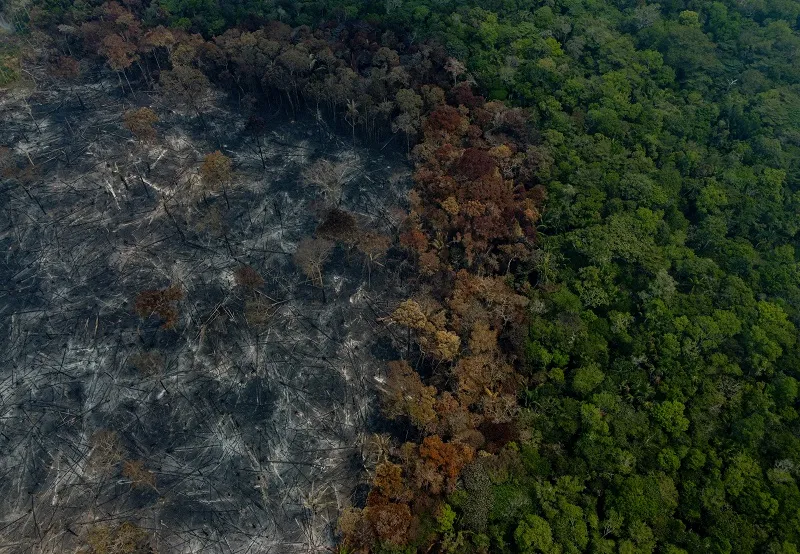
On the eve of the 30th United Nations Climate Change Conference (COP30), the Brazilian federal government presented encouraging environmental results this Thursday (30), showing more than an 11% reduction in deforestation in both the Amazon and the Cerrado. In the Amazon, it is the third-best result since monitoring began in 1988.
“We want to lead by example,” said Minister of the Environment and Climate Change Marina Silva during a press conference announcing the figures. Marina emphasized that Brazil leads not only with concrete results but also as the only country to set a target of reaching zero deforestation by 2030.
According to Greenpeace, achieving this goal still requires a permanent and global action plan to protect forests. “It is essential to establish permanent and institutionalised safeguards that do not depend on political cycles or government will, in addition to ensuring the implementation of robust action plans for periods of greater climate vulnerability,” said Ana Clis Ferreira, spokesperson for the Zero Deforestation initiative at Greenpeace Brazil.
The Climate Observatory issued a statement describing the results as “an achievement of Brazilian society,” identifying two lessons and two warnings.
The first lesson is that zero deforestation is within reach and depends only on the government and society. The second is that the Brazilian Institute of the Environment and Renewable Natural Resources (Ibama) is not “against the government.” The warnings: reductions will become increasingly difficult going forward and more dependent on economic alternatives, and that greenhouse gas emissions control will increasingly need to come from other sectors.
Historic Numbers
Between August 2024 and July 2025, the area deforested in the Amazon totaled 5,796 km², representing an 11.08% drop compared to the previous period (August 2023 to July 2024), according to Prodes data from the National Institute for Space Research (Inpe).
This is the third-lowest rate ever recorded for the region since monitoring began in 1988. It also marks the third consecutive year of decline. Compared to 2022, the last year of the Bolsonaro administration, the current government has achieved a 50% reduction in Amazon biome deforestation in 2025.
In the Cerrado region, deforestation reached 7,235.27 km² in the same period, an 11.49% decrease compared to August 2023 to July 2024. It is the second consecutive year of reduction, after five years of increases since 2019.
As a result, 733.9 million tonnes of CO2 emissions were avoided, equivalent to the combined 2022 emissions of Spain and France, according to government estimates.
Inspection and Fire Control
The government attributes the positive results mainly to stronger enforcement and increased investment.
“These results are not the work of chance. The excellence of Inpe and the precision monitoring we conduct provide the foundation that allows us to truly see the reality of our territory,” said Minister of Science, Technology and Innovation Luciana Santos.
In the Amazon, Ibama increased environmental infraction notices related to flora by 81% from 2023 to 2025, compared to the 2020–2022 period. Fines increased by 64%, and embargoed areas by 49%.
In the Cerrado, flora-related infraction notices rose by 24% and fines surged by 130%, with a 26% increase in embargoed areas.
“Crime forms a perverse alliance with the climate issue. That is why we have mechanisms to restrict criminal access to the market, so it becomes clear that crime does not pay,” stated Marina Silva.
Beyond enforcement, the resumption of investments and support from international donors also played a key role. The Amazon Fund alone received about US$ 668 million over the past three years.