

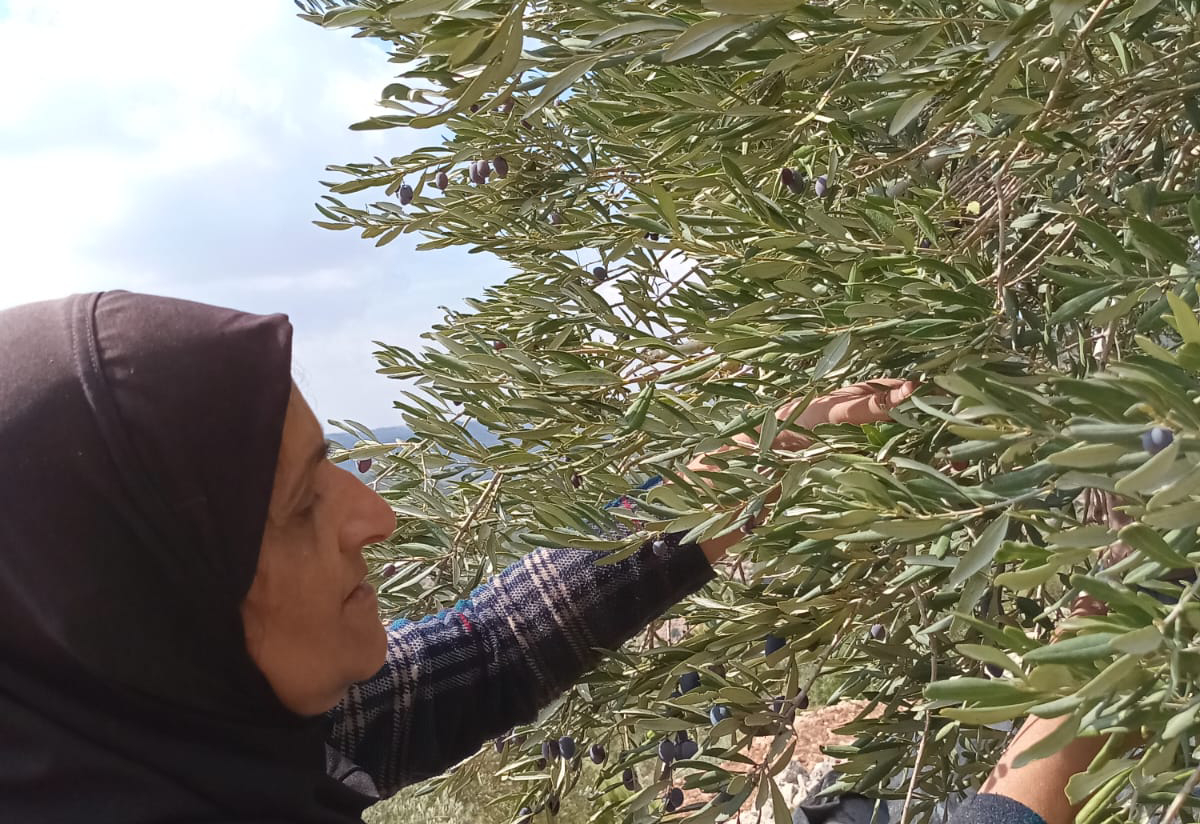
Ruayda Rabah was born and raised in Brazil and moved to the West Bank as an adult to care for her family’s land, as her Palestinian relatives had emigrated to Brazil. Over the past decades, she has watched the situation of her people deteriorate as the Israeli occupation advances, meter by meter, over Palestinian territory.
This year, the third year of the genocide in Gaza, things have become even worse. She and many others in her village were simply prevented from carrying out their annual olive harvest. Worse still, she saw the fruits of their labor stolen by Israeli settlers.
Olive trees are Palestine’s main agricultural product, providing direct income for 100,000 people and serving as a national symbol. These are century-old trees, planted today so that future generations may harvest them, an inheritance that keeps the bond with the land alive.
Because they are both symbol and livelihood, olive trees are a target of Israel. This year, Jewish settlers, with the complicity, and often the assistance, of Israeli soldiers, have carried out hundreds of daily attacks on the harvest, which officially began in early October but has already been severely disrupted.
Read below the full interview:
BdF: How was this year’s olive harvest?
Ruayda Rabah: Unfortunately, this year we were prohibited from accessing certain plots; we were expelled. Some people were even arrested, others had their tools seized and their cars destroyed. Something we never imagined could happen did happen: we were assaulted, expelled, and banned from harvesting on land that is in Area B [administered jointly by the Palestinian Authority and Israel], and we have documents proving this. They claimed the land was in Area C [administered solely by Israel].
How many trees do you have? Were you expecting enough income for the entire year?
Well, we have one plot in Area C with 99 olive trees. My father’s other plots are all in Area B and have around 400 olive trees. And of course, harvest season is eagerly awaited by everyone because most Palestinians’ income comes from olives, used to make oil, pickles, and even the ground seeds, which are burned for heat.
Since we were unable to harvest this year, family incomes dropped by about 80%. People could not plough the land, spray the groves, or prune the trees because they had no resources, which normally come from selling the olive oil. Many did not even have oil for household use because they were prevented from entering their own land. The worst part is that settlers moved in and harvested the olives, including those belonging to my father’s family. Our olives were picked by settlers.
You were born in Brazil and then moved to the West Bank. When and why?
I was born in Brazil, I studied in Brazil, I got married in Brazil. After getting married, my husband and I came to Palestine. This was in 1999, after my father passed away, because the intention was to take care of his olive groves, which had been left unattended. My uncle was already very old and could no longer look after them.
The plan was for me to move here, finish my studies, and then take care of the land. That’s why I came. I arrived in 1999 and I’ve been here ever since, caring for these olive trees.
How frequent are the attacks by settlers and security forces? How do they happen? Is there any way to defend yourselves?
The attacks have become daily. After October 7 [2023], they became constant, and settlements around the town expanded. A new settlement is even being built very close to Area B. Right in front of my house there is a settlement that sits partly in Area B and partly in Area C, and they are expanding. This expansion is getting dangerously close to our homes.
This makes settler attacks frequent, especially against people who go down to farm. Winter is coming, the planting season, cabbage, lettuce, oregano, everything used in winter. And we are being prevented from planting. In other words, the economy is being strangled.
Settlers carry out attacks inside the town as well, even invading homes. They break in, assault residents, and always, of course, accompanied by the army. They are all heavily armed. There is no way to resist, because Palestine has no army and the population is not armed, while those attacking us are soldiers and settlers armed to the teeth, acting with extreme violence.
In addition to being armed, they come with dogs. They have been invading homes indiscriminately, burning cars. The only thing people can do is try to escape unharmed. Nothing else is possible, because if you try to react, you are killed on the spot.
Do you receive any support?
With the help of organizations, we support a group of women farmers by helping them access seeds, local, native seeds, something Israel has also been destroying. They have been burning crops, especially wheat, tobacco, and native olive trees.
We have been working closely with these women, visiting their towns, distributing seeds, and teaching them how to fertilize and plant. Another serious problem we face is that settlements are approaching so closely that sewage is being released into our irrigation water, ruining crops and making the soil infertile due to the salinity in these waters.
Has the harvest ended?
Unfortunately, the harvest is over because people cannot reach the larger groves. So the harvest season has ended, also because this year the olive trees, like coffee plants, have cycles: some years they produce a lot, others very little. And this was one of the low-yield years, made worse by severe lack of rainfall, because the climate has changed significantly. With almost no rain and no access to the large groves, this year’s harvest was very weak.
