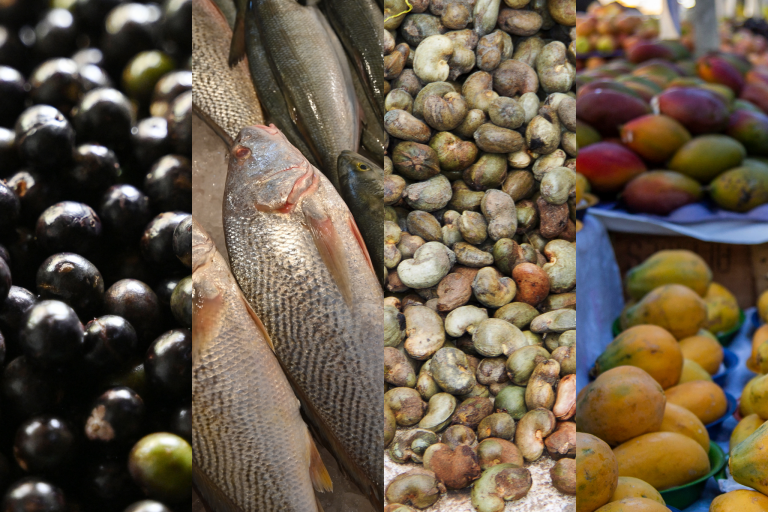

The White House published an executive order on Friday (14) reducing import tariffs on coffee, beef, açaí, and fresh or frozen tropical fruits. Since August, the United States has applied a 50% tariff on Brazilian products. At the time, U.S. President Donald Trump admitted that the measure had a political character and that its reversal was linked to former president Jair Bolsonaro’s absolution in the coup plot investigation. According to the White House, the measure concerns the reciprocal tariffs announced by Trump in April.
Brazilian authorities say the parameters of the new tariffs remain unclear, as the executive order makes no direct mention of any country and only lists the products that will see reductions. Brazil is expected to benefit, since it is the largest supplier of coffee to the U.S. and one of the main exporters of beef. The Ministry of Development, Industry, Trade and Services reported that it is analyzing the executive order signed by Trump.
On Saturday morning (15), Vice President Geraldo Alckmin commented on the 10% reduction announced the night before. He celebrated the decision by the U.S. president, saying it was “in the right direction,” but noted that for some products, such as coffee, the situation remains delicate. “40% is still high, it makes no sense,” he said about the remaining tariff on the grain. “Brazil is the main exporter to the U.S., 33% [of the total sold in the U.S. market] is Brazil, and it is Arabica coffee, the most consumed there. But these are successive advances.”
He pointed out that “there is a distortion that needs to be corrected,” since “everyone had 10% less, but Brazil already had an additional tariff,” which is the work that still needs to be done. “Orange juice was well addressed, it had 10% and it went to zero, no tax. Coffee also reduced 10%, but a competitor reduced 20%.” In addition to coffee and orange juice, tariffs on beef, açaí, and fresh or frozen tropical fruits were also reduced.
The decision to reassess tariffs on Brazil may be a direct result of the recent rapprochement between the two countries, which culminated in the meeting between Trump and President Luiz Inácio Lula da Silva in October in Malaysia. “After considering the information and recommendations these officials provided me, the progress of negotiations with various trade partners, the current domestic demand for certain products, and the current domestic capacity to produce them, among other factors, I determined that it is necessary and appropriate to further modify the scope of products subject to the reciprocal tariff,” Trump stated in the executive order.
According to Alckmin, three factors contributed to the progress in negotiations: “President Lula always guided dialogue; Brazil wants to resolve the issue.” He also cited “the sensitivity of the American government, which made the right decision for consumers, after all, it is the consumer who pays,” and highlighted the role of the private sector, which “has also helped, both American and Brazilian businesspeople.”
*With informations from G1 and Agência Brasil