
Standing before the port where his ancestors once disembarked, Roland Boye reflects on the origins of his people. He is part of the sixth generation of the Tabom, descendants of formerly enslaved Africans who were freed in Brazil and later returned to Ghana, on the West African coast, in a migration that intensified after the Malê Revolt in Bahia, in 1835.
“We are proud of our history. It is sad that our great-great-grandparents were taken as slaves, but in the end, they returned victorious, bringing many skills and knowledge to teach the people of Ghana,” Boye says.
Like the Agudás in Benin and Togo, and the Amarôs in Nigeria, the Tabom are part of the estimated 3,000 to 8,000 Afro-Brazilians who returned to Africa from the late 18th century onward. From this return, whether forced or voluntary, emerged communities that still survive today, preserving traditions brought from Brazil. This report is the first in a special series by Radio BdF, exploring this enduring cultural heritage.
Initially, the first groups of returnees who arrived on the African continent were sent by the Brazilian Empire into the custody of slave traders or people involved in the trafficking business, such as the Luso-Brazilian Francisco Félix de Souza, the first among the so-called Chachás, who landed in Ouidah, Benin, between 1788 and 1792.
From the mid-1830s onward, however, the return flow intensified and became directly linked to popular uprisings in imperial Brazil, especially with ships departing from Bahia.

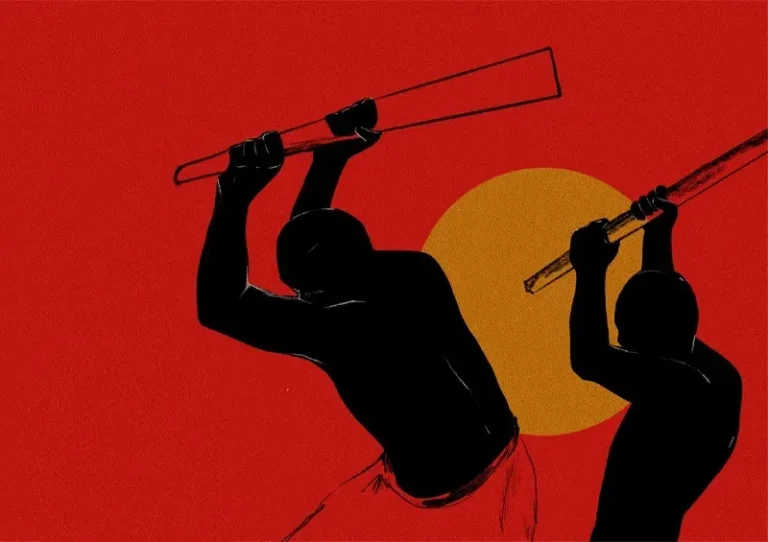
Many of the first Tabom belonged to the Hausa Muslim ethnic group and, according to historical accounts, may have been forcibly sent back as a consequence of their participation in the Malê Revolt. The uprising, which took place on January 24, 1835, brought around 600 enslaved and freed Black people to the streets of Salvador, seeking to overthrow the slave regime and end the imposition of Christianity.
At that time, the return to Africa — whether voluntarily or by force as deported rebels — became increasingly common. Between 1835 and 1837, the researcher Mônica Lima e Souza compiled data showing that about 993 people were returned to the continent, the period with the highest number of returns.
The ones that were not forcibly returned for taking part in the largest slave-led revolt in Brazilian history, around 200 people, left Bahia to escape persecution and racism. For the Empire, freed Brazil-born Black people were seen as potential threats for a new uprising.
Among the legal measures adopted by the colonial authorities in the years following the insurrection were laws allowing the deportation of Black people who “disturbed public order.” In Bahia, the center of the revolt, provincial laws also prohibited freed Black people from buying houses and required judicial authorization even to rent a home.
“The first people who came from Bahia arrived in 1836. The port was the city’s main entryway. Once they got here, they went to see the local chief, from the Mantse Nii Kwaku Ankrah royal family, who gave them a piece of land to cultivate. That area is now known as Brazil Lane, because it was Afro-Brazilians from the diaspora who built the houses on that street,” recalls Boye.

Arrival in Ghana
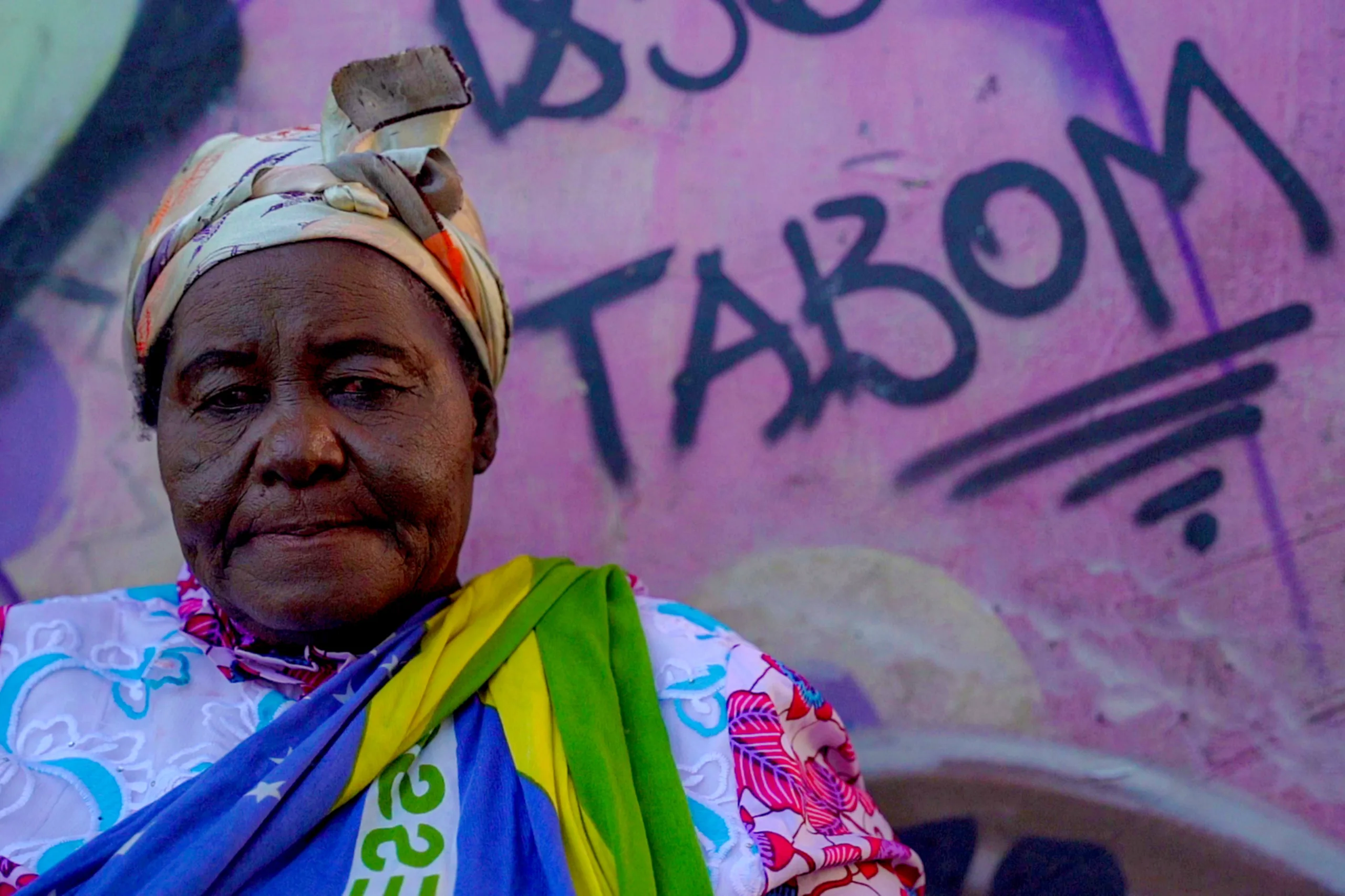
The returnees were welcomed by the Ga people, settlers of Ghana’s coastal bay area. According to oral tradition, since they did not understand the local language and often replied “tá bom” (“okay”) to any conversation, the Ga began referring to them as the Tabom people.
The multiple skills brought from Brazil were what led Ga chief Mantse Nii Kwaku Ankrah to welcome the newcomers. It was Azumah Nelson, later known as Nii Azumah I, the first Tabom chief, who took on the responsibility of distributing land in the Jamestown neighborhood, one of the oldest and most populated areas of Accra.
Near Fort James, built in 1673 by the Royal African Company as one of Britain’s main trading posts for gold and enslaved people, the Tabom built their first stone houses, including the historic Casa Brasil, constructed in 1837. The community grew around it.
“According to the stories, they knew they were from Ghana. Their parents and grandparents had been taken as enslaved people, but now they were free. So they wanted to return to see where their ancestors had come from. And when they arrived, they were warmly welcomed in Ghana, embraced in Accra. They knew they were Ghanaian, but not their specific place of origin, so they settled in Accra. Today, we celebrate festivals with the Ga people and share their culture. We are half Ga, half Brazilian,” explains Boye.
The presence of the Tabom people transformed Ghana’s capital through new construction techniques, irrigation methods, and especially tailoring skills.
“The first president of Ghana and leader of independence, Kwame Nkrumah, was close to the Tabom family. We fought not only alongside Nkrumah but also for the people of Accra,” says Roland.
Throughout the 19th century, the Tabom community grew with the arrival of new Afro-Brazilian returnees, many of them formerly enslaved people who had been manumitted or freed and sought in Ghana the opportunity to build the life that slaveholding Brazil had denied them.
Surnames such as Ribeiro, Lima, Moura, Vieira, Da Costa, and Peregrino became common among the Tabom. Dishes like feijoada, cozido, and acalalá also became part of local cuisine, the latter being a delicacy similar to the Bahian acarajé, though without vatapá, caruru, or other fillings.
In his book ‘Os Retornados‘, author Carlos Fonseca notes that as the community expanded and land speculation in Accra intensified, many Tabom families were gradually pushed to more remote areas of the city, where they resumed cultivating agricultural crops they had learned to grow in Brazil.
Roland Boye explains that the Africans who returned to Ghana did not form a single, uniform group: they came from different ethnic backgrounds, spoke various languages, and practiced distinct faiths. What ultimately united them was their shared experience in Brazil, shaped by collective life on plantations and the Afro-Brazilian cultural traditions they brought back across the Atlantic.
“During the slave trade period, many Yoruba people from Nigeria were taken to Bahia. And in Bahia, Nigerians, Ghanaians, Togolese, and Beninese lived together as one people. They mixed, did everything together. So, in Bahia, all the West African traditions were practiced. They spoke Yoruba and created songs and customs in that language,” says Boye.
Agbê: a link between Africa and Brazil

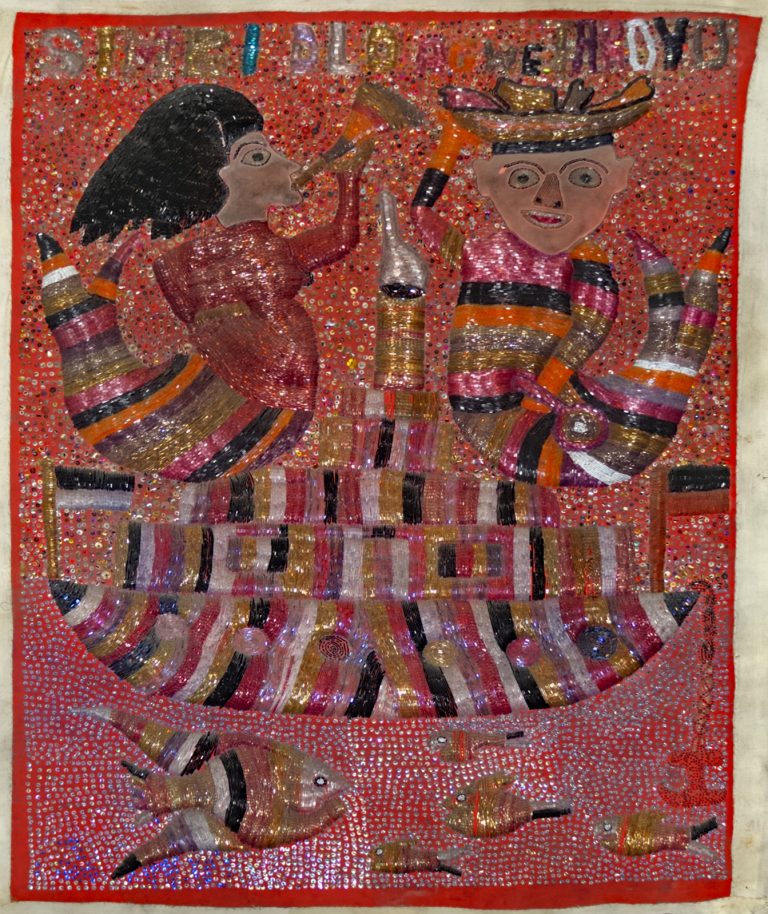
Although the Portuguese language has been almost entirely lost, traces of Brazilian influence remain visible in cuisine, religion, and, above all, music.
The Agbê rhythm, of Yoruba origin, lies at the heart of the Afro-Brazilian identity that survived the Atlantic crossing. Eric Morton, a master percussionist known as Nii Kwashie II, is the guardian of Agbê among the Tabom people.
He explains that before arriving in Ghana, the Tabom community spent around 40 years in Lagos, Nigeria. It was there, he says, that they came into contact with the rhythm and incorporated it into their culture.
“Agbê is a link between the Tabom people and the Brazilian people. We are together. We dance together, we do everything together. The only difference is that the songs are sung in Yoruba,” says Morton.
With more than 40 years of dedication, he was the first member of the community to travel to Bahia, in 2016, to reconnect with the history of his ancestors. The master visited Candomblé temples, joined capoeira circles, and attended rehearsals of Filhos de Gandhy and Olodum.
“Agbê doesn’t come from Brazil. In Brazil, they have samba and capoeira, but I sent Agbê there, to capoeira master Cobra Mansa, so he could teach it to Brazilian percussionists. We brought Agbê to Brazil, I sent it to several universities, played there, and met great Brazilian musicians who really liked the rhythm,” he recalls.
Lula’s visit
In 1961, diplomat Raymundo de Souza Dantas was sent by President Jânio Quadros to establish Brazil’s first embassy in postcolonial Africa. Upon arriving at the Tabom people’s courtyard, he and his wife, Ideline Botelho Souza Dantas, were welcomed to the sound of the old Bahian song Viva Iáiá, Viva Iáiá.
The visit of Dantas, the first Black man to officially represent Brazil abroad, marked a milestone in restoring ties between the returnees and their ancestral land.
In 2005, Luiz Inácio Lula da Silva became the first Brazilian head of state to visit the Tabom people in Ghana, accompanied by then-ministers Gilberto Gil and Celso Amorim.
During the celebration organized by the community, Lula was honored with a finely embroidered white cotton batakari, a kente stole, and sandals, traditional gifts offered to local chiefs. Eric Morton remembers the day vividly.
Following Lula’s visit, the Brazil House, the historic two-story building constructed by the first Tabom settlers, was restored and turned into a museum. It has since closed, awaiting a new round of renovations.
“The president Lula was here. I sang with him, and he told me he had never seen an African sing a Brazilian song before. He said, ‘Eric, you’re the first person I’ve seen sing a Brazilian song.’ We sang right here, in this same yard,” Morton recalls.
Viva Iáiá
Two drums, an agogô, and a shekere form the rhythmic base of Agbê. In the circle, Eric Morton leads call-and-response chants that honor the Yoruba orixás. The music invites matriarchs to dance steps reminiscent of the samba de roda from Bahia’s Recôncavo region.
The worship of Xangô, the orixá of thunder and justice, is one of the most deeply preserved elements of this diaspora. Through Agbê, the Tabom celebrate births, baptisms, weddings, and, above all, death.
One of the celebratory songs that still carries verses in Portuguese is ‘Viva Iáiá, Viva Iáiá‘, as Morton explains:
“When someone dies, at midnight we say a prayer over the body. After the prayer, we sing Viva Iáiá, Viva Iáiá for the deceased. We place a cross on their head, walk around the body, and then everyone steps away. This means that the spirit is returning to Brazil because, when we die here, our body may stay, but we believe the soul goes back to Brazil, since we are Brazilian,” he says.
“We turn death into a celebration. It’s something natural. When a Tabom dies, we hold this midnight ceremony with songs and prayers as a farewell,” he adds.
For young Mahama Nelson, the legacy of his people’s resistance will not fade with time. Anyone visiting Brazil Lane in Accra, Ghana’s capital, will see young people like him, introduced early to Agbê, honoring Xangô, and dancing to the rhythm of their ancestors.
“When Eric saw me at a festival, he said, ‘Ah, you know how to play.’ I said yes. Then he handed me the drum, and now I’m playing. They brought the drums, so I have to help. We must support this so it continues for a long time,” he concludes.