“I am happy with our foreign policy. Brazil has become a global player. Today, Brazil is respected in all international forums,” President Luiz Inácio Lula da Silva said during a press conference on December 18. In the year-end assessment, foreign policy played a central role. Brazil hosted key multilateral forums, such as the Brics Summit and the 30th United Nations Climate Change Conference (COP30), receiving high-level delegations from all parts of the world.
At the same time, the president visited at least 20 countries and took part in a series of multilateral meetings abroad, including the G7 in Canada, the G20 in South Africa, the Association of Southeast Asian Nations (Asean), and the World Food Forum in Italy, in addition to delivering Brazil’s traditional opening address at the United Nations General Assembly in New York.
Amid all these commitments, Brazil had to deal with the imposition of additional tariffs on its exports by the Donald Trump administration, in an attempt to interfere in Brazil’s domestic political affairs. The Brazilian response to the tariff hike, described by analysts as “cautious,” involved intensifying efforts to open new markets for Brazilian products, a strategy that, according to the government, allowed the country to face the situation with relative calm.
The year ends with the threat of U.S. military aggression against Venezuela. Brazilian diplomacy is closely monitoring the situation, which could affect Brazil, but has remained largely silent. 2025 was Brazil’s year on the global stage.
The Trump factor: Bolsonaro-aligned tariffs
The main challenge for Brazil’s foreign policy in 2025 was the imposition of 50% tariffs on Brazilian products by the United States government. The announcement was made on July 9 by U.S. President Donald Trump on social media.
In the statement, Trump linked the tariff hike to an alleged “witch hunt” against former president Jair Bolsonaro, who at the time was a defendant in the criminal case investigating the attempted coup in Brazil. Trump also criticized Brazil’s justice system, claimed the bilateral relationship was “unfair,” and threatened to double down if Brazil adopted retaliatory trade measures.
In a video shared on social media, Bolsonaro’s son, federal lawmaker Eduardo Bolsonaro, admitted to having coordinated with members of the U.S. State Department to impose tariffs on Brazilian products as a way to pressure Brazilian authorities not to prosecute the former president.
Soon after, the U.S. government issued an executive order formalizing the tariffs, while establishing a long list of nearly 700 exemptions. At the same time, Brazil decided to file a complaint with the World Trade Organization (WTO) against the tariff measures.
Alongside the tariffs, the Trump administration also decided in July to apply the Magnitsky Act against Supreme Court Justice Alexandre de Moraes and his wife, as another means of pressuring the justice, the rapporteur of the coup case, to alter the course of Bolsonaro’s trial. The law provides for a series of sanctions and was originally designed to target alleged human rights violators.
In August, in response to the crisis, the Brazilian government announced the “Brazil Sovereignty” plan, releasing approximately R$30 billion in credit to exporters affected by the tariffs.
From chemistry at the UN to a meeting in Malaysia
During the UN General Assembly in New York, Lula and Trump had a brief encounter that, according to the U.S. president, involved a certain “chemistry” between the two. The gesture was interpreted as a signal of openness to negotiations to restore bilateral relations.
On October 6, the first official direct contact between the two presidents took place when Trump called Lula. During the conversation, the Brazilian president requested the removal of the 40% surcharge imposed on Brazilian products, as well as the lifting of sanctions against Brazilian authorities. He also signaled the possibility of an in-person meeting during a trip to Malaysia for the ASEAN summit, to which both leaders had been invited.
On October 26, Trump and Lula met in Kuala Lumpur, Malaysia. The conversation lasted about 50 minutes, during which Lula handed Trump a printed document with detailed information on bilateral trade relations, requesting the suspension of tariffs on Brazilian products.
“I made a point of telling him that claims of a U.S. trade deficit with Brazil were unfounded. We proved that over 15 years there was a surplus of US$410 billion. Last year alone, the surplus for the United States was nearly US$22 billion. In the entire G20, there are only three countries with which the U.S. runs a surplus: Brazil, the United Kingdom, and Australia,” Lula said at the time.

According to Brazil’s Foreign Ministry (Itamaraty), Lula also addressed the application of the Magnitsky Act to Brazilian authorities, calling it “unjust,” since “due process was respected and there was no persecution.”
The meeting paved the way for further negotiations, led on the Brazilian side by Vice President Geraldo Alckmin, Finance Minister Fernando Haddad, and Foreign Minister Mauro Vieira.
On November 20, the U.S. government announced the removal of the additional tariff on Brazilian products, retroactive to November 13. The measure covered items such as meat, coffee, fruit, spices, as well as religious and mineral products.
In response, Lula called Trump on December 3 to thank him for the suspension and reminded the U.S. president that sanctions against Brazilian authorities still needed to be lifted. This occurred on December 13, when Alexandre de Moraes and his wife were removed from the Magnitsky sanctions list.
According to international relations professor Bruno Huberman, the Brazilian government’s cautious handling of the negotiations was ultimately effective. “Brazilian diplomacy consistently presented its demands properly and conducted negotiations with the correct procedures. Lula’s firm stance, without backing down in the face of pressure from Trump’s government, was also crucial,” he said.
Analyst Bruno Rocha Lima also noted that Brazil’s cautious approach reflected internal power dynamics. “Brazil avoided escalating tensions with the United States, partly because there is no cohesive nationalist elite internally, including within the armed forces and dominant economic sectors,” he argued.
International conflicts and multilateralism
Throughout 2025, Lula repeatedly condemned armed conflicts and rising military spending, especially by major powers, and defended multilateralism as the key mechanism for resolving disputes.
“We are facing the highest number of conflicts since World War II. NATO’s recent indecision fuels the arms race. It is easier to allocate 100% of GDP to military spending than the promised 0.7% for Official Development Assistance. Resources to implement the 2030 Agenda exist, but political will is lacking,” Lula said during the Brics Summit in Rio de Janeiro in July.
Lula consistently defended an end to the war in Ukraine and a UN-mediated solution. During a visit to Moscow in May, he said Brazil, alongside China, was part of a group of countries willing to help mediate negotiations if both sides agreed.
The massacre of the Palestinian people also prompted strong statements from Lula. During a trip to France in June, before the ceasefire in Gaza, he described the situation as genocide and reiterated support for the creation of a Palestinian state based on the 1967 borders.
In July, Brazil formally joined South Africa’s genocide case against Israel at the International Court of Justice (ICJ) and withdrew from the International Holocaust Remembrance Alliance. Diplomatic relations with Israel remain frozen after Prime Minister Benjamin Netanyahu declared Lula “persona non grata.”
In September, alongside the UN General Assembly, Lula took part in the International Conference for the Peaceful Settlement of the Palestinian Question and the Implementation of the Two-State Solution in New York.

Huberman highlights the Brazilian government’s actions on the Palestinian issue that go beyond public statements.
“The most relevant institutional measure was Brazil’s withdrawal from the International Holocaust Remembrance Alliance, which is directly responsible for manipulating accusations of antisemitism, accusations that President Lula himself has been, and continues to be, repeatedly subjected to. These were institutional steps, although limited. Another issue I consider highly relevant, in material terms, is the freezing of diplomatic relations with Israel. Brazil appears to have stopped exporting oil to Israel, although it did not impose a military embargo or an economic embargo,” he assessed.
On the other hand, Huberman explains that because Brazil did not impose a military embargo on the Israeli regime, Brazilian states, which are constitutionally responsible for public security, continued to purchase weapons from Israel.
“The federal government could have intervened, at low political cost, but it did not. I think that was a problem. A full military embargo would have been entirely feasible. That is exactly what Brazil did in relation to South Africa, a military and energy embargo, under President Sarney’s government in 1985, against the apartheid regime. Doing the same in relation to Israel would have been consistent with Brazil’s diplomatic tradition of respect for human rights,” he emphasized.
Another major focus of Brazilian diplomacy, especially in the second half of 2025, was the deployment of U.S. troops to the Caribbean Sea, near Venezuela’s borders. Under the pretext of combating drug trafficking, the U.S. president has authorized the bombing of civilian vessels, both in the Caribbean and the Pacific, and has accused the government of Nicolás Maduro, without presenting evidence, of leading drug trafficking operations in the region.
“President Lula raised the issue and stated that Latin America and South America, where we are located, are regions of peace. He also expressed Brazil’s willingness to act as a channel of dialogue, an interlocutor, as it has done in the past, with Venezuela, in order to seek solutions that are mutually acceptable and appropriate for both countries,” Foreign Minister Mauro Vieira said after the meeting.
More recently, Lula spoke with both Maduro and Trump about the situation. The president recounted these conversations during a press conference with journalists on Thursday, December 18. “I am thinking that, before Christmas arrives, I may need to speak with President Trump again to see how Brazil can contribute to achieving a diplomatic agreement rather than a fratricidal war,” Lula said.
“I told Maduro that if he wanted Brazil’s help, he would need to say what he expects us to do. And I told Trump: ‘If you believe Brazil can contribute, we would be very interested in speaking with Venezuela, speaking with you, and speaking with other countries so that we can avoid an armed confrontation here in Latin America and in our beloved South America,’” the president added.
Despite Lula’s public statements, Brazil’s Foreign Ministry (Itamaraty) has not issued an official position on the situation in Venezuela. For Huberman, given the seriousness of the issue and its potential consequences for Brazil, the government should have taken a “firmer position.”
“I would like to see President Lula take a tougher stance on this, because a U.S. military action, such as what is being suggested, for example, the seizure of the oil tanker, already constitutes an unprecedented act of hostility. In my view, Brazil should be able to act more forcefully to contain this,” the professor argued.
Huberman further noted that the U.S. military escalation has only been possible due to the dismantling of regional integration mechanisms built over recent decades.
“This reveals the weakness of the Lula government at this moment in terms of reorganizing Unasur [Union of South American Nations] and recreating the South American Defense Council, which were achievements of his first and second administrations. If we had a South American Defense Council, if we had strong South American integration, as was being built in the 2000s, and if we had an IIRSA [Initiative for the Integration of Regional Infrastructure in South America] that had actually delivered infrastructure, connectivity, and socio-economic and political integration across our subcontinent, this type of U.S. intervention would be far less likely,” he concluded.
Opening markets
Aligned with geopolitical challenges, a central focus of Brazilian diplomacy, not only in 2025 but over the past three years, has been opening new markets, especially for agricultural products.
In early December, Itamaraty celebrated the opening of 500 new markets in 80 countries since the start of Lula’s term. Agriculture Minister Carlos Fávaro estimated export potential exceeding US$37.5 billion per year.
President Lula praised the achievement, saying Brazil has “no competitor” in terms of export capacity. Rocha Lima viewed the strategy as effective in mitigating the impact of Trump’s trade war on Brazil’s economy.
Major multilateral events in Brazil
Brazil hosted some of the most important multilateral meetings of 2025. The first was the 17th Brics Leaders’ Summit, held in July in Rio de Janeiro, with a strong focus on the defense of multilateralism. The meeting was attended by 11 heads of state and government.
In the final declaration, the bloc’s members proposed structural reforms to international organizations and denounced practices that deepen global inequalities, such as unilateral sanctions and the concentration of power in the global financial system. The document also condemned ongoing wars, especially the genocide of the Palestinian people, and called for greater cooperation in health, agriculture, and the fight against hunger, as well as the creation of an alternative financial system aimed at de-dollarizing international trade.
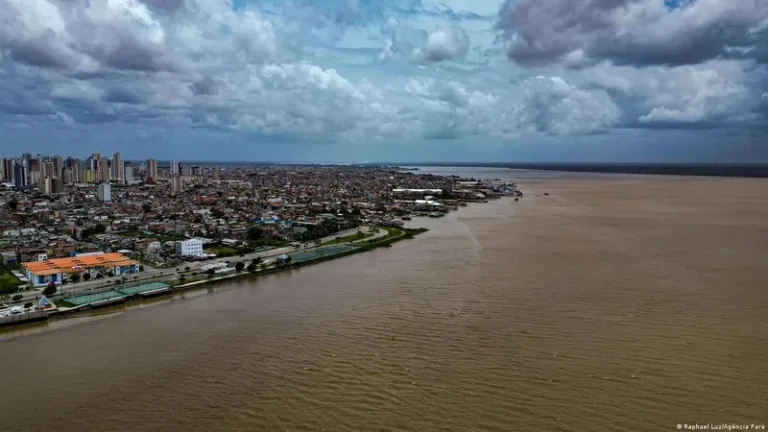
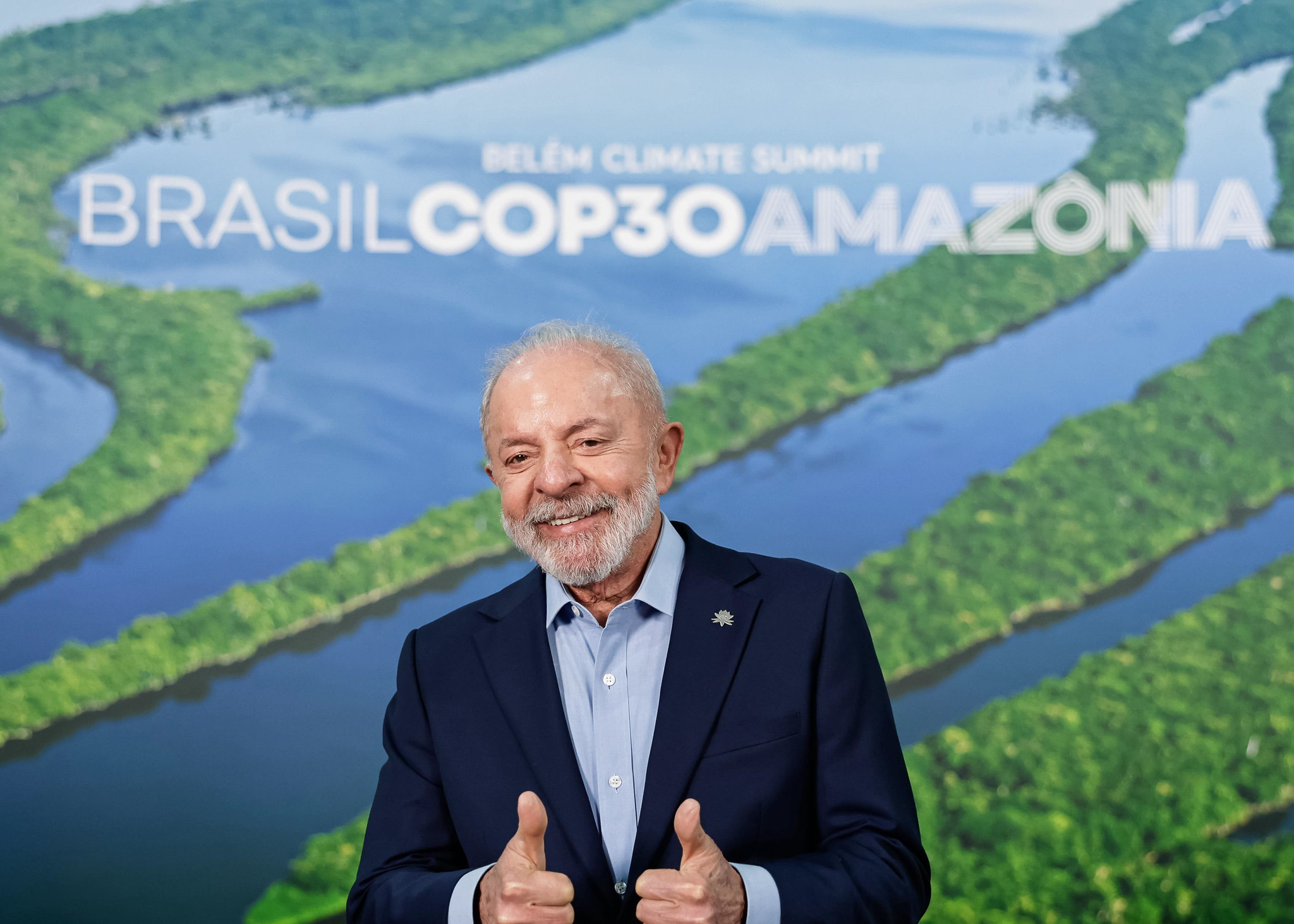
The largest event of the year, however, took place in the heart of the Amazon rainforest, with the hosting of the 30th United Nations Climate Change Conference (COP30) in Belém, the capital of Pará state, from November 10 to 21. The conference brought together representatives from 195 countries and concluded with the approval of a set of measures known as the “Belém Package,” which includes 29 decisions focused on technology, adaptation, and a just transition to clean energy.

The event significantly transformed the city of Belém, welcoming 42,618 participants. To ensure the infrastructure required for an event of this scale, the Brazilian government invested approximately R$787.2 million in its organization.
After a series of questions regarding the city’s structural capacity to host the conference, President Lula celebrated the outcome and said that part of the criticism was driven by prejudice. “I am very satisfied with the success of COP in Belém. Those who thought Belém was not prepared, that it wouldn’t work, were proven wrong, COP was an extraordinary success. I am certain that those who came, who had the opportunity to get to know the city and its cuisine, returned amazed. Those who didn’t come regretted it,” the president said.
On this point, experts diverge in their assessments. International affairs analyst Bruno Rocha Lima believes Brazilian diplomacy managed to reaffirm Brazil’s leadership role in the environmental debate. “Within the possibilities and limitations of COP30, with the retreat of the United States and a very reluctant Europe, what came out of COP30 in Pará was far superior to the previous three editions,” he said.
“I believe it was a pivotal moment for Brazilian diplomacy, a unique and very important moment. Public perception helped consolidate Brazil’s leadership, whether through the preservation of biomes or the accumulated work in this field,” Rocha Lima added.
International relations professor Bruno Huberman, however, highlighted contradictions in Brazil’s governance on the issue.
“COP fell short of what Brazil itself hoped to achieve, even though Brazilian diplomacy made a major effort and tried to go beyond what was initially planned. But diplomacy itself acknowledged that it failed, for example, to secure the plan Lula announced at the outset to phase out fossil fuels. I think this exposes a contradiction: Lula’s government plans to open roads in the Amazon, build railways to transport soy, extract oil at the Amazon River mouth, and at the same time host a climate summit,” he said.
Regarding the debate on ending fossil fuel use, President Lula considered the discussion around the so-called “Roadmap” to be a step forward. The roadmap does not foresee the immediate elimination of polluting fuels but establishes a set of long-term strategies to move in that direction.
“We are not naive enough to think we can do without fossil fuels today or tomorrow. What we committed to was building a roadmap to prove that we can get there without causing disruption for anyone. I don’t want Saudi Arabia to shut down its oil industry overnight and then live off what? What I want is for Saudi Arabia to use its oil potential so that, with the money it earns from oil, it can build the energy transition and help produce other types of fuel in countries that need resources,” the president said.
During COP30, Brazil officially launched the Tropical Forests Forever Facility (TFFF), considered one of the main initiatives of Brazil’s presidency of the Climate Conference. Initial contributions total US$5.5 billion, invested by Brazil, Indonesia, Norway, and France.
“We managed to approve the Tropical Forests Forever Fund, which seemed impossible, almost a dream. Norway opened the bidding with three billion euros. Now it will depend on our ability to attract more funding, since the World Bank will manage the fund. It was an extraordinary success,” Lula celebrated at a press conference in Brasília.
Rocha Lima considers the TFFF initiative innovative. “The goal was to create a financing mechanism that was not a grant or a donation, but one that could financially mobilize the green economy, conservation, carbon credits. That objective was achieved,” he said.
Huberman, however, criticized the “neoliberal” logic underpinning the TFFF. “The TFFF is a neoliberal adaptation designed to offer profits to rentiers in exchange for preserving the environment in peripheral countries. In other words, it is the bare minimum. I am not against this type of initiative, but I don’t think it establishes Brazil as a leader,” he argued, while also pointing to missed opportunities in Brazil’s response to climate change.
“Petrobras could be leading a much more robust energy transition, developing new technologies. Brazil could be far better prepared, showing clearly, not only in international negotiations, but through its economic structure, that it is on this path. A country pursuing neo-development, a new industrial policy, should be prioritizing reindustrialization through the green economy. And I don’t see that as a major priority for Brazil,” he concluded.
Brazil welcomes the world: visits by heads of state and government
In addition to the dozens of heads of state and government who traveled to Brazil for the multilateral meetings hosted by the country in 2025, President Lula also received other leaders in Brasília for bilateral talks.
The first foreign leader to visit Brazil this year was Portugal’s President Marcelo Rebelo de Sousa, in February. The visit was part of a series of events under the Brazil–Portugal Summit, a high-level meeting that brings together leaders from both countries to strengthen cooperation in areas such as defense, security, justice, science, the environment, trade, health, and culture.
At least three African presidents met with Lula in Brasília this year: Angola’s President João Lourenço in May, Benin’s President Patrice Talon in June, and Nigeria’s President Bola Tinubu in August. “In recent administrations, Brazil distanced itself from Africa. Two of the largest economies in Latin America and Africa should have much stronger exchanges,” Lula said in a statement to the press during the visit of his Angolan counterpart.
Southeast Asia was also a focus of Brazil’s foreign relations. In July, in the context of the Brics summit, Indonesian President Prabowo Subianto and Indian Prime Minister Narendra Modi also traveled to Brasília to meet with the Brazilian president.
Alongside the Indian leader, Lula condemned ongoing wars and said he would not accept any form of “interference” by Donald Trump in Brics affairs. “We do not accept any complaints against the Brics meeting. That is why we disagree with the suggestion made yesterday by the U.S. president that he would impose tariffs on Brics countries,” Lula said. “We want to tell the world that we are sovereign countries. We do not accept interference by anyone in our sovereign decisions,” he added.
Among Latin American leaders, the first to officially visit Brazil was Chilean President Gabriel Boric, in April. On that occasion, the two presidents joined forces to criticize the trade war launched by U.S. President Donald Trump and defended greater regional integration as a way to shield Latin American economies.
“I believe that we, presidents of South American countries, must understand that in isolation we are very weak,” Lula said, arguing that most governments in the region had prioritized only segments of their populations. “After building North American wealth, a president now emerges who treats Latin Americans as enemies,” Lula criticized at the time.
In August, Lula received in Brasília two presidents from the Latin American right: Ecuador’s Daniel Noboa and Panama’s José Raúl Mulino.
The world welcomes Brazil: the president’s international travels
In 2025, President Lula also maintained an intense schedule of international travel. His first trip was to Montevideo, Uruguay, in February, to attend the inauguration of President Yamandú Orsi. On that occasion, Lula took part in a dinner at the Brazilian embassy, attended by Orsi as well as the presidents of Chile, Gabriel Boric, and Colombia, Gustavo Petro.
A second visit to Uruguay took place in May, for the funeral of former Uruguayan president and Lula’s close friend José “Pepe” Mujica. Lula was traveling in Asia when he learned of Mujica’s death and arrived in Montevideo the following day to bid farewell to his longtime ally.
“In his nearly 90 years of life, Mujica fought fiercely against the dictatorship that once ruled his country. He defended democracy like few others and never stopped militating for social justice and the end of all inequalities,” Lula said upon the loss of his friend.
In March, the Brazilian president toured Asia, with stops in Tokyo (Japan) and Hanoi (Vietnam). The following month, Lula traveled to Tegucigalpa (Honduras), where he attended the summit of the Community of Latin American and Caribbean States (Celac). Still in April, the president went to the Vatican to attend posthumous tributes to the late Pope Francis.
In May, Lula traveled to Moscow (Russia), at the invitation of President Vladimir Putin, to take part in celebrations marking the 80th anniversary of the Soviet Union’s victory over Nazi Germany in World War II. He then continued on to Beijing (China), where he met with President Xi Jinping and participated in the China–Celac Summit.
In June, Lula made an official visit to France, where he met with President Emmanuel Macron in Paris and took part in the closing session of the Blue Economy and Finance Forum in Monaco, as part of the Third United Nations Ocean Conference. That same month, the president also attended the G7 meeting in Kananaskis, Canada.
The following month, Lula traveled to Buenos Aires, Argentina, for the Mercosur Summit, during which Brazil assumed the bloc’s rotating presidency. On that occasion, Lula visited former Argentine president Cristina Fernández de Kirchner, who is currently under house arrest. Still in July, the Brazilian president went to Santiago, Chile, where he met with his counterparts Gabriel Boric (Chile), Pedro Sánchez (Spain’s prime minister), and Yamandú Orsi (Uruguay) at the conference titled “Democracy Always.”
In August, Lula participated in the 5th Summit of the Amazon Cooperation Treaty Organization (ACTO) in Bogotá, Colombia. The meeting brought together the eight Amazonian countries (Brazil, Bolivia, Colombia, Ecuador, Guyana, Peru, Suriname, and Venezuela), to align strategies ahead of COP30 in Belém.
In September, as is tradition, the president was the first head of state to address the United Nations General Assembly in New York. In October, Lula traveled to Italy to attend the World Food Forum of the UN Food and Agriculture Organization (FAO). On that occasion, he was received at the Vatican by Pope Leo XIV.
The following month, President Lula made another trip to Asia. His first stop was Jakarta (Indonesia) for a two-day official visit, followed by Kuala Lumpur (Malaysia), where he attended the Association of Southeast Asian Nations (Asean) summit and met with U.S. President Donald Trump.
On the eve of COP30, Lula also made a brief trip to Santa Marta, Colombia, to take part in the opening of the Fourth Summit of the Community of Latin American and Caribbean States–European Union (Celac–EU). After the conference in Belém, still in November, Lula attended the G20 Summit in Johannesburg (South Africa) and then made an official visit to Maputo (Mozambique), bringing his international agenda for the year to a close.
Looking ahead to 2026, Lula announced that he plans to make a single international trip in February, visiting two countries: South Korea and India. In India, a business forum is scheduled with Brazilian and Indian commercial representatives, aimed at expanding trade relations between the two countries.