

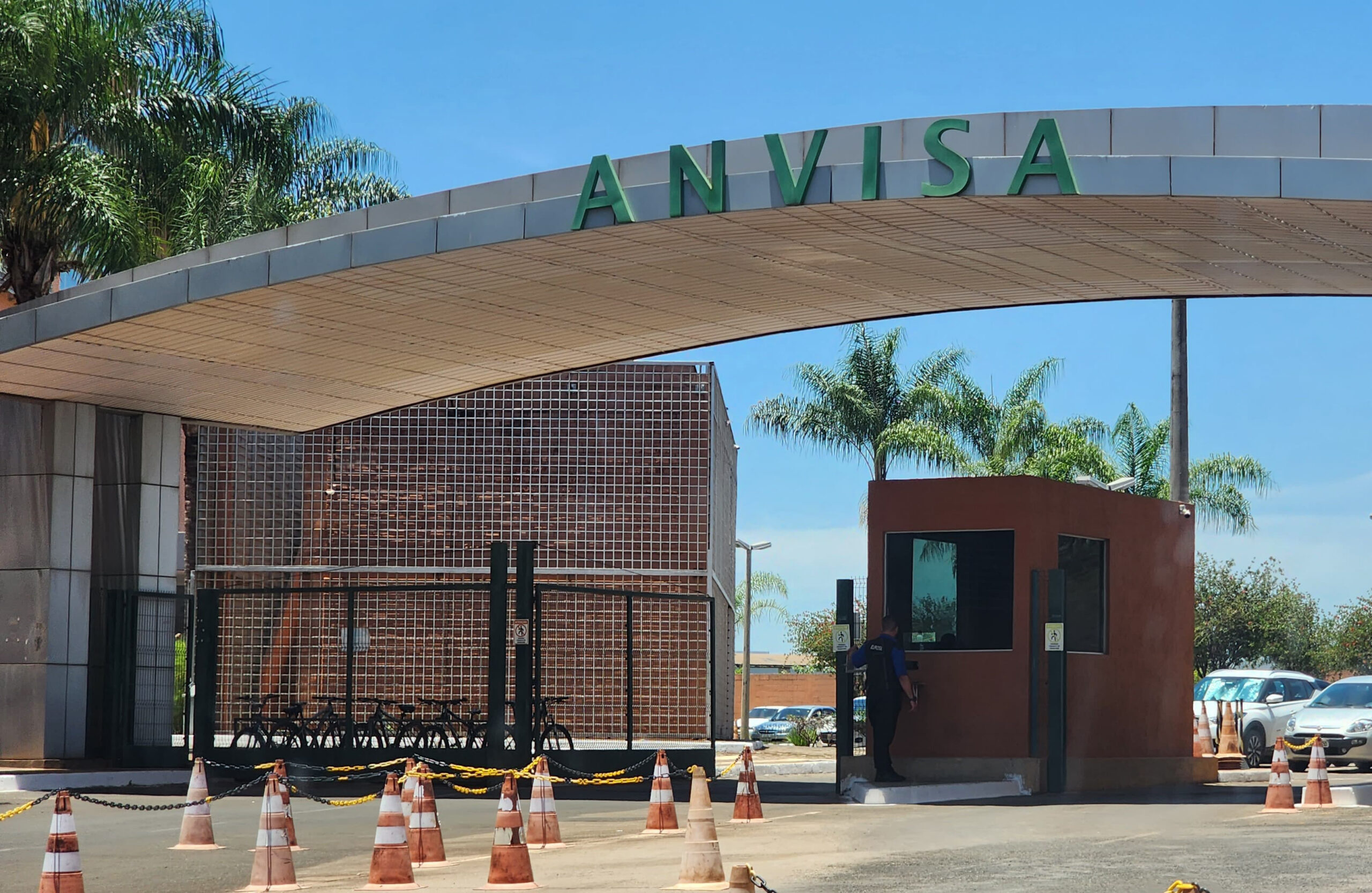
Three civil society organizations have submitted a formal request asking the National Health Surveillance Agency (Anvisa) to halt the sale of three types of pesticides used in agricultural production. The document, signed by the Permanent Campaign Against Pesticides and for Life, the Oswaldo Cruz Foundation (Fiocruz), and the Brazilian Institute for Consumer Protection (Idec), was delivered on December 15, 2025, and calls for the re-evaluation of glyphosate, atrazine, and alachlor.
The main reason for the request was the withdrawal of a scientific study on glyphosate that had been used as a reference by regulatory agencies for more than two decades. It was discovered that the article, published in 2000, involved undisclosed participation by employees of Monsanto, the manufacturer of the substance. The information was revealed by the British newspaper The Guardian.
In the official letter, the Permanent Campaign Against Pesticides highlights that “the editor-in-chief of Regulatory Toxicology and Pharmacology, Martin van den Berg himself stated that the lack of clarity regarding which parts of the article were authored by Monsanto ‘creates uncertainty about the integrity of the conclusions drawn,’” and links the study to the approval of the pesticide in Brazil.
“The journal acknowledged that this article had ‘significant influence on regulatory decisions.’ In Brazil, it supported the technical opinion commissioned by Anvisa in 2016 and Technical Note No. 12/2020, which resulted in Board of Directors Resolution (RDC) No. 441 of December 2, 2020, establishing the continued approval of glyphosate without changes to the monograph of the active ingredient regarding its carcinogenic potential,” the campaign states.
In addition, on November 21, 2025, international health experts classified atrazine and alachlor as probable causes of cancer in humans. According to the campaign, “atrazine is the sixth most sold pesticide in Brazil, with 22,765.17 tons marketed.”
In this context, the organizations are asking Anvisa to re-evaluate the active ingredients and to temporarily suspend their use. They also call for guaranteed social and technical participation in the re-evaluation process.
Record consumption
On December 18, the Brazilian Institute of the Environment and Renewable Natural Resources (Ibama) published data on pesticide sales in 2024, revealing that the country set a new record for the consumption of these substances.
In 2024, the agency received 7,358 reports from 288 companies responsible for 6,100 different brands. According to the survey, “the overall commercialization panorama showed an increase in sales of chemical pesticides,” a trend driven by the growth of imports.
The report indicates a 20.13% increase compared to the previous year, totaling 908 thousand tons of active ingredients. This figure exceeds the 755 thousand tons recorded in 2023 and marks a record in the country’s historical series.
Glyphosate remains the most sold active ingredient nationwide. A total of 231.9 thousand tons of the product were sold in 2024, despite a slight reduction compared to the previous year. Mancozeb follows in second place, having moved up in the ranking after a significant increase in sales volume.
Ibama warns that the data are self-declared by the companies holding the registrations. For this reason, the figures may undergo revisions or corrections in the future if flaws or errors are found in company declarations.
In a statement on the report, the Campaign Against Pesticides recalls that of the ten most sold pesticides in 2024, six are banned in the European Union: “mancozeb (since 2021), acephate (since 2003), chlorothalonil (since 2019), atrazine (since 2009), glufosinate (since 2018), and s-metolachlor (since 2013).”
The platform also cites data from the National Union of the Crop Protection Products Industry (Sindiveg), which point to the same upward trend. “According to the entity, in 2024, 1.665 million tons of formulated products were sold, a 17% increase compared to 2023. Company revenues remained stable at around US$20 billion, equivalent to R$110 billion. These same companies failed to collect R$25.8 billion between January 2024 and February 2025 alone,” the statement says.
Record approvals
Alongside the increase in consumption, Brazil set a new record for the approval of pesticides for agricultural use in 2025. According to a survey conducted by BdF, 725 new products were approved from February to early December of this year, representing an increase of nearly 10% compared to 2024, when the country had already set a record with 663 new products entering the Brazilian market.
In an interview with BdF, Jaqueline Andrade, legal advisor at the organization Terra de Direitos, noted that the pesticide market in Brazil moves billions of reais with state support, while the population bears the harsh consequences of this policy.
“This means we have more contaminated water, more contaminated food, and more people directly intoxicated, whether acutely or chronically, by pesticides,” Andrade said, adding that, in light of this scenario, “it is essential to implement the National Program for the Reduction of Pesticides (Pronara),” launched in July this year by the federal government.
