

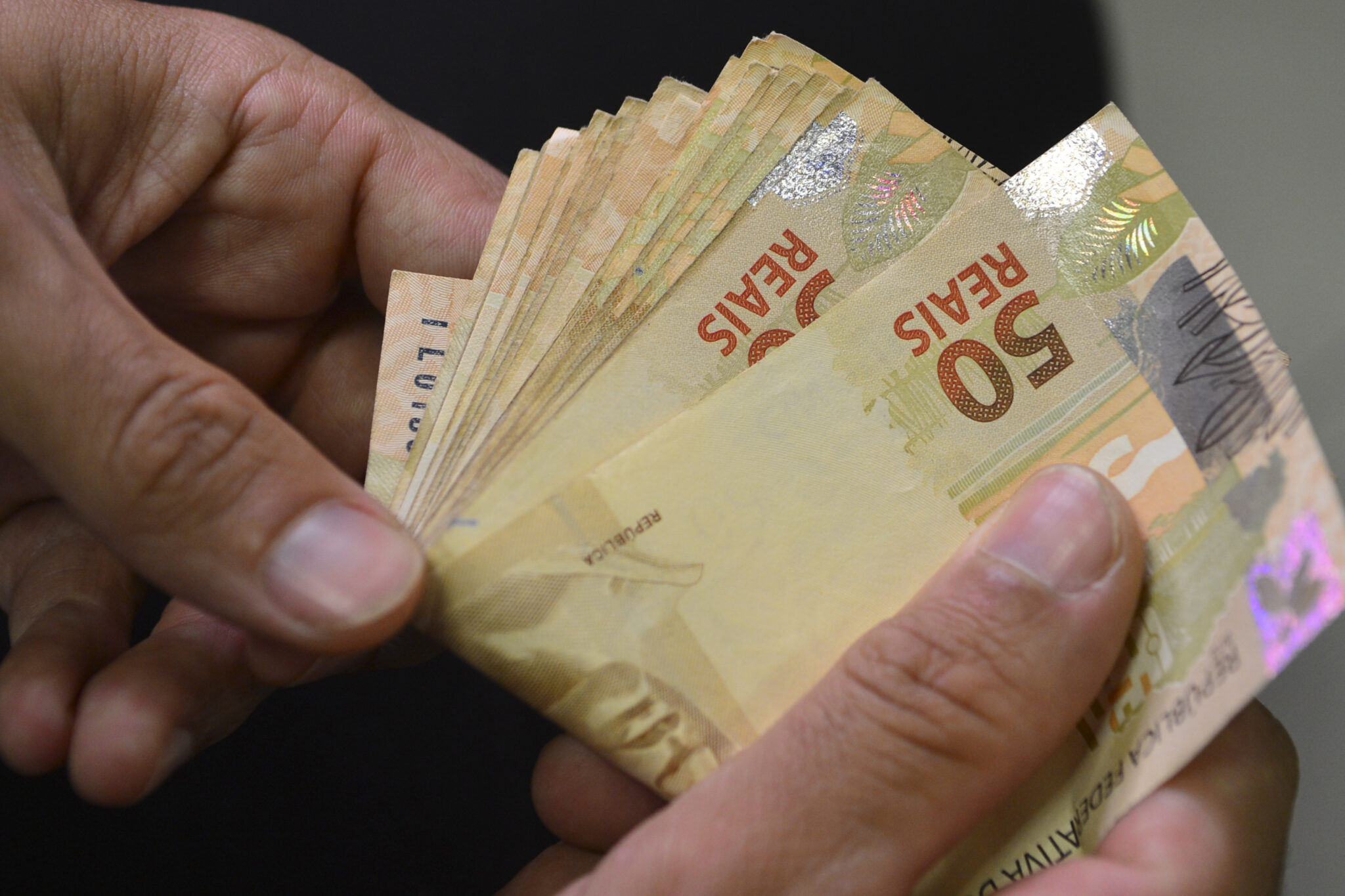
Brazilian newspapers warned this Tuesday (30) about what they consider a worrying figure: the increase in public debt. The National Treasury announced that gross public debt has risen to 79% of Gross Domestic Product (GDP), while net public debt reached 62.5%. However, economists indicate that the hysteria of sectors linked to the financial market does not translate into a real risk for the Brazilian government for several reasons.
First, because the vast majority of Brazil’s public debt (97%) is denominated in the national currency. Even with creditors abroad, debt in the country’s own currency gives the government room to maneuver, since it can issue its own money and sell government bonds precisely to expand its financing.
Paulo Kliass, an economist specializing in Public Policy who has previously worked in the federal government, states that the debt as it is structured is not a concern for the Brazilian government, because it ends up being a development tool used by the state itself.
“Public debt is not a problem. It is a very important instrument of economic policy that most developed capitalist countries have used. The Marshall Plan, the money to rebuild Western Europe, was financed through U.S. public indebtedness. All processes that involve some degree of development, such as infrastructure, for example, are undertaken based on indebtedness, but they generate profit for everyone involved, companies and workers alike. So this is not a problem; it is a solution,” he told BdF.
The composition of this amount changed starting in 1994. Until the last decade of the 20th century, most of the debt was in foreign currency, mainly the dollar. After the Real Plan, the Brazilian currency stabilized and inflation fell, providing greater security for the Brazilian economy. From the first term of Luiz Inácio Lula da Silva (PT), the situation reversed and Brazil, driven by the rise in commodity prices, managed to shift its debt back into the national currency.
In this scenario, the only concern for economists comes from another factor: interest rates. Currently at 15%, the so-called Selic rate directly affects public debt and has consequences for government accounts. For Luiz Carlos Delorme Prado, a professor at the Institute of Economics of the Federal University of Rio de Janeiro (UFRJ), interest on the debt ends up being a direct transfer of wealth to the richest sectors of society.
“The debt does not represent a risk of default. That does not exist. The problem is the high interest rate, because it is a transfer of wealth to the richest, who are the investors. The way out would be to raise taxes on them. Debt in itself is not a macroeconomic problem. But with these unrealistic interest rates, those who profit are the investors,” he told BdF.
Another impact of high interest rates is a decline in investment in public services such as infrastructure works, construction, and the creation of jobs and businesses. The Central Bank shifts the focus of investment toward the financial market and the purchase of government bonds, which offer high returns to investors.
One issue noted by economists is the comparison with other countries that have most of their debt in local currency. While in Brazil this proportion stands at 68%, the United States currently has debt equal to 125% of GDP. In the European Union this ratio is 88%. Japan’s debt ended last year at 240%. For economists, in this scenario Brazil’s debt is “ridiculous.”
The government itself blamed interest rates for the rise in public debt. The Minister of Institutional Relations, Gleisi Hoffmann, said that the benchmark interest rate “drains” resources from the budget that could be invested and undermines “the provision of public services, social programs, and government investments for the country’s development.”
Net or Gross?
The relationship between gross or net debt and GDP is also questioned by economists for two reasons. First, because it compares a measure of wealth generated in one year (GDP) with an amount accumulated over several years (public debt).
Second, because when referring to gross debt, Brazilian newspapers are not considering the bonds held by the Central Bank and by the BNDES (National Development Bank), for example. Kliass believes that this presents a less harmful picture for the federal government than what is shown in the mainstream media.
“Gross debt is everything. These bonds that are public represent a debt of the government to itself. So the macroeconomic impact is different. The Brazilian public sector has assets — international reserves, property — and this offsets the gross figure. The net figure is what really matters,” he said.
The public sector spent R$ 87.2 billion last month on public debt. Over 12 months this amounted to R$ 981.9 billion, which represents 7.77% of GDP.
