China delivered one of its strongest recent interventions at the United Nations Security Council by condemning the United States’ military action against Venezuela and demanding the immediate release of President Nicolás Maduro and his wife, Cilia Flores, who were forcibly detained.
During the emergency session, China’s ambassador to the UN, Fu Cong, said the operation highlights Washington’s growing diplomatic isolation within the international community. He reiterated that China is ready to work alongside countries in the region and the broader international community to protect Venezuela’s sovereignty and safeguard peace in Latin America and the Caribbean.
“We stand ready to collaborate with countries in the region and with the international community to strengthen solidarity and cooperation, defend justice, and jointly safeguard peace and stability in Latin America and the Caribbean,” Fu Cong said.
According to Beijing, the international community must prioritize dialogue, respect for state sovereignty, and the peaceful resolution of disputes, avoiding unilateral actions that risk destabilizing entire regions.
“No country has the right to act as the world’s police, nor can any state appoint itself as an international judge. International peace and stability can only be ensured through multilateralism and cooperation among all states,” the Chinese ambassador stressed.
Abduction of a head of state and rupture of the international order
Fu Cong described the events of January 3 as a grave breach of the norms governing international relations, as they involved the forced detention of a sitting head of state, an extreme act even under conditions of declared war.
“On January 3, the United States launched blatant illegal incursions, forcibly detaining the president and his wife and removing them from the country. They stated they would govern the country and did not rule out a second round of military operations, potentially on an even larger scale,” Fu Cong said.
The episode has reignited concerns over dangerous precedents for the international system, particularly for countries of the Global South, which have historically been subjected to external interventions under political or security pretexts. Authorities from neighboring countries and regional organizations warned that such an action could undermine regional stability and normalize direct military intervention against sovereign governments.
“China is deeply shocked by this unilateral act of U.S. aggression, which we categorically condemn,” Fu Cong added.
According to Beijing, no country can place itself above international law, and history shows that military solutions do not resolve crises, they only deepen them.
Demand for President Maduro’s release
A central element of China’s statement was its clear and direct demand for the immediate release of Nicolás Maduro and his wife, Cilia Flores, along with guarantees for their physical safety and human rights, in what Beijing described as the kidnapping of a sitting head of state.
“We urge the United States to ensure the personal safety of President Maduro and his wife and to release them immediately,” Fu Cong said.
China reaffirmed that Venezuela retains its full right to self-determination, protected by binding norms of international law and human rights treaties that guarantee the free choice of governments without external coercion.
“Venezuela is an independent and sovereign state, fully entitled to defend its national sovereignty and dignity,” Fu Cong stated.
Beijing warned that any attempt to alter a country’s legitimate government through coercive means, such as forced arrests or unilateral military interventions, constitutes a serious violation of international law and multilateralism, underscoring the need to protect Venezuela’s peace, stability, and territorial integrity.
Sanctions, blockades, and the prolonged siege of Venezuela
China placed the military attack within the broader context of a long-standing pressure campaign against Venezuela, marked by years of economic sanctions, financial blockades, and efforts at diplomatic isolation. According to Fu Cong, “the international community has repeatedly expressed deep concern over the sanctions, blockades, and threats of force imposed on Venezuela.”
Concrete analyses show the severe economic consequences of these measures. A joint study by Global South Insights and the Tricontinental Institute found that between 2017 and 2024, U.S.-led sanctions resulted in approximately US$226 billion in lost oil revenues, more than twice Venezuela’s GDP over the same period. According to OPEC, oil accounts for roughly 95% of Venezuela’s exports, while national production has fallen to around 0.9 to 1 million barrels per day, reflecting the combined effects of external restrictions and internal operational challenges.
From an international law perspective, China argued that sanctions and blockades are illegal, as they violate established norms. The UN Charter protects state sovereignty and equality and prohibits the use of force or coercion to interfere in internal affairs (Articles 2.1 and 2.4). The principle of non-intervention, enshrined in the 1907 Hague Convention and reaffirmed in UN General Assembly resolutions, forbids unilateral measures aimed at overthrowing sovereign governments. International humanitarian law, including Article 33 of the Fourth Geneva Convention, prohibits collective punishment of civilian populations, while international covenants guarantee peoples’ right to self-determination.
“As a permanent member of the Security Council, the United States has ignored the serious concerns of the international community and has deliberately trampled on Venezuela’s sovereignty, security, and legitimate rights and interests,” Fu Cong said.
Violation of the founding principles of the United Nations
For China, the gravity of the U.S. action lies not only in its regional impact but in its direct violation of the core pillars of the multilateral system established after World War II.
“The principles of sovereign equality, non-interference in internal affairs, peaceful settlement of international disputes, and the prohibition of the use of force in international relations have been gravely undermined,” Fu Cong said.
According to Beijing, the operation that led to the abduction of Maduro and his wife constitutes a clear violation of the UN Charter (Articles 2(1) and 2(4)), the principle of non-intervention under the 1907 Hague Convention, and internationally recognized human rights norms, including the prohibition of collective punishment of civilians.
By prioritizing military force, Washington deliberately weakens diplomatic and legal mechanisms that underpin international peace, China warned, reiterating that unilateral military solutions never replace multilateral dialogue and only exacerbate regional and global crises.
History of U.S. interventions in Latin America and beyond
Fu Cong reinforced his critique by recalling previous U.S.-led military interventions that resulted in prolonged instability, humanitarian crises, and severe impacts on civilian populations.
“History painfully reminds us that military solutions are not solutions. The indiscriminate use of force only leads to even greater crises,” the Chinese ambassador said.
He pointed to Iraq, Libya, and multiple interventions across Latin America as examples of unilateral U.S. actions that produced institutional collapse, mass displacement, and deep economic damage, arguing that Venezuela now faces a familiar pattern of external intervention.
China’s proposal: dialogue, multilateralism, and solidarity
In closing his address to the Security Council, Fu Cong reaffirmed China’s readiness to engage diplomatically to prevent further escalation, strengthen international cooperation, and defend Venezuela’s sovereignty in the face of U.S. military action.
“We are ready to work with countries in the region and the international community to reinforce solidarity and cooperation, uphold justice, and jointly safeguard peace and stability in Latin America and the Caribbean,” he said.
Beijing emphasized that solutions to international crises must be grounded in dialogue, peaceful negotiation, and respect for the UN Charter, rejecting unilateral measures that violate the sovereignty of independent states.
Human impact of the attack
The U.S. military attack on Venezuela on January 3 left dozens dead and many injured. Among the victims were both military personnel and civilians, while residential neighborhoods near the targeted areas suffered significant damage, particularly in regions around Caracas and La Guaira.
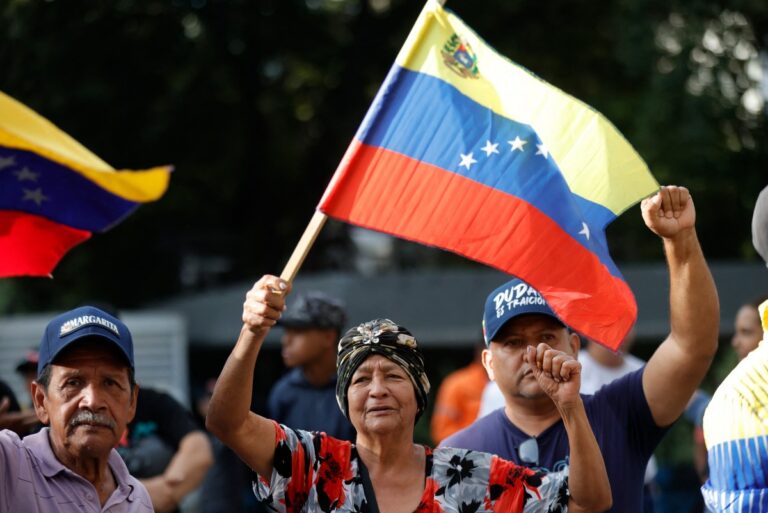
Hospitals and health centers, already strained by years of crisis, were overwhelmed by the influx of wounded patients, facing power outages and logistical challenges. In response, large crowds took to the streets in cities across the country, expressing support for President Nicolás Maduro and rejecting foreign intervention. Venezuelan lawmakers echoed calls for the immediate release of the president and his wife and for the defense of national sovereignty.