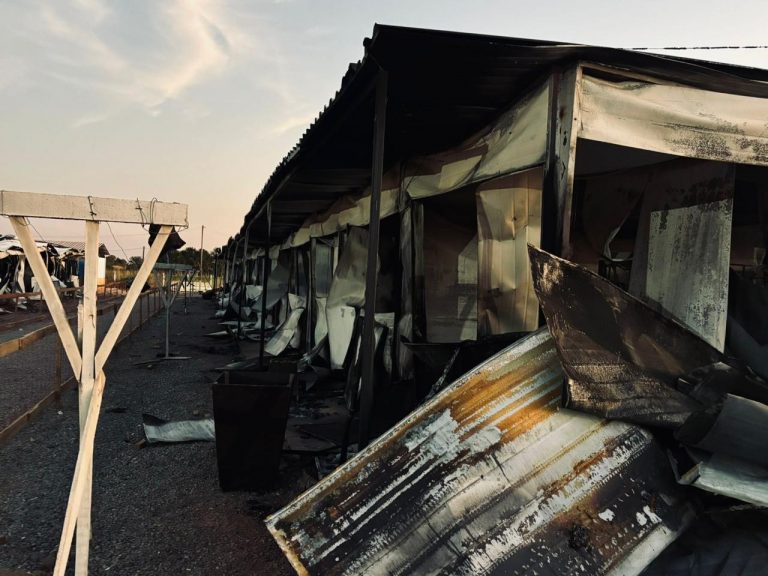
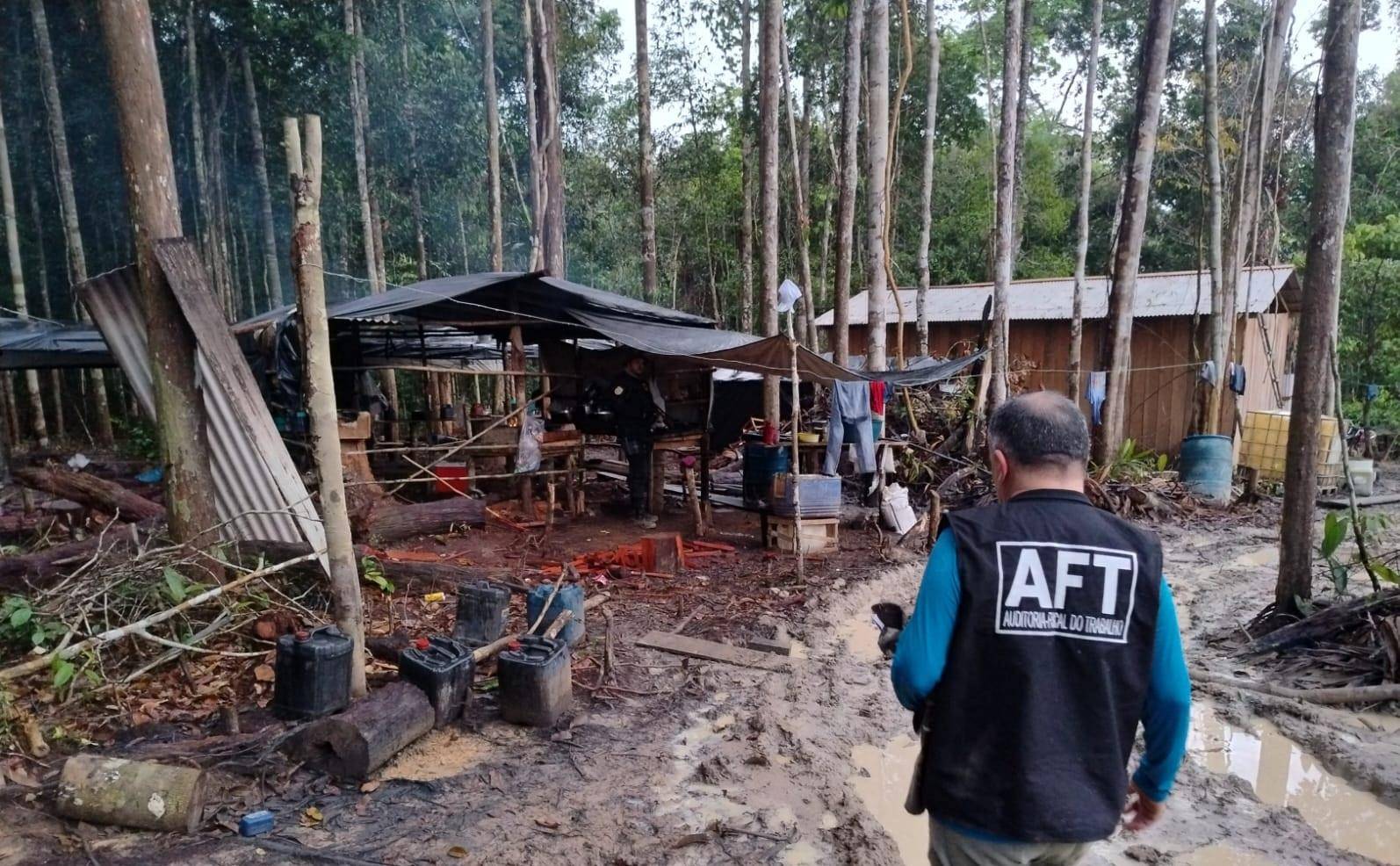
In June 2025, three men were rescued from a farm in São Félix do Xingu, in the Brazilian state of Pará, where they were being subjected to conditions analogous to slavery. Hired to clear forest land to open pasture, they were threatened, denied access to drinking water and basic safety equipment, and forced to sleep in a pigsty shared with animals.
Between 1995 and 2025, Brazil’s Pastoral Land Commission (CPT), a church-linked organization that monitors rural conflicts, recorded 2,692 similar cases involving workers rescued from deforestation-related activities. These cases account for 4% of all people found in slave-like conditions in Brazil over the past 30 years.
When combined with other activities such as cattle ranching, charcoal production, mining and sugarcane cultivation, the share of slave labor cases linked to activities that cause severe environmental degradation rises to 57% of the 67,058 workers rescued nationwide over the same period, considering both rural and urban sectors.
At the top of the list is cattle ranching, which accounts for 26% of all rescued workers, according to CPT data. It is also the activity most responsible for forest destruction in Brazil. Data from the MapBiomas platform show that the Amazon has lost 9 million hectares of forest to pasture over the past ten years.
“Activities involving illegal vegetation clearing are usually linked to cases in which workers are subjected to conditions analogous to slavery,” Brazil’s Labor Prosecutor’s Office (MPT) said in a statement. According to the MPT, the real figures may be even higher due to underreporting and the difficulty of inspections in remote and hard-to-access areas.
“The destruction of the environment has roots directly connected to the crime of slave labor in Brazil,” warned social worker Francisco Alan Santos Lima, who has worked with the CPT for 15 years monitoring slave labor complaints.
Lima was the one who received the call for help from the three workers isolated on the farm in São Félix do Xingu. “One of them, already elderly at 65, developed health problems. In addition to cutting down the forest, he was spraying poison with a handheld pump,” Lima said.
The agrochemicals used to prepare pastureland were applied without proper protective equipment, leading to illness. The workers had traveled from the northeastern state of Maranhão and were able to return home after being rescued.
A few months later, in August 2025, another farm in São Félix do Xingu was targeted in a joint operation by Brazil’s Ministry of Labor and Employment (MTE), the Labor Prosecutor’s Office, and the Federal Police. Seventeen workers were rescued. Without formal contracts or regulated working hours, they were living under tarps and trees; one of them slept in a chicken coop.
According to an MPT statement, although the farm had new personal protective equipment on site, it was not provided to workers, who were applying toxic substances without any protection.
CPT data identify São Félix do Xingu as the municipality in Pará with the highest number of slave labor cases, totaling 1,704 over the past 30 years.
“It’s a region with a high number of cases and, above all, a high number of victims rescued in this situation, most of them in cattle ranching,” Lima said.
São Félix do Xingu is a place of staggering figures. Located in southern Pará, the municipality is roughly the size of Austria and has the largest cattle herd in Brazil, with more than 2 million head of cattle, an average of 38 cows per resident.
Other activities
After cattle ranching, sugarcane cultivation ranks second among activities associated with slave labor, accounting for 8% of cases over the 30-year period.
“Some certification programs try to establish deforestation-free criteria for sugarcane to curb these practices, but they remain quite frequent,” said Marcelo de Aguiar Pereira, Agro ESG coordinator at the Institute for Forest Management and Certification (Imaflora), who has worked for three decades implementing best practices in natural resource management.
Charcoal production, a highly polluting activity that uses wood as its main raw material, accounted for 7% of all cases recorded over three decades.
Mining was also included in BdF’s analysis. Although it represents 2% of slave labor cases between 1995 and 2025, it is among the most environmentally destructive activities. MapBiomas data show that in areas where Amazon forest cover declined, land use for legal and illegal mining increased by 1,063% between 1985 and 2024.
Remote locations where these activities take place are a key factor enabling worker exploitation. Isolation makes it harder for workers to seek help or even be seen by others, explained social worker Brígida Rocha dos Santos, a CPT agent in Maranhão who has monitored slave labor complaints since 2002.
Another contributing factor, she said, is the uneven reach of inspections in rural areas, both in combating slave labor and environmental crimes.
“These inspections, whether focused on slave labor or environmental violations, occur far more frequently in rural areas, where farms, charcoal plants and mining sites are located,” she said.
The survey also shows that 10% of workers found in slave-like conditions were employed in temporary crop farming. However, CPT data do not specify which crops, which may include soy, corn, cotton or other, less environmentally damaging commodities.
According to CPT classifications, rural slave labor cases involve activities such as deforestation, cattle ranching, tree monocultures, plant extraction, sugarcane cultivation, temporary and permanent crops, charcoal production and mining. In urban areas, cases are concentrated in construction, garment production and other services.
Forest destruction and the erosion of ways of life
As environmentally destructive activities advance into forest areas, they also undermine the ways of life of traditional peoples and communities, including fishers, riverine populations and Indigenous peoples. Dispossessed of their knowledge systems and traditional livelihoods, these groups become more vulnerable to degrading forms of work.
“This process tends to drive forced migration, especially among rural workers,” Lima said, citing riverine communities affected both by the exploitation of their territories and by extreme climate events.
As the climate crisis deepens, many of these communities may lose their lands altogether. “They will face rising river levels or the expansion of projects that disrupt their ways of life, pushing them into precarious labor alternatives, whether in rural or urban settings,” he said.
During the 30th United Nations Climate Change Conference (COP30), held in Belém, Pará, the Labor Prosecutor’s Office launched the publication Climate Change and the Protection of the Working Environment, which warns of the links between the climate crisis and labor relations.
In one article focusing on slave labor, author Luciana Paula Conforti argues that “economic activities that adopt illegal practices, without proper repression by the Brazilian state, drive a highly harmful combination that dehumanizes workers and degrades the environment.”
The “dirty list”
At the end of 2025, Brazil’s Ministry of Labor and Employment released an updated version of the Register of Employers who have subjected workers to conditions analogous to slavery, known as the “Dirty List” – a public transparency mechanism.
The new update includes 159 employers, 101 individuals and 58 companies, representing a 20% increase compared to the previous edition.
According to Brazil’s Labor Inspection Authority, the cases included in this update occurred between 2020 and 2025 and involved the rescue of 1,530 workers.
Among the economic activities most frequently listed are cattle ranching, with 20 cases; domestic work, with 15; coffee cultivation, with nine; and construction, with eight. Overall, 84% of the listed cases are linked to rural economic activities.
How to report
Reports of labor conditions analogous to slavery can be made confidentially through the Ipê System, launched on May 15, 2020, by Brazil’s Labor Inspection Secretariat in partnership with the International Labour Organization (ILO).
The Ipê System is the only platform exclusively dedicated to receiving complaints related to slave labor and is fully integrated into Brazil’s National Framework for Assisting Victims of Slave Labor.