

With no ceasefire agreement in sight, the war waged by the US and Israel against Iran has entered its second week, and some actions seem to herald an escalation in the conflict. On the one hand, the Israeli attack on an oil refinery in Tehran spread a thick black cloud full of highly toxic chemicals over the city, in a dystopian scenario that is likely to cause serious damage to the health of the capital’s inhabitants, as well as to the environment. On the other hand, numerous sources claim that Iran is entering the second phase of its military strategy: until now, Iranian forces have reportedly used only drones and old missiles (manufactured more than 10 years ago) in order to wear down US and Israeli defences, which many military analysts say cannot withstand a prolonged conflict lasting many weeks. From now on, Tehran would begin to make use of its more sophisticated and powerful missiles, which could cause more serious damage to Israel and US bases in the region. Let us see, in the coming days, if this prognosis is confirmed.
By assassinating Supreme Leader Ayatollah Ali Khamenei, Washington and Tel Aviv hoped to cause chaos in the Iranian government that would eventually lead to the fall of the Islamic republic. However, so far, there are no signs of weakening in the Iranian state’s power structures. This criminal act reveals a total lack of knowledge of Shiite culture and the role of martyrdom in it, because, as professor and international relations analyst Setareh Sadeqi, interviewed by BdF, states, “for Shiite Muslims, martyrdom is considered the greatest honour a person can achieve (…) This spirit of resistance and sacrifice is deeply rooted in Shiite thought and continues to shape the rhetoric and worldview of modern Iran.” One need only walk a few hours through the streets of Tehran, where I was in November, to confirm Prof. Sadeqi’s statement: there are countless images of martyrs from past wars – from generals to children – in graffiti painted on ten-storey (or taller) buildings or on walls; on “altars” on the pavements; on banners inside institutions such as Tehran University, which lost many professors and students.
Despite the image of small anti-government groups celebrating Khamenei’s assassination, crowds took to the streets across the country to celebrate the martyrdom of the supreme leader and show support for Iranian resistance against Zionist and imperialist invaders. Iranian officials said that when instructed to take shelter in a bunker, the Ayatollah asked, “Is there room for 92 million Iranians in this bunker? If not, I will not go there. I want to remain in the same conditions as the majority of our people.” Khamenei died in his office, along with his daughter, son-in-law and 14-month-old granddaughter. Days later, on 8 March, the Assembly of Experts elected the new and third supreme leader of the Islamic republic, Ayatollah Seyyed Mojtaba Hosseini Khamenei, son of the former supreme leader.
To analyse some aspects of the US and Israeli strategy in the early days of the war, the reactions of the Iranian government and people from a Shiite worldview, as well as the possible consequences of the war for the BRICS, Brasil de Fato spoke with Professor Dr. Setareh Sadeqi (University of Tehran). She is an assistant professor at the Faculty of World Studies at the University of Tehran, a specialist in American Studies, with research focused on postcolonial theory, sanctions, and relations between Iran and the US. She has appeared as a political analyst on several channels, including Al-Jazeera, TRT, RT, Press TV, and CGTN.
BdF: As in June, the US and Israel acted treacherously once again and – in the midst of negotiations mediated by Oman – launched attacks against Iran. The Iranian government, as it had warned, responded with a counteroffensive against American bases in the region, against Israel and neighbouring countries. After the Twelve-Day War (June 2005), many Iranians who had criticised the government and the Islamic republic began to support the government. What was the impact of these attacks on public opinion this time? Was it similar to June 2025, even after the protests at the beginning of the year?
The January protests, triggered by the disastrous economic situation — a condition shaped by the illegal unilateral sanctions imposed on Iran by the US regime — proceeded peacefully for 10 to 11 days before being hijacked by a mob of angry thugs and paid and trained MOSSAD agents who attempted to seize security bases and police stations. Then, a ridiculously high number of casualties was fabricated and publicised to create consensus for an invasion of Iran. For 47 years, they have also been waging a massive propaganda campaign against Iranians and the Islamic Republic to demonise our political system. Unfortunately, there are people in the world, and even among Iranians, who fall for it. Trump once again miscalculated: he thought that if he assassinated Imam Khamenei, the system would collapse within hours and Iran would surrender. In fact, what happened was that people took to the streets in support of their country and demanding revenge for their martyred leader, Imam Khamenei. Suddenly, once again, the majority decided to put aside their differences and grievances and protect their country’s sovereignty. Millions of people have taken to the streets every night, sometimes under bombardment, rain and snow, to show their support for their country.
The West hypocritically claims to be concerned about the rights of Iranian women, who are supposedly oppressed by the “Ayatollah regime.” However, its first major act of war was the bombing of a girls’ school in southern Iran, killing nearly 200 of them. How do you interpret this action?
The West is acting on the same playbook — a worn-out playbook designed to manufacture consent for an invasion of Iran. Imperialist feminism has never been about liberating women or protecting their rights, but has always been about promoting imperialist agendas of exploitation and robbing nations of their independence. They killed about 200 girls while they were studying at school and destroyed a few more schools, killed 20 volleyball players while they were training, destroyed infrastructure and residential buildings, and imposed cruel sanctions that kill women and take away their opportunities. Iranian women make up more than 60% of university students, are ministers, MPs, doctors, pilots, etc. No one believes the imperialist narrative that seeks to justify the mass bombing of a nation, especially coming from the Epstein regime, which kills girls all day long in Iran, Palestine, Lebanon, etc., and rapes them during its breaks. The claim that the Epstein regime’s bombs would have any chance of liberating Iranian women, who are already free and powerful, is absolutely ridiculous.
On the second day of the war, Supreme Leader Ayatollah Ali Khamenei was assassinated in a bombing of the complex where he lived and worked. Iranian officials said Khamenei refused to hide in a bunker because he insisted on living in the same conditions as the rest of the people. What explains this attitude on the part of the leader of a nation at war? What are the consequences of this loss for the Islamic revolution?
He was the most popular political and spiritual figure in Iran for precisely the same reason: he remained strong in the face of aggression from his enemies and maintained a very modest and simple lifestyle, close to that of the poorest people in the country. He did not consider his life more valuable than that of his people. He did not want any form of exclusive protection. Such was the level of faith and dedication he had. He prayed publicly and privately for his martyrdom in the way of God, and he achieved martyrdom fighting against the most satanic class of the Rothschild and Epstein regimes, without ever surrendering. He inspired many politicians and ordinary people in the country. He established a very strong structure that would keep his path alive without wavering. Therefore, although this was the greatest loss we have suffered in the country, his legacy, his school of thought, and the very well-established structure he left us are still functioning at full strength.
How can we understand this decision by Supreme Leader Khamenei, which led him to become a martyr of the Iranian people? What are the historical origins and significance of martyrdom in Shiite culture?
To truly understand Iran and its worldview, one must first understand Imam Hussein [grandson of the Prophet Muhammad and son of Imam Ali, founder of Shi’ism] and the Battle of Karbala [in present-day Iraq, in which Hussein and a small group of about 70 followers were killed while facing thousands of the caliph’s soldiers in a fight for the succession of the Prophet Muhammad]. For Shiite Muslims, martyrdom is considered the greatest honour a person can achieve. The story of Karbala teaches that one must never submit to oppression or injustice. Instead, we believe that we must stand firm and resist our enemies, even if it means fighting to the last drop of blood in our veins.
In this belief, there are only two outcomes, and both are victories: either we prevail over injustice, or we achieve martyrdom in the path of truth. This spirit of resistance and sacrifice is deeply rooted in Shiite thought and continues to shape the rhetoric and worldview of modern Iran. It is a theme that appears frequently in Imam Khamenei’s speeches and is captured powerfully in the words of our martyred General Soleimani, who once said that we are the nation of Imam Hussein.
BRICS, which is attempting to establish itself as an instrument of multipolarity and an alternative to Western hegemony, seems very timid so far, having issued no statement. On the other hand, contradictions in the interests of West Asian countries have manifested themselves internally within the group: to defend itself from attacks, Iran has attacked American bases and other locations in the United Arab Emirates, as well as in Saudi Arabia (which participates in the meetings, although it has not yet confirmed its membership). At the same time, Indian Prime Minister Narendra Modi made a state visit to Israel days before the war began, in a public show of support for Benjamin Netanyahu. Do you think the group is at risk of fragmenting in the face of these contradictions?
It is a great disappointment, but not surprising. Some BRICS members, including India and the United Arab Emirates, have been staunch allies of the Zionist regime, while nations around the world rejected the genocidal entity for the war crimes and genocide it committed in Gaza. They preferred the interests of the Zionist regime to those of their own nations. They blocked the formation of any real and pragmatic alliance against the capitalist financial system that has been strangling entire nations. If other members do not prevent this and take different measures, then we can conclude that it is already fragmented, as there are members who are serving imperialist power.
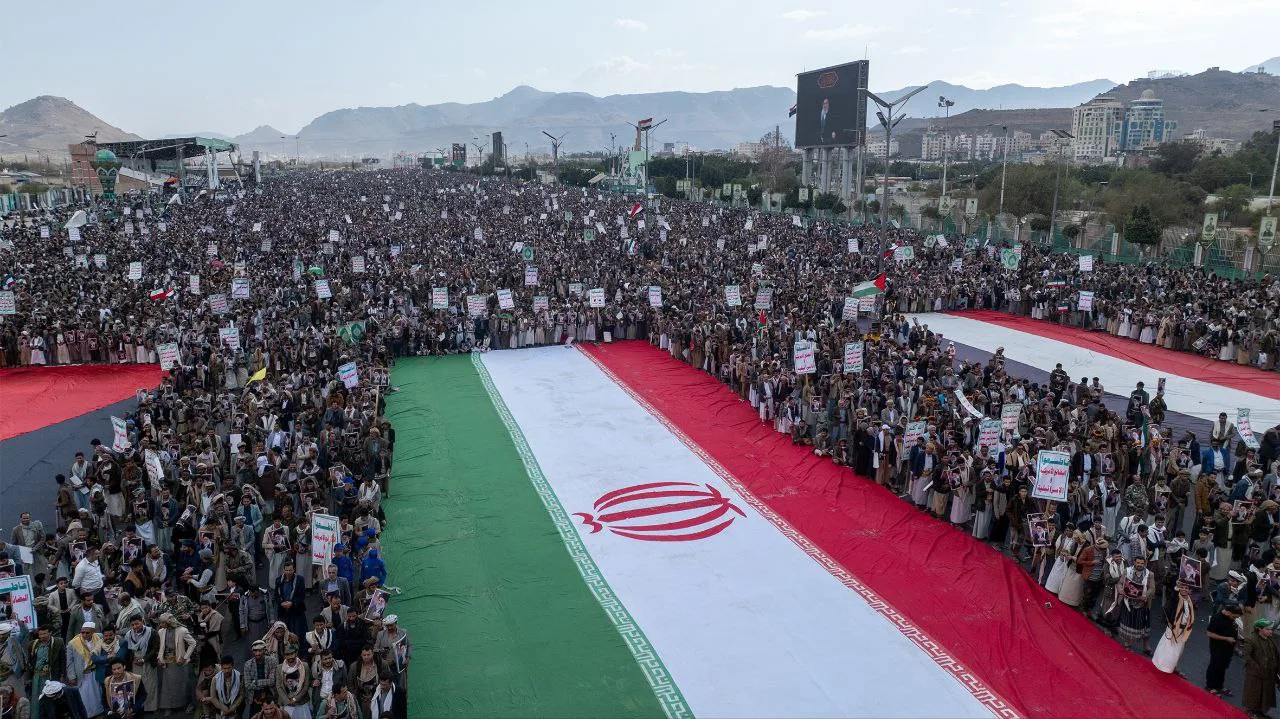
We have seen images of massive demonstrations in the streets of Tehran, demonstrating the Iranian people’s resistance to the Zionist-imperialist attacks against their country. How big are these demonstrations? Have they also taken place in other cities in the interior of the country?
Every night for over a week, millions and millions of people have taken to the streets to reject the invasion and show support for their country’s resistance against the United States and the Zionist regime. These are massive demonstrations taking place in most of Iran’s large and small cities. People take to the streets in rain and snow, after fasting all day [we are in the period of Ramadan, when Muslims must observe certain rules regarding daily fasting], and even under the roar of fighter jets, missiles and bombs, without retreating. This makes me very proud of my country and my people. We Iranians are showing the world that the tiger is made of paper and has no teeth; that nations CAN defeat the imperialist powers.
The Assembly of Experts announced yesterday (8 March) the election of Iran’s new supreme leader, the son of Ayatollah Ali Khamenei. What were the criteria for the election of the new leader, Ayatollah Mujtaba Khamenei? What personal and political characteristics stand out in the new leader? And who chooses the Assembly of Experts?
The new leader, Ayatollah Mujtaba Khamenei, was appointed third leader of the Islamic Revolution by the Assembly of Experts, an assembly of 88 members directly elected by the people. Because he carries on his father’s legacy and name, he is already very popular, but he is also considered a prominent and very humble scholar. Something that many people may not know about him is that when he was 17, he volunteered on the front lines of the holy defence when Iran was defending its sovereignty against the invasion of the country by Saddam, supported by the United States. Therefore, his father, his martyred father, never thought that the blood of his children was more valuable than that of other people. This is considered very valuable and respectful among Iranians. In addition, he lost his wife, his sister, his father, his mother and at least one niece in the attack that took his father’s life, the attack by the Zionist regime in the US. Well, he accepted to take on this responsibility of leading the country because it was very necessary as a new leader, and the assembly of experts came to the conclusion that he was the most qualified among all the candidates to do so.
And people are saying that it seems that Ayatollah Sayyidat Ali Khamenei has rejuvenated and come back to life. And that’s what gives them, that’s what gives people a lot of hope and motivation to continue resisting imperialist power. Well, we still need to wait to learn more about his personal and political characteristics. But what the Assembly of Experts explained is that he was the strongest and highest in academic matters, according to them, and the most suitable candidate to take office. The Western media always has its speculations accompanying developments in Iran through its imperialist and Orientalist narratives, but what they do not understand is that any leader or any of the candidates would have strong relations with the Revolutionary Guard, because the leader is also the commander-in-chief. And Ayyub Abdullah Khamenei was known to be a very moderate, open-minded and highly educated religious scholar. And I think many people expect his son to be equally knowledgeable and strong to defeat imperialist power and continue the resistance movement that his father and Imam Khomeini had established.
