
On December 14, 2001, Brazil’s National Congress enacted Constitutional Amendment 31, which created the Fund for the Eradication and Combating of Poverty. Two years later, in 2003, the first year of President Luiz Inácio Lula da Silva’s first term, a law established the date as Brazil’s National Day to Combat Poverty.
Since then, the country has made progress in reducing poverty through social inclusion policies and income-transfer programs. In 2014, during former President Dilma Rousseff’s administration and after more than a decade of progressive governments, the United Nations Food and Agriculture Organization (FAO) announced that, for the first time in history, Brazil had reduced poverty to such an extent that it was removed from the organization’s global hunger report, known as the Hunger Map.
However, the dismantling of these policies following the 2016 coup, and especially after Jair Bolsonaro’s election in 2018, pushed Brazil back into the ranks of countries with a significant portion of their population facing hunger. By 2022, more than 33 million Brazilians were living in this condition.
With the Workers’ Party (PT) returning to power in 2023, several food security, income-transfer and social inclusion policies were reinstated. By 2025, Brazil once again exited the Hunger Map.
Valéria Burity, Extraordinary Secretary for the Fight Against Poverty and Hunger at the Ministry of Social Development and the Fight Against Hunger (MDS), notes that after years of fiscal austerity and the rollback of social policies between 2016 and 2022, the current government has managed to achieve significant results in poverty reduction in a short period.
“Between 2023 and 2024, we estimate that approximately 17.5 million people rose out of poverty, and about 5 million left extreme poverty,” Burity said. “Last year we reached the lowest level of extreme poverty ever recorded, at 3.5%. Without these social programs, it would have reached 10%.”
In addition to restoring Brazil’s social protection system, such as Bolsa Família, raising the real value of the minimum wage, and expanding the Continuous Cash Benefit (BPC), Burity highlights other measures adopted by the current administration. These include “an economic policy that generates growth with jobs and reduces inequality,” the creation of the National Food and Nutrition Security System, and the approval of a tax reform that introduces elements of progressivity into Brazil’s tax system.
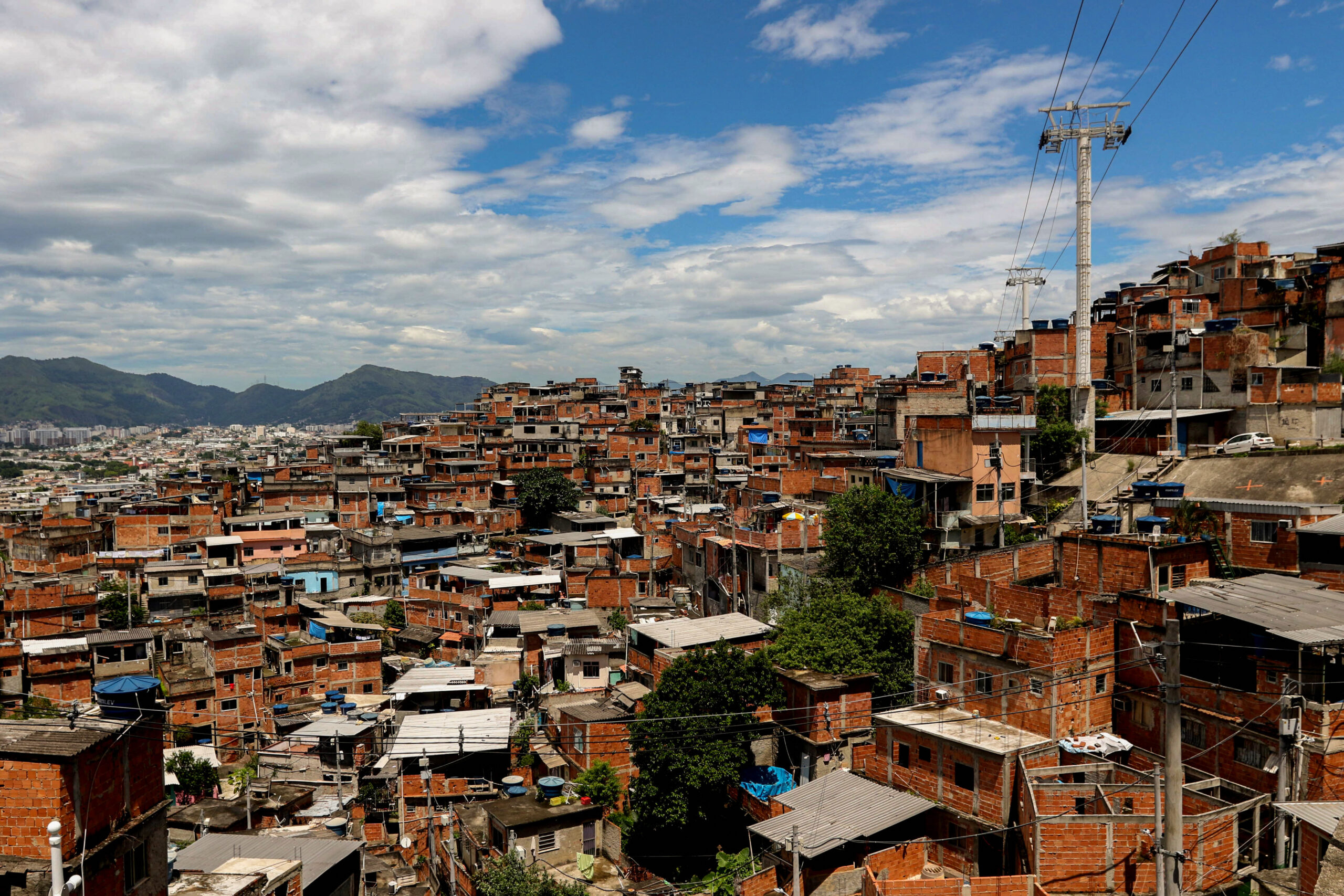
A snapshot of poverty in Brazil
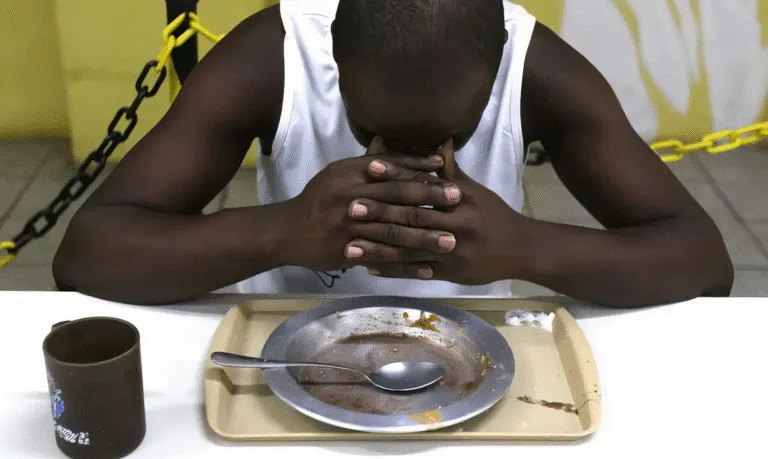
Exiting the Hunger Map does not mean hunger is no longer part of Brazilians’ reality.
According to the Brazilian Institute of Geography and Statistics (IBGE), between 2023 and 2024, 8.6 million people left poverty in Brazil. In percentage terms, 31.6% of the population lived in poverty in 2022, falling to 27.3% in 2023 and then to 23.1% in 2024, the lowest level since the series began in 2012.
In absolute numbers, the population living in poverty dropped from 66.5 million people in 2022 to 57.6 million in 2023 and 48.95 million in 2024.
Over the same period, 1.9 million people escaped extreme poverty. In 2022, 5.9% of the population, 12.3 million people, were in extreme poverty. This figure fell to 4.4% (9.3 million) in 2023 and to 3.5% (7.35 million) in 2024.
Proportionally, poverty affects women more (24%) than men (22.2%). When race is taken into account, poverty and extreme poverty rates among Black and mixed-race women reach 30.4% and 4.5%, respectively. Among white men, the figures are 14.7% and 2.2%.
IBGE data also show that in 2024, Black and mixed-race people together made up 56.8% of Brazil’s population but accounted for 71.3% of those living below the poverty line. Among Black people, 25.8% were poor, while among mixed-race people the figure was 29.8%. Among white people, the poverty rate was 15.1%. Extreme poverty affected 3.9% of Black people, 4.5% of mixed-race people, and 2.2% of whites.
Inequality reduction
While inclusion and income-transfer policies have transformed the lives of millions, the country’s wealthiest have been largely untouched, and a persistent problem remains: the gap between rich and poor.
Today, around 70% of Brazilians live on just two minimum wages, about R$3,036 (roughly US$600). At the same time, Brazil counted 56 billionaires this year, according to Forbes’ national ranking.
Finance Minister Fernando Haddad recently celebrated what he called “the largest reduction in inequality in Brazil’s history,” based on the Gini Index, a widely used measure of income inequality. The closer the index is to zero, the more equal a society is. Brazil’s Gini Index fell from 0.517 in 2023 to 0.506 in 2024.
“Inequality in Brazil is an obstacle to development. There is no development with this level of inequality,” Haddad said during the signing ceremony of a law that exempts workers earning up to R$5,000 (about US$1,000) per month from paying income tax.
Even so, the reduction is far from enough to remove Brazil from the list of the world’s most unequal countries. According to the Gini Index, Latin America is the most unequal region globally, and Brazil ranks among the worst performers.
Considering only countries with updated data between 2022 and 2024, Brazil ranks second to last in equality in Latin America, ahead only of Colombia.
Gini Index, considering only countries with data updated between 2022 and 2024. Source: World Bank
- Dominican Republic – 0.390 (2024)
- Suriname – 0.392 (2022)
- El Salvador – 0.398 (2023)
- Uruguay – 0.400 (2024)
- Peru – 0.401 (2024)
- Bolivia – 0.421 (2023)
- Argentina – 0.424 (2024)
- Chile – 0.430 (2022)
- Mexico – 0.435 (2022)
- Paraguay – 0.442 (2024)
- Ecuador – 0.452 (2024)
- Honduras – 0.457 (2024)
- Costa Rica – 0.458 (2024)
- Panama – 0.497 (2024)
- Brazil – 0.506 (2024)
- Colombia – 0.539 (2023)
“We have historically been champions of inequality,” warns social scientist Alan Carvalho. “Reducing poverty does not necessarily mean reducing inequality.”
“These phenomena are interconnected. You can have positive economic indicators, Brazil leaving the Hunger Map, reducing poverty and extreme poverty. But at the same time, the deeper roots of inequality remain unchanged,” he adds.
Historical causes
Carvalho points to Brazil’s development model, based on accumulation by a few and exploitation of the majority, as the core driver of inequality.
“We have a system of governance, capitalism, that produces and disseminates inequality, misery, poverty and hunger. That is intrinsic to its logic,” he explains, citing the legacy of slavery and the unpaid historical debt to Black Brazilians.
He also highlights Brazil’s rentier economy, heavily dependent on central capitalist economies and burdened by public debt payments at the expense of structural inequality-reducing strategies.
“The capture of the Central Bank by an ‘independent’ institution dominated by financial market interests means that most public revenue, out of R$2.2 trillion, goes to servicing debt. This limits the reach of public policies,” he argues.
The agrarian question
One of the most painful consequences of poverty is hunger, described by Brazilian geographer Josué de Castro as the country’s great dilemma: “bread or steel.”
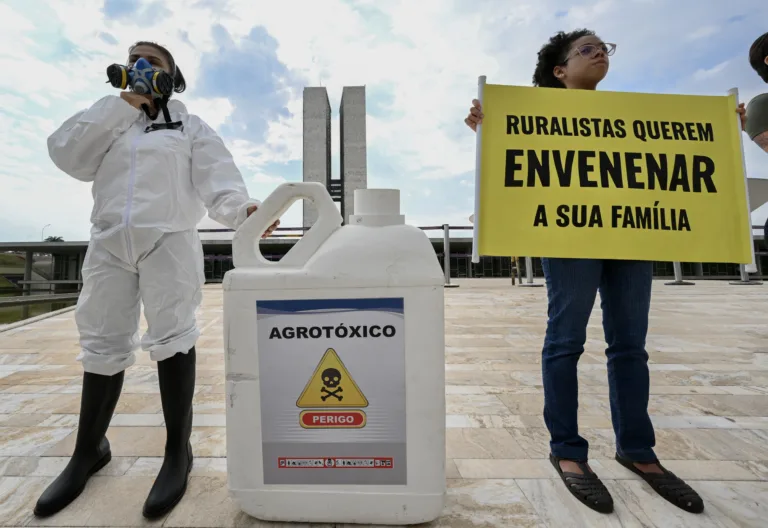
Land concentration remains a key determinant. In 2023, while 33 million Brazilians faced hunger, agribusiness posted record exports and a historic 16.3% growth in sector GDP.
Ceres Hadich, a national leader of the Landless Workers’ Movement (MST), says PT governments showed sensitivity to hunger but stresses that current policies are insufficient.
“Being off the Hunger Map today doesn’t guarantee we won’t return tomorrow,” she warns. “Food security is fragile if it only means access to food, not to healthy, quality food.”
She emphasizes food sovereignty: knowing where food comes from, who produces it, under what labor and ecological conditions.
Hadich links chronic hunger to Brazil’s archaic agrarian structure, highly concentrated, monopolistic, and export-oriented. “Land equals wealth and power. Talking about agrarian reform means confronting power relations,” she says.
Policies under debate
Beyond agrarian reform, several measures are under discussion to reduce inequality. Burity highlights income tax reform, which exempts workers earning up to R$5,000 (about US$1,000) per month and introduces progressive discounts for those earning up to R$7,350 (about US$1,450).
“When you guarantee income, you guarantee access to other rights and services essential for a dignified life,” she says.
Carvalho agrees the measure helps but notes that Brazilian wages remain severely lagging. “If we consider the cost of a basic food basket, the minimum wage should be five times higher,” he says, pointing to informal labor and platform-based work.
He also argues that reducing working hours without cutting pay could significantly improve living standards and employment.
Making rights permanent
“To dismantle is always faster,” Carvalho warns, stressing the importance of education and social participation to protect social policies from political shifts.
“We need a unified system of social participation and oversight. Representative democracy, distorted by misinformation and big tech dominance, has drifted away from popular demands,” he argues.
Burity echoes this view, saying democracy itself is the vaccine against the rollback of social rights. “Whenever rights are threatened, democracy weakens. We must strengthen democratic spaces and ensure public funding for social policies,” she concludes.