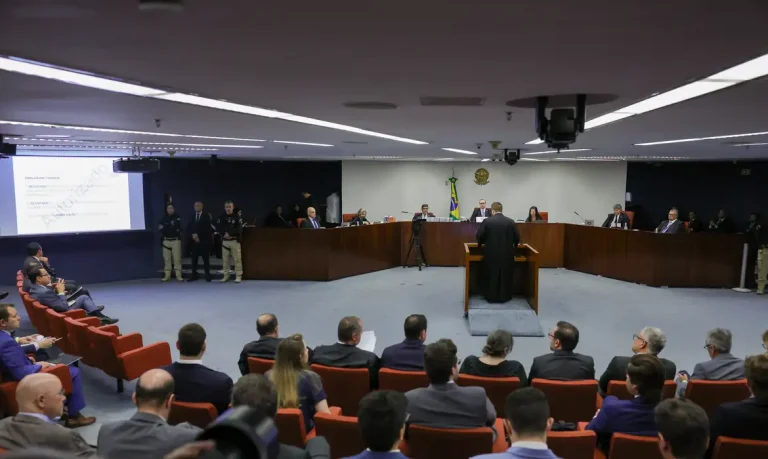

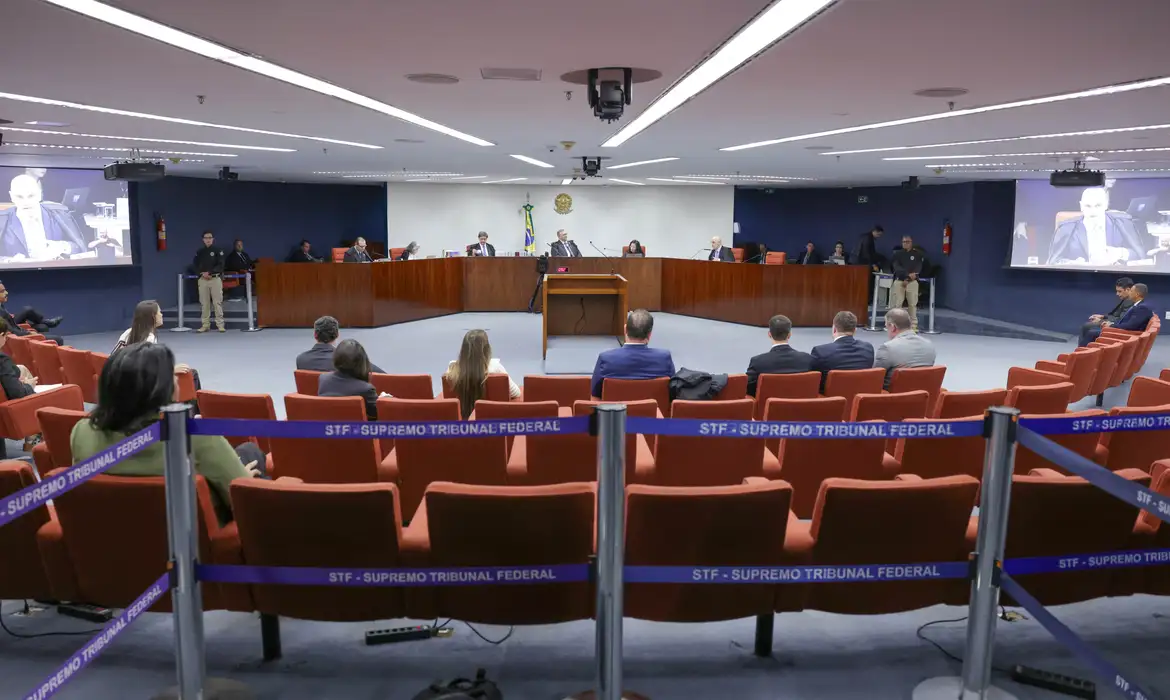
By a unanimous decision, the First Panel of Brazil’s Supreme Federal Court (STF) on Tuesday (16) convicted five of the six defendants linked to Core 2 of the coup plot that unfolded during former president Jair Bolsonaro’s administration.
By a 4–0 vote, the panel convicted Filipe Martins, former international affairs adviser to Jair Bolsonaro; Marcelo Câmara, a former Bolsonaro adviser; Silvinei Vasques, former head of the Federal Highway Police (PRF); Mário Fernandes, a retired Army general; and Marília de Alencar, former director of intelligence at the Ministry of Justice.
By the same margin, the panel acquitted Fernando de Sousa Oliveira, a career Federal Police (PF) officer and former director of operations at the Ministry of Justice, citing insufficient evidence.
The justices will now move to the sentencing phase, known as dosimetria, to calculate penalties. According to the First Panel of the STF, sentences may range from eight to 26 years in prison. The ruling is subject to appeal, and the sentences will not be carried out immediately.
The defendants were charged with armed criminal organization, attempted violent abolition of the Democratic Rule of Law, coup d’état, qualified damage involving violence and serious threat, and damage to protected heritage.
Allegations
Prosecutors allege that Filipe Martins was one of those responsible for drafting the so-called coup memorandum produced at the end of the Bolsonaro government.
Mário Fernandes is accused of devising a plan to assassinate President Luiz Inácio Lula da Silva, Vice President Geraldo Alckmin, and Justice Alexandre de Moraes. The alleged plan was found in a Word document titled Green and Yellow Dagger.
According to the indictment, Marcelo Câmara carried out illegal surveillance of Justice Alexandre de Moraes’s routine.
Messages seized from the cellphone of Mauro Cid, a whistleblower and Bolsonaro’s former aide-de-camp, show Câmara informing Cid that Moraes was in São Paulo and referring to the justice as “professor.” The exchange took place in December 2022.
Silvinei Vasques, then head of the Federal Highway Police, is accused of acting to hinder the movement of voters for then-candidate Luiz Inácio Lula da Silva during the second round of the 2022 elections.
Prosecutors say Marília de Alencar was responsible for compiling the data that underpinned the roadblocks.