
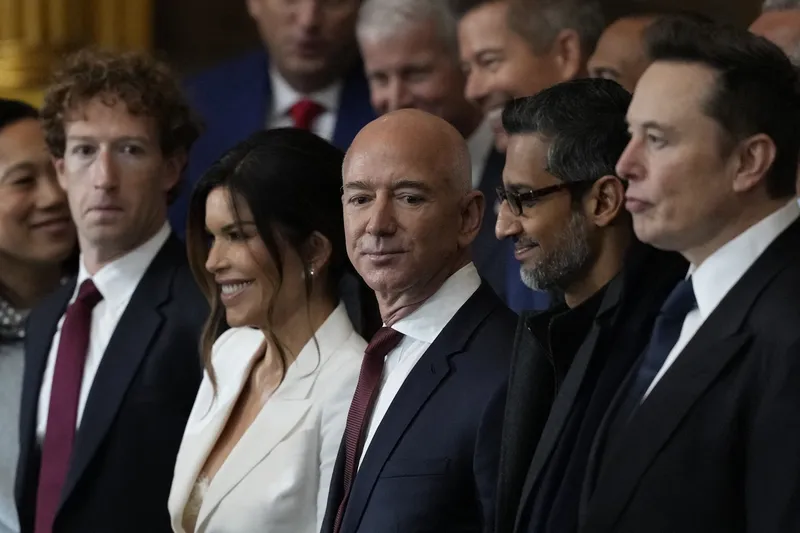
The presence of billionaires in politics is not new, but in recent years it has become a consolidated power strategy driven by increasingly wealthy and exclusive economic groups. According to a new Oxfam report, billionaires today are 4,000 times more likely to hold public office than the general population, a result of a system designed to preserve privileges and block any attempt at redistribution. The report was released on Sunday (19), at the opening of the World Economic Forum in Davos.
The capture of states by the economic elite is one of the central arguments of the report Resisting the Rich: Protecting Freedom from the Power of Billionaires, which analyzes the political influence of the super-rich on a global scale. Oxfam states that governments are “making deliberate decisions to please the elite,” while repressing protests and weakening social and democratic rights.
For Viviana Santiago, executive director of Oxfam Brazil, this dynamic poses a direct threat to democracies. She argues that “these groups pressure states and, at the same time, increasingly become part of governments themselves.” According to her, “there is a proven trend of state capture by oligarchic interests, which act to block reforms and maintain privileges.”
According to Santiago, the power of billionaires goes beyond influencing public policy. She says these domination strategies also include repression of those who challenge the prevailing model. “State action stops being aimed at redistribution and recognition of citizenship and becomes focused on repression,” she told BdF.
Oxfam highlights that democratic backsliding is directly linked to deepening inequality. The report cites the World Values Survey, conducted in 66 countries, showing that nearly half of respondents believe the wealthy often buy elections in their countries. Moreover, the risk of democratic erosion, such as weakened institutions, censorship, and persecution of political opponents, is seven times higher in countries with high concentrations of wealth.
Super-rich in government, protests repressed in the streets
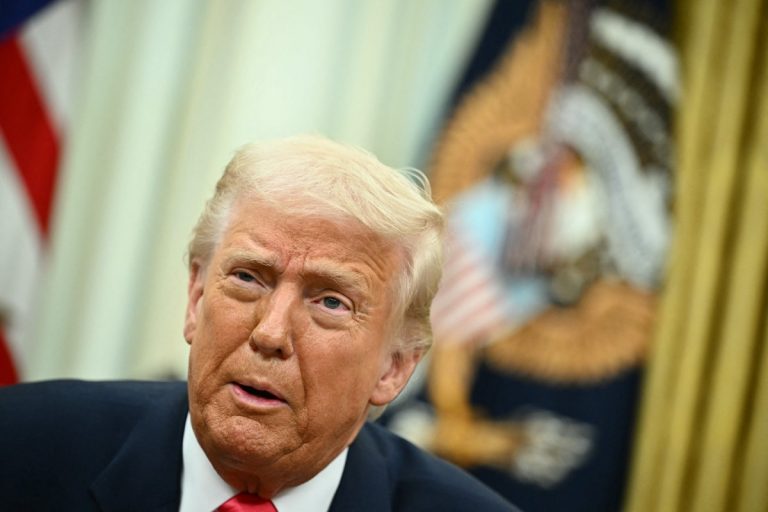
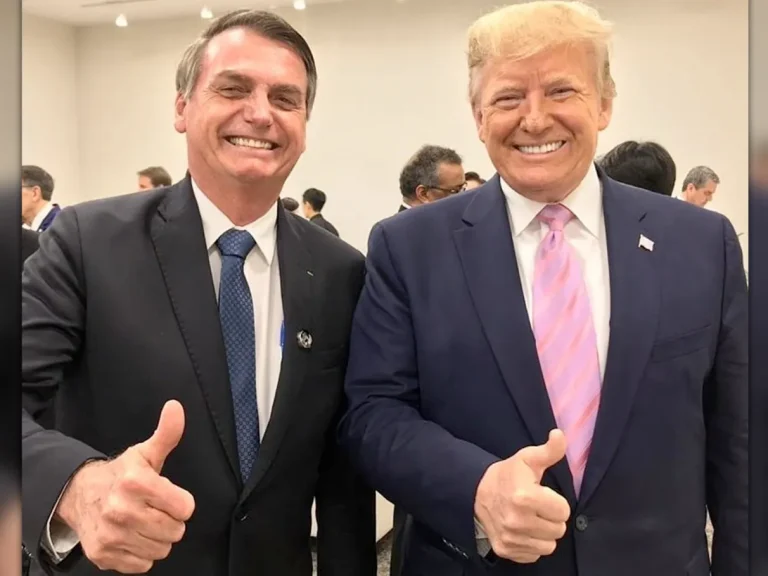
The report describes the global rise of a political elite made up of billionaires or individuals directly tied to their interests. One example cited by Oxfam is Donald Trump’s return to the U.S. presidency in 2025. According to the organization, the new U.S. administration pursued an openly pro-billionaire agenda, promoting tax cuts for the super-rich, weakening regulations on large corporations, and blocking progress on taxing profits and dividends, while also doing so for personal enrichment.
In December 2025, according to Forbes, Trump’s personal wealth reached US$6.7 billion following the appreciation of shares in Trump Media, his media and technology company. The firm’s merger with TAE Technologies, valued at US$6 billion, is expected to turn the former president’s holding company into a controller of businesses in energy, social media, and financial services. The deal also foresees up to US$300 million in cash injections, all while Trump occupies the office of head of state of the world’s largest economic power.
For Viviana Santiago, Trump’s election was a “gift year for the super-rich.” She notes that his administration “worked to weaken labor protection laws, preserve monopolies, and halt any progress in taxing the most profitable sectors, such as artificial intelligence.” According to her, this type of government systematically acts “to prevent income redistribution and deepen exploitation.”
While power concentrates at the top of the pyramid, dissenting voices are silenced. The Oxfam report notes that in 2024 there were more than 140 significant protests across 68 countries, many of which were met with violent responses. In Kenya, demonstrations against a new tax law resulted in 39 deaths and 71 enforced disappearances, with allegations of torture and kidnappings. In Argentina, under President Javier Milei, repression of union protests left more than 1,000 people injured, 33 of whom were shot in the face with so-called non-lethal ammunition.
Oxfam argues that this pattern of repression is not an exception but part of the logic of “captured states” described in the report. “These governments increasingly act as representatives of oligarchies and move away from their role of guaranteeing rights and equality,” Santiago summarizes.
The report also warns about the use of social media as a tool for surveillance and political repression. In one case cited, Kenyan authorities used X (formerly Twitter) to track political opponents. According to a study by the University of California, hate speech on the platform increased by around 50% after it was acquired by Elon Musk.
Davos Forum
The report was launched during the World Economic Forum, held from January 19 to 23 in Davos, Switzerland. The event brings together heads of state, corporate executives, and representatives of the world’s largest fortunes.
President Luiz Inácio Lula da Silva is not attending the 2026 edition; Brazil is represented by Planning Minister Simone Tebet. While the official theme of the meeting is “A Spirit of Dialogue,” Oxfam denounces what it sees as an increasingly explicit alliance between political and economic elites that, according to the organization, is undermining the foundations of democracy.