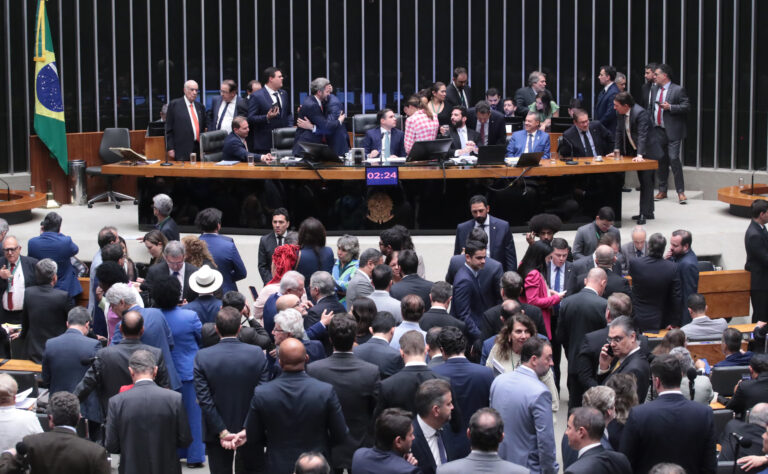
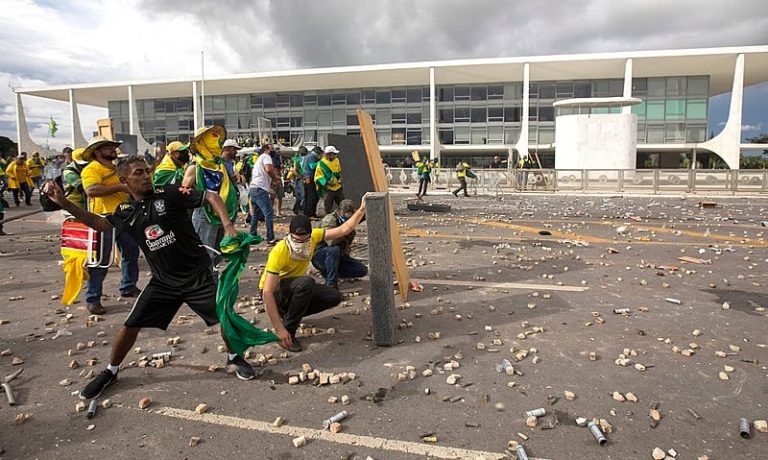
Brazil’s Senate approved on Wednesday (17) a revised version of the Dosimetry Bill (PL da Dosimetria), a piece of legislation that reduces prison terms for those convicted over the January 8 coup attempt. The bill passed by 48 votes to 25 and now heads to presidential sanction. President Luiz Inácio Lula da Silva has already indicated he will veto the bill in full.
The proposal changes how penalties are calculated for the crimes of attempted abolition of the Democratic Rule of Law and coup d’état. Under the new rules, defendants convicted of two or more crimes would serve only the sentence corresponding to the most serious offense, rather than the cumulative sum of penalties.
One of the bill’s key provisions concerns sentence reduction and parole eligibility. The legislation establishes that those convicted may serve just 16% of their sentence in a closed prison regime, even in cases involving violence. The threshold for repeat offenders is also reduced: previously, they were required to serve at least 30% of their sentence in a closed regime; under the new bill, this drops to 20%.
The main beneficiary of the change would be former President Jair Bolsonaro. Sentenced by Brazil’s Supreme Federal Court (STF) to 27 years and three months in prison, Bolsonaro could see his time behind bars reduced to just two years and four months, served at the Federal Police headquarters in Brasília. Without the bill, he would remain imprisoned until at least 2033.
The federal government opposed the proposal and attempted to postpone the vote until next year, but failed. Lawmakers from the political center bloc (centrão) proved decisive. One of them, Senator Alessandro Vieira, acknowledged that January 8 was a coup attempt but argued that it was necessary to distinguish between those who were “used as pawns” and those who organized the riot.
The bill initially proposed sentence reductions for other crimes as well, but Senator Sergio Moro introduced an amendment restricting its scope to those involved in the January 8 attacks and excluding common crimes from the reduced sentencing rules.
Supreme Court justices were among the main targets of criticism from right-wing senators. Lawmakers argued that the Court would challenge the bill and accused the judiciary of acting out of “revenge” for the destruction of government buildings housing the executive, legislative and judicial branches.
Senator Jaques Wagner, from the Worker’s Party (PT), recalled the arson attacks that preceded January 8 and described as “absurd” the far right’s comparison between amnesty for coup plotters and the 1979 amnesty granted during Brazil’s military dictatorship to those who fought against the regime.
“What we are voting on is an affront to democracy. January 8 was an attempted coup against the result of an election. I had never seen protest camps set up in front of military barracks. Minimizing what happened is an invitation for these coup plots to happen again,” he said.
The only PT senator to vote in favor of the bill in the Constitution and Justice Committee (CCJ) was Fabiano Contarato. Even so, he told the Senate floor that the proposal violates basic legal principles by benefiting a specific group of society at the expense of others. He also questioned the far right’s stance of demanding harsher penalties for common crimes while advocating sentence reductions for coup plotters.
“Claiming this law corrects injustices for the women who were there is a fairy tale. What happened was just the tip of the iceberg. There was a draft coup decree written inside the presidential palace. There were attacks on the Federal Police headquarters. There were plans to assassinate authorities. This law is neither impartial nor abstract, it has a clear political target,” he said.
Senator Renan Calheiros also criticized the bill, stating that there is no possible leniency for crimes against constitutional order and the Democratic Rule of Law.
“We are about to commit this insanity and confront the judiciary and its rulings. To reward crime and release criminals. This debate is about extremist offenders. This agenda no longer belongs to politics, but to law enforcement. Sentencing and amnesty are not demands coming from society,” he said.
Calheiros also denounced an alleged government deal to approve the sentencing bill in exchange for a vote on tax exemptions. According to him, this arrangement was “confided” by Senator Randolfe Rodrigues prior to the bill’s vote in the Constitution and Justice Committee.
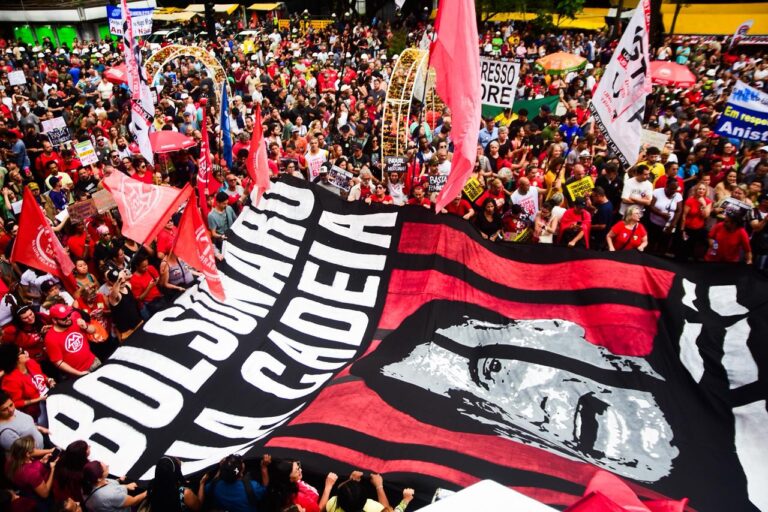
The government’s main argument against the proposal is popular mobilization. An earlier attempt to grant amnesty to the January 8 coup plotters, through a separate Amnesty Bill, was overwhelmingly rejected by the public in September. This new proposal reignited protests last weekend, mobilizing the left once again. Thousands of people took to the streets to demonstrate against the bill.